Questions about DWO3
Category: Helpdesk · Tags: — · Posts: 46
#1 — dryodryo · 2023-01-25
Hi,
Got my DWO3s a few days ago and logged enough time to think I might be able to ask intelligent questions.
First and foremost, how do I get vertically oriented bars, scrolling left / right? Should be the Range selector at the right-most position, right? I’m not seeing the frequency stabilize anywhere near horizontal scan rate. Am I doing it wrong? Video format is 1080i59.
No problem getting horizontally oriented bars, scrolling up / down.
This is pretty important to me. If it’s not possible, then I will be very disappointed. My dim memory of the Hearne / EAB Videolab II from 30 years ago was that this was super easy, the oscillators had coarse and fine controls.
Second, what’s the process for getting a Reset that just does a reset, without blanking the oscillator? The blanking effect is cool, but not what I want at the moment. I’m assuming the Reset input is a gate? Positive voltage blanks the oscillator off. When voltage goes back below a threshold, the oscillator starts up again at phase = 0. Right? And that threshold is… 0.5 V?
This would seem to indicate that in order to just reset the clock, without blanking it off, I need a trigger pulse. Hmm. I actually don’t have that in my system. Plus, I suspect that there’s always going to be some amount of blanking, because a trigger pulse has to have some duration. There’s no such thing as instantaneous. I just want the oscillator to sync to an arbitrary incoming signal without blanking. What’s my move here?
Third, in the video below, we can see some noise, a subtle jitter. The video compression does soften it up somewhat, but it’s there. DWO3 directly into ESG3. It’s pretty obvious in full screen / HD.
Also, this is a square wave and it’s really soft. I guess that is just something I have to live with in high definition formats. The internal components of these modules just aren’t fast enough to resolve a transition from zero to one anywhere near the HD pixel clock.

Thanks,
Aaron
#2 — jwsmithwick1 · 2023-01-25
To scroll an oscillator left or right, to the best of my knowledge, you’re going to need to take the output of a scrolling audio rate oscillator and run it through the waveform visualizer of a Diver. Then, take the h ramp from the diver and that should achieve the horizontal scroll that I think you’re describing.
#3 — rempesm · 2023-01-25
VU008 Phase Shifter can shift vertical bars with ramp, saw and triangle waveforms left and right.
It’s also possible to put an audio rate scrolling oscillator into Memory Palace and rotate it so it appears to be scrolling left <> right.
#4 — jwsmithwick1 · 2023-01-25
Forgot about the VU008 for that. Gotta try it!
#5 — creatorlars · 2023-01-26
dryodryo wrote:
First and foremost, how do I get vertically oriented bars, scrolling left / right? Should be the Range selector at the right-most position, right? I’m not seeing the frequency stabilize anywhere near horizontal scan rate. Am I doing it wrong? Video format is 1080i59.
That’s not possible with an analog oscillator core – you’d need something extremely precise, like a crystal clock controlled DCO for left-to-right scrolling with a source that is asynchronous to your video sync. We get away with vertical scrolls because that frequency is much, much lower.
My dim memory of the Hearne / EAB Videolab II from 30 years ago was that this was super easy, the oscillators had coarse and fine controls.
IIRC, the VideoLab oscillator used a trick related to delaying the sync phase, or a kind of variable “weak sync pll” to achieve this. I’d like to add sync phase modulation (Horizontal & Vertical) with a dual clock/sync controller module later on. Here’s an old test of something like that:

https://www.youtube.com/watch?v=NoolIkQntl0> Second, what’s the process for getting a Reset that just does a reset, without blanking the oscillator? The blanking effect is cool, but not what I want at the moment. I’m assuming the Reset input is a gate? Positive voltage blanks the oscillator off. When voltage goes back below a threshold, the oscillator starts up again at phase = 0. Right? And that threshold is… 0.5 V?
You understand it correctly! What you want can be achieved by sending a narrower pulse. You could use a module like Keychain to key out a narrow pulse for this purpose (use the saw/triangle outs of one oscillator into Keychain, then vary the pulsewidth via threshold – or see above, re: sync/phase controller module, which could also include an adjustable monostable. Contour could also be used to generate a short pulse at an edge.)
Third, in the video below, we can see some noise, a subtle jitter. The video compression does soften it up somewhat, but it’s there. DWO3 directly into ESG3. It’s pretty obvious in full screen / HD.
That looks perfectly normal to me. There’s going to be some “sparkling”, especially in HD.
Also, this is a square wave and it’s really soft. I guess that is just something I have to live with in high definition formats. The internal components of these modules just aren’t fast enough to resolve a transition from zero to one anywhere near the HD pixel clock.
Correct, that’s all as expected.
This is how it goes with analog oscillators and video synthesis. DWO3 is the most technically precise and high performance VCO core we’ve designed, and also the most affordable. I would use ramps based modulations/transforms (like DSG3) or digital sources that count pixels in cases where the analog VCO is not helping you achieve what you want.
#6 — dryodryo · 2023-01-26
creatorlars wrote:
IIRC, the VideoLab oscillator used a trick related to delaying the sync phase to achieve this.
After I posted, my memory started coming back to me. It’s not a “fine” control at all, it’s a phase offset and drift, like you said. I guess that just goes to show how advanced the Videolab was.
Without that functionality, I’m at a loss to see how I can achieve a drifting horizontal movement. Diver and Memory Palace are not available to me. VU008 is introducing extra black bands into the sawtooth, and just doing weird folding things with sines and triangles. That looks cool, but it’s not what I’m trying to achieve.
Sync phase modulation definitely goes onto the wish list.
#7 — creatorlars · 2023-01-26
Another note on using hard keying to control reset. The reset input has a 0.5V comparator (fixed threshold hard key generator) at the input. So if you mix an offset in with your ramp or triangle waveform before patching it to the input, you can vary the pulse width. You can do this just with Proc, without a need for Keychain.
#8 — creatorlars · 2023-01-26
dryodryo wrote:
Sync phase modulation definitely goes onto the wish list.
It would be like a normal video sync generator (HV pulse outs) but with modulation controls to scroll or reposition the phase relative to the input sync. So the neat thing about it, is that you could use it to reposition/scroll anything with a sync input (for example, it could be used as a phase/scroll controller for DSG3 as well.) Essentially Diver/MemPal like on the control side,
After I posted, my memory started coming back to me. It’s not a “fine” control at all, it’s a phase offset and drift, like you said. I guess that just goes to show how advanced the Videolab was.
It’s a very cool circuit! It uses the ICL8038 for the VCO core like the Sandin IP oscillator did, if I recall correctly. Having the sync phase controlled by a crystal clocked syncgen (like “scrolling momentum”, above) is a lot more stable. You can see from that video that the reset periods in the older cores were very long. DWO3 syncs in 200-300ns (as opposed to 2000ns-3000ns from previous cores), so it will be capable of seamless repeats in a new way.
#9 — creatorlars · 2023-01-26
dryodryo wrote:
Without that functionality, I’m at a loss to see how I can achieve a drifting horizontal movement.
Turn your feedback camera 90 degrees and rescan it! That was the trick, before things like Diver were introduced.
#10 — dryodryo · 2023-01-26
creatorlars wrote:
Turn your feedback camera 90 degrees and rescan it! That was the trick, before things like Diver were introduced.
… to the LZX modular standard. Obviously Bill Hearn solved this artistic / technical problem ~40 years ago.
I’m not trying to be snarky, just want to get back to where I was in 1993. Don’t get me wrong, I fully appreciate all of the MANY advances you’ve made. I lust after Diver on a regular basis.
Even just Swatch by itself is a huge advancement. Today I learned that I can use a Function Generator to process the positive and negative parts of I and Q separately. Never would have imagined this.
Thanks
#11 — creatorlars · 2023-01-26
dryodryo wrote:
… to the LZX modular standard. Obviously Bill Hearn solved this artistic / technical problem ~40 years ago.
Of course! I am talking about early LZX days here. We decided to address sync phase modulation outside of the core oscillator module’s feature set. The “scrolling momentum test” was a proof of concept. Later that idea made it into Diver. But we’ve never really done the concept justice as an independent module.
Just to be clear: the Videolab’s ICL8038 circuit doesn’t do asynchronous horizontal scrolling with it’s VCO core either. It uses a sync PLL so that the oscillator core is “genlocked” to the sync, but with a weak pull on one side or the other. Super clever, I agree. My goal with all this is not innovation so much as preserving and expanding the legacy ecosystem.
#12 — dryodryo · 2023-01-26
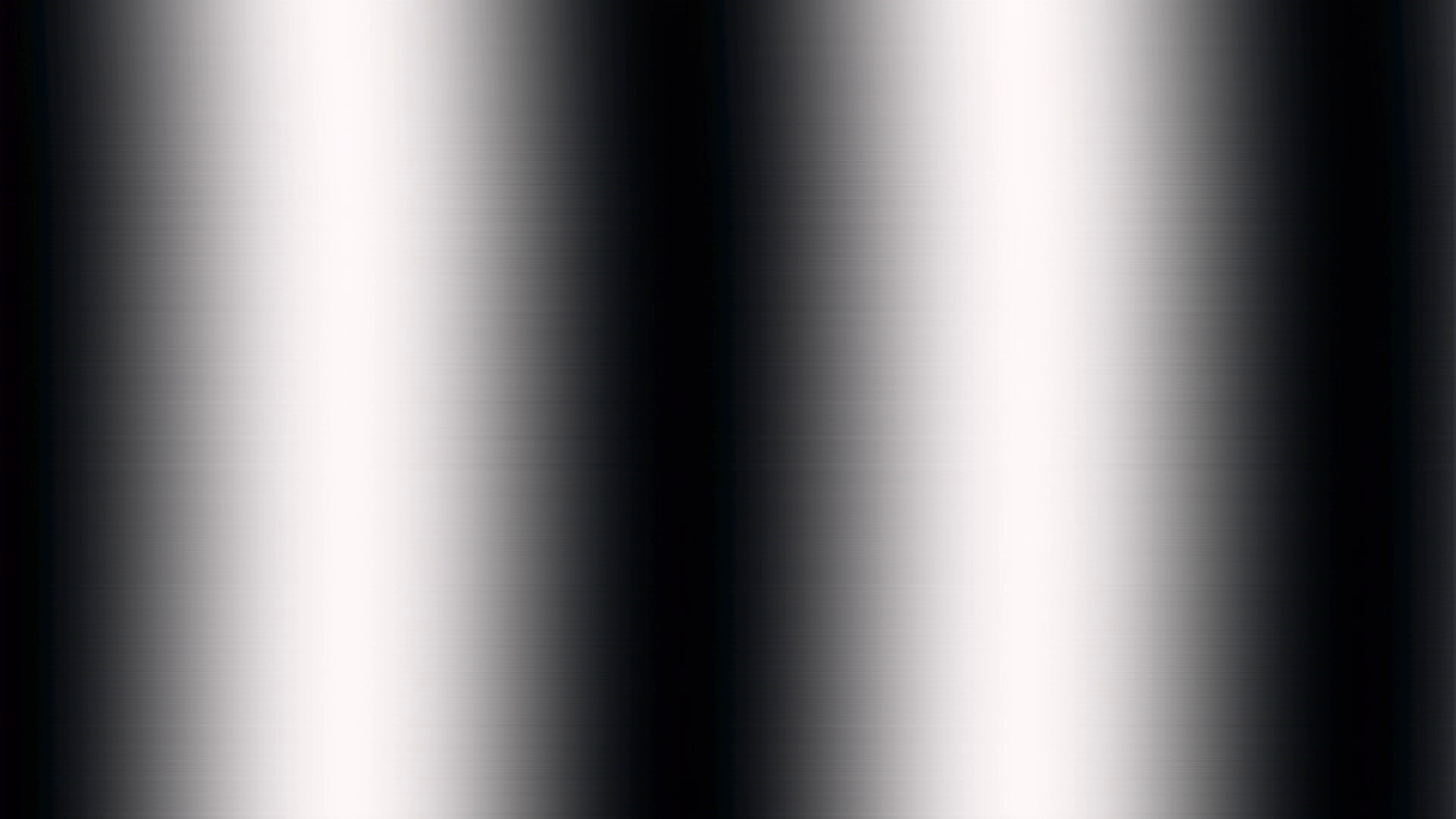
Is this normal? Because to me it looks doubleplus ungood.
The other DWO3 is also noizy, but not nearly this much.
#13 — dryodryo · 2023-01-26
Dammit, the Vimeo compression just smears the heck out of it so you can’t even see the issue
#14 — dryodryo · 2023-01-26
Here’s a still image showing the horizontal noise, super problematic. Hopefully this won’t get mangled by Discourse … I uploaded a PNG but it looks like it got automatically JPEG’d
#15 — creatorlars · 2023-01-26
dryodryo wrote:
Is this normal? Because to me it looks doubleplus ungood.
Looks great to me, especially for HD. If you’re looking at straight, non modulated bars near the lowest frequencies in a range like this on an analog VCO, with HD output, with no modulation at all, there is definitely going to be some texture and nonlinearities. What we’re seeing here is the “good” kind of texture created by subtle thermal properties of discrete parts. The “bad” kind of texture involves diagonal, jagged edges and scrolling ripples caused by power supply bleed.
There will always be some of both in the analog path, but the goal is to get the bad kind low enough so that it doesn’t show up in the recording. Without any texture at all, it might as well not be an analog VCO core – which is why we use a crystal clocked 10-bit DAC for ramp generators. A generator that’s running on a pixel clock is always going to line up with a digital capture in a way that creates the illusion that the image is perfectly crisp or “frozen” (rather than being in constant motion, as it is in reality.) An analog VCO at high resolution on the other hand is going to have some sparkle when it turns into pixels – it’s on it’s own time base, one constrained by the physics of the transistors. That’s part of the appeal of it – it breathes in a way that a DCO can’t.
Our role in the creation of video art tools will always be to provide the underrepresented alternative to real time software visuals, and try to balance the engineering challenges against the cost of making the gear accessible. We’d never presume that an analogue VCO is superior to other approaches – just that it’s worth making it exist, for those who want it. So while you see noise here, I see life! I’d use VCOs when I want to create an organic, flowing pattern with smooth curves. I’d use a digital generator or Touch Designer if I wanted to save and recall precise settings, and modulate things at mathematically perfect ratios.
You can think of it like FM synthesis vs Subtractive synthesis. FM synthesis is prohibitively difficult to do with analog circuitry. The results of an analog FM synth can sound cool, but the math doesn’t add up to some of the clear bell tones you get from a digital FM engine. If clear bell tones is what you want, digital FM is definitely the way to go. On the other hand, if you stack multiple analog oscillators into an analog filter, the slight variations in texture are what create a squelching, strong bass sounds that the FM synth just won’t be able to reproduce on its quantized timebase. Different tools for different jobs.
Analog video VCOs will create patterns you can’t get any other way, especially under complex modulation. But if you want pixel perfect frozen patterns with exact counts, where things start and end on specific pixels and can be saved/recalled, the analog VCO is not the right tool for that job.
#16 — Dr_Rek · 2023-01-26
Maybe I’m missing something here, but can’t you just use a finely tuned unsynced mode on DWO3 for scrolling bars in either direction? Not as precise as maybe you’d like yet, but would get the motion.
#17 — creatorlars · 2023-01-26
At audio rate frequencies – vertical ranges, where the waveform scrolls top to bottom at multiples of vsync frequency, this is exactly what you can do. That is range #6 on the dial.
At video rate frequencies, slight fluctuations in FM current in an analog triangle VCO core cause the frequency to not be stable enough to “drift” left to right, when at an asynchronous multiple of the hsync frequency (15KHz - 30KHz). That’s why a sync input is necessary when working at those frequencies, and also why you see some slight movement in the waveform even when it’s synchronized.
We could probably reduce slight movement by filtering the FM CV input signal, but then you would be making it more difficult to achieve video rate FM response. So we have to pick a sweet spot between response time and FM fluctuations at higher frequencies.
When working with oscillators, I like to consider the high frequencies (the vertical bars) as the “stroke” of the pen. The waveshape matters a little, but not a lot – that’s the dot size of your pen and how fuzzy the lines are. The waveshape of the midrange frequencies (the horizontal bars) matters much more, since their waveshape is what creates the pattern. Since FM should happen at a lower time constant on the modulator, compared to the source, you usually modulate the high frequency oscillator with the midrange frequency oscillator in order to create 2D FM patterns that are very characteristic of analog video VCOs. The waveshape of the modulating oscillator (the midrange one) matters a lot more than the high frequency one in this case, because it is the one actually drawing the waveform (using the “pen stroke” created by the higher frequency one.)
Yes, analog VCOs are going to feel “fixed” in their relationship to horizontal and vertical space. That’s very much part of the medium itself. I love 2D FM VCO patterns for this reason, they reveal how the space on the screen is related to the timing of the analog signal in their structure.
#18 — dryodryo · 2023-01-26
creatorlars wrote:
Looks great to me, especially for HD
OK, you’re the expert. But there is a wide variation in the amplitude of this noise between the two DWO3s. The first one is acceptable to me, this second one is not. Maybe it’s within spec, but from an artistic standpoint, I can’t use this except as an LFO. I am going to try moving things around in the case to see if anything changes. If not, I may sell it. One great thing about these boutique instruments is that they not only hold their value, but historically they actually appreciate. So even if a module doesn’t meet my needs, in the long term there’s not much financial risk.
It’s great to hear the background info about why the DSG3 ramps look so clean and the DWO3 waveforms look so… analog. Thanks for the education, as always.
#19 — creatorlars · 2023-01-26
dryodryo wrote:
The first one is acceptable to me, this second one is not.
You need to quantify this with some numbers somehow, or else I have no basis for understanding what you mean or if there is an RMA situation. Can you try some things?
Can you take a comparative side by side screenshot of both VCOs?
If you swap the VCOs’ locations in your case, does it help?
What if you swap the power cables?
What if you swap the sync cables or change the sync order?
What’s the amount of headroom on your power supply right now?
Have you seen if powering the module alone makes a difference in what you are seeing?
Do the waveshapes and frequency ranges work consistently across both units?
#20 — dryodryo · 2023-01-27
creatorlars wrote:
Can you take a comparative side by side screenshot of both VCOs?>>>> If you swap the VCOs’ locations in your case, does it help?>>>> What if you swap the power cables?>>>> What if you swap the sync cables or change the sync order?>>>> What’s the amount of headroom on your power supply right now?>>>> Have you seen if powering the module alone makes a difference in what you are seeing?>>>> Do the waveshapes and frequency ranges work consistently across both units?
Thanks, I will conduct some more thorough tests.
The power supply is a 5 amp DC Distro. At the moment the available overhead is 3800 mA.
All waveshapes and frequency ranges look normal, consistent across both units.
Also, would you be so kind as to update the product page and docs to reflect the DWO3 power draw of 230 mA according to the rear panel?
#25 — wiatrob · 2023-01-28
creatorlars wrote:
IIRC, the VideoLab oscillator used a trick related to delaying the sync phase, or a kind of variable “weak sync pll” to achieve this.
"PATTERN SOURCE
The B Module Pattern Source consists of four independent
digitally stabilized spatial oscillators, each producing three synthetic
monochrome video signals, and a voltage controlled video mixer. The
most important application of this unit is the creation of simple or
complex, moving or stationary, video patterns."
EDIT: Though one of the issues I recall with the Videolab was it was very hard to get it to STOP scrolling but it’s been a few years since I played with one…
#26 — wiatrob · 2023-01-28
I know exactly what you’re seeing even in the posted video, and I agree with @creatorlars that looks pretty darn good. There will ALWAYS be noise. ALWAYS. Given that we are shoe-horning relatively high frequencies into a format never designed to handle them, using unshielded patch cables, it’s to be expected. Even if you start off with a clean looking signal, process that through a couple of high-gain amps (Staircase/Stairs? or an extreme FM of any vertical waveform) and the noise will be right back there.
The following should be considered more philosophical than technical

: Folks rave about the ‘Fat Sound’ of analog audio oscillators. We’re looking at that equivalent in the Analog Video Synth world. Why this is considered ‘noise’ in the video world relates to the difference in the senses of hearing and sight, but that’s probably really outside the scope of this thread.Embrace the noise!
#27 — creatorlars · 2023-01-28
I’ve been thinking on this more, and I definitely see video synthesis in part as “revealing the hidden world of signals” and using the visualization of those signals to make art. Especially in the case of an analog specific generator like a VCO. So when I see an SD vs HD capture for example, and this reveals more noise, I am thinking “wow, I can see more of what’s there! it’s like getting my glasses cleaned.” It’s more like a microscope with a sharper lens pointed at the same thing, than a different resolution. That’s what quantifies good noise vs bad noise for me. The bad noise is a different signal getting in the way of visualizing the target one – PSU crosstalk for example. The good noise is whatever is part of the character of the analog generator itself (where it’s not a question of Yes/No to noise, it’s always a question of how much, as Bill points out above.)
#28 — nerdware · 2023-01-29
I feel the same way about the noise. I think of it as grit. Like the “grit in the oyster”, the “pearl in the shell”. As you said, embrace the noise! Use it as a texture. Control it - perhaps with filters (like Contour or the Gen1 filter module, if you can find one) or key/fading - or let it loose.
It’s all part of the process. I don’t just mean the creative process. I think of it all as one big computational process. Not all computation is digital. Video certainly needn’t be. However, with feedback, you enter the world of cellular automata. This takes the process to a new level.
That’s why my goal, using Gen3 and HD, is to use TBC2 and an HD camera pointing at my monitor. I might also feed the system output back into the TBC2 directly. It’s amazing what a little frame delay can do there.
So obviously HD oscillators will play an important role in that. In my experience, they’re ideal for “perturbing” the feedback process, and the “grit” goes a long way.
I hope that makes sense.
#29 — wiatrob · 2023-01-29
Hey! You’re paraphrasing my Artist’s Statement

I refer to the Bad Noise as ‘Egregious Noise’ and it can manifest as serious static along vertical lines or a giant deformation rolling in sync with 59/60Hz line freq. There’s an in between here - as @nerdware pointed out in the scrolling ramp edge on Diver (see Diver thread) It doesn’t affect my workflow but if it did I would find it hard to hide.If you want an example of Bad Noise, I’ll see if I can provide that.

#30 — wiatrob · 2023-01-29
Makes sense to me. The automata-like behavior may be seeded by the noise!
I post process nearly all my non-live video now and that goes a long way to alleviating analog noise and any digital stepping in the final output. Live, I still run SD out scaled with noise reduction, but I don’t find noise much matters live so long as the content is compelling. I’ve certainly had comments like ‘the repeating geometric shapes were over-represented’ but never about noisy signals.

Sorry we’re veering out of the OP DWO3 question.
#31 — dryodryo · 2023-01-30
Hope everyone had a fun and restful weekend. On Friday I fired up the studio and this is what I saw coming out of both DWO3’s:
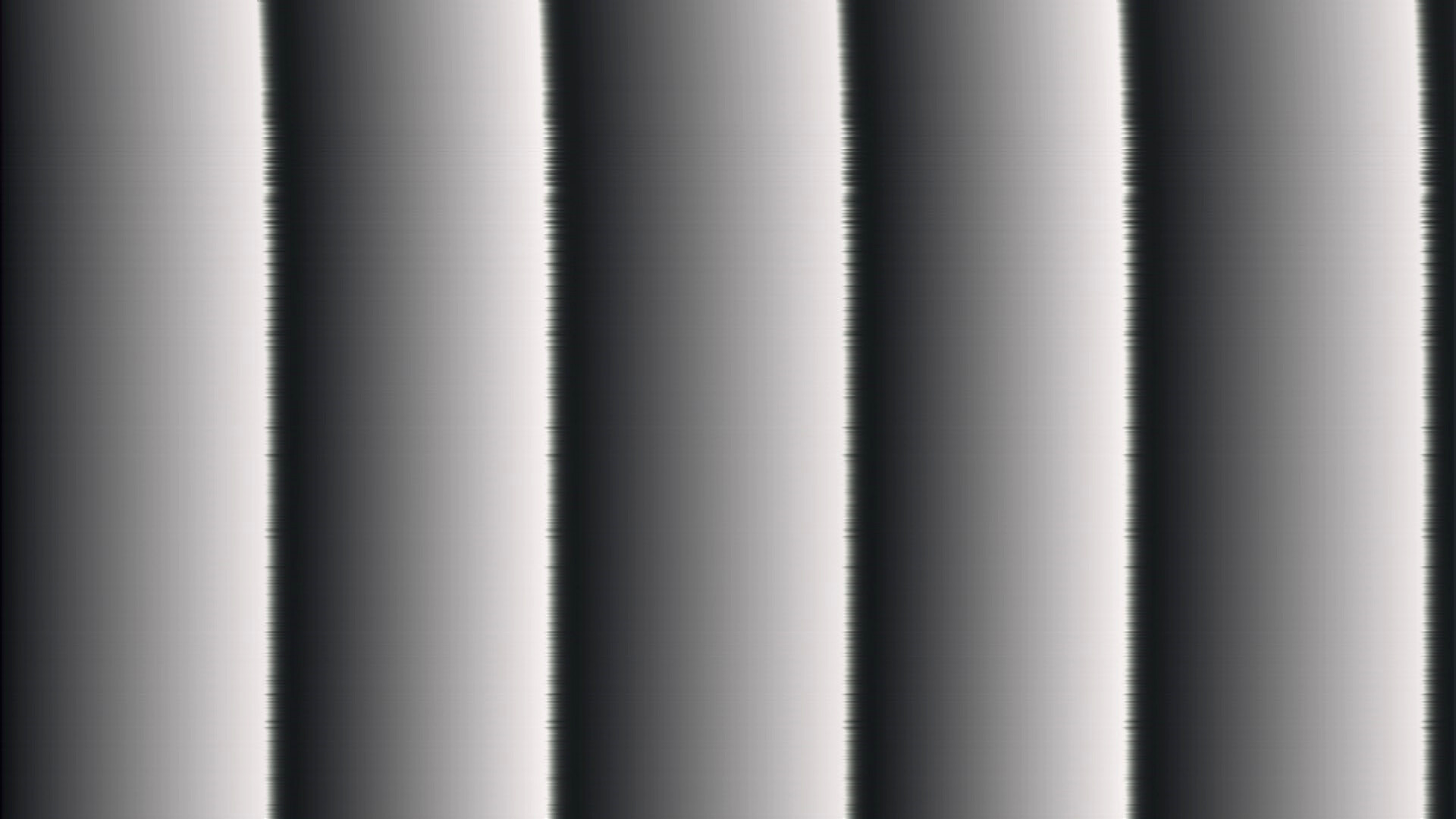
The output of the four oscillators was variable, but they were all unquestionably out of spec.
This looked like a sync issue to me, the bending at the top of the screen is characteristic of sync problems.
Disassembled the rack completely, stripped it down to one DWO3 and one ESG3, both powered by 5 amp DC Distro. Doepfer PSU3 powered down.
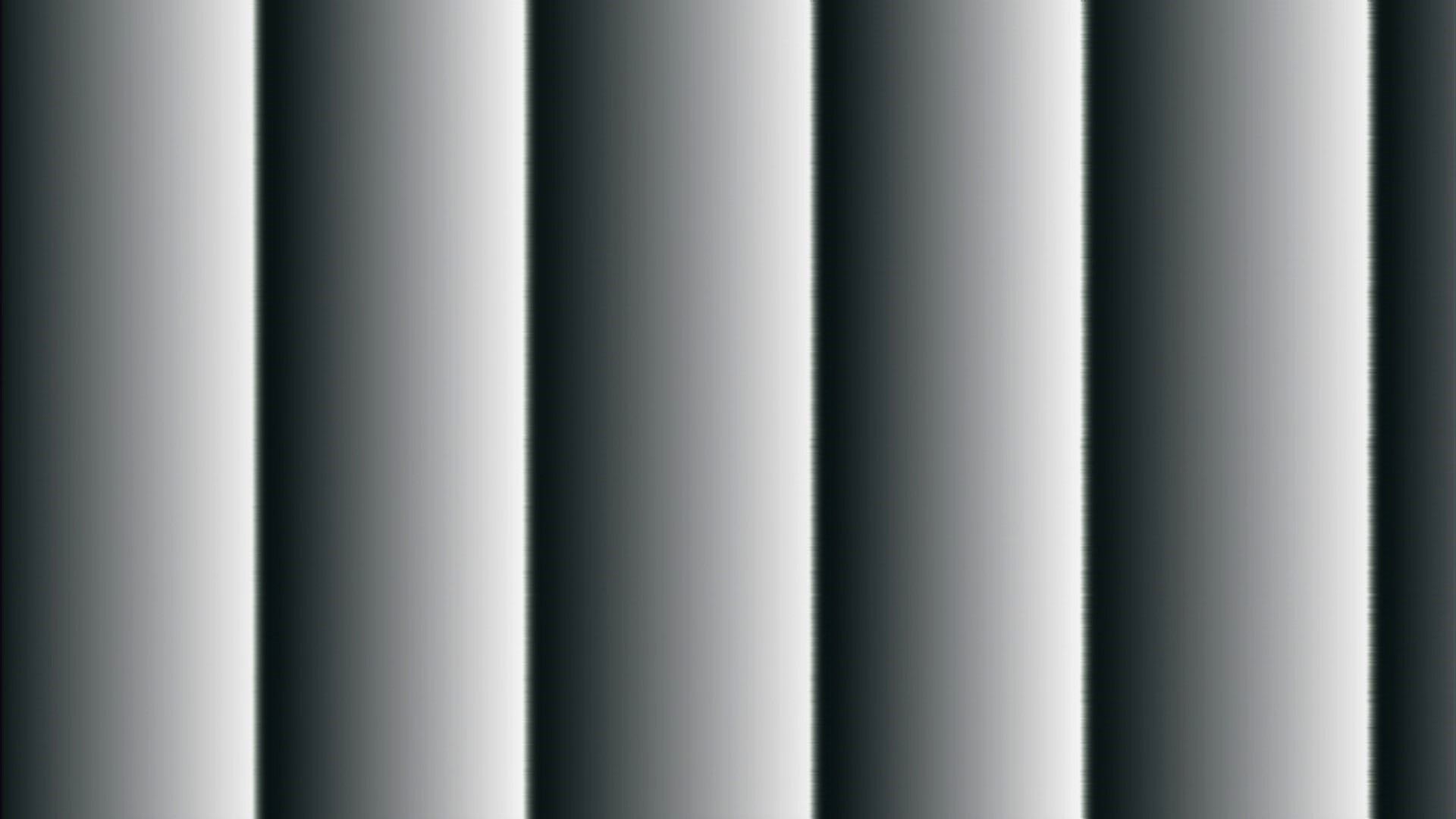
Much better. Still noisy to my eyes, but probably not out of spec.
Rebuilt the rack, re-routed sync. Previously the chain was ESG3 → FKG3 → DSG3 → VU009 → VU009 → VU009 → DWO3 → DWO3. The new chain is ESG3 → DWO3 → DWO3 → DSG3 → FKG3 → VU009 → VU009 → VU009 → 75 ohm BNC terminator. Results nearly as good as the stripped down configuration, still noisy to my eyes.
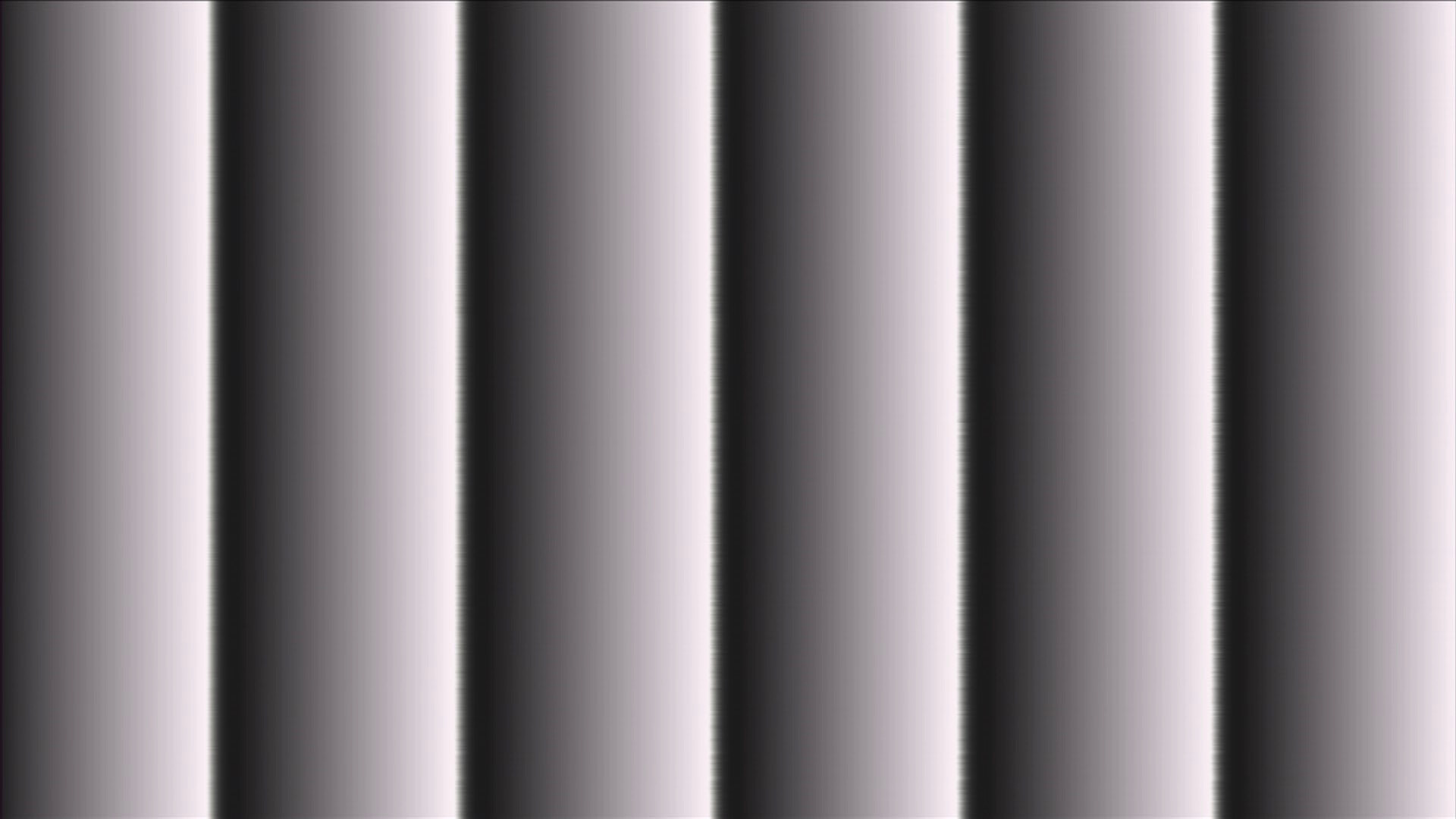
Here’s the VU009 output for comparison. All three VU009 outputs are consistently less noisy than either of the DWO3’s.
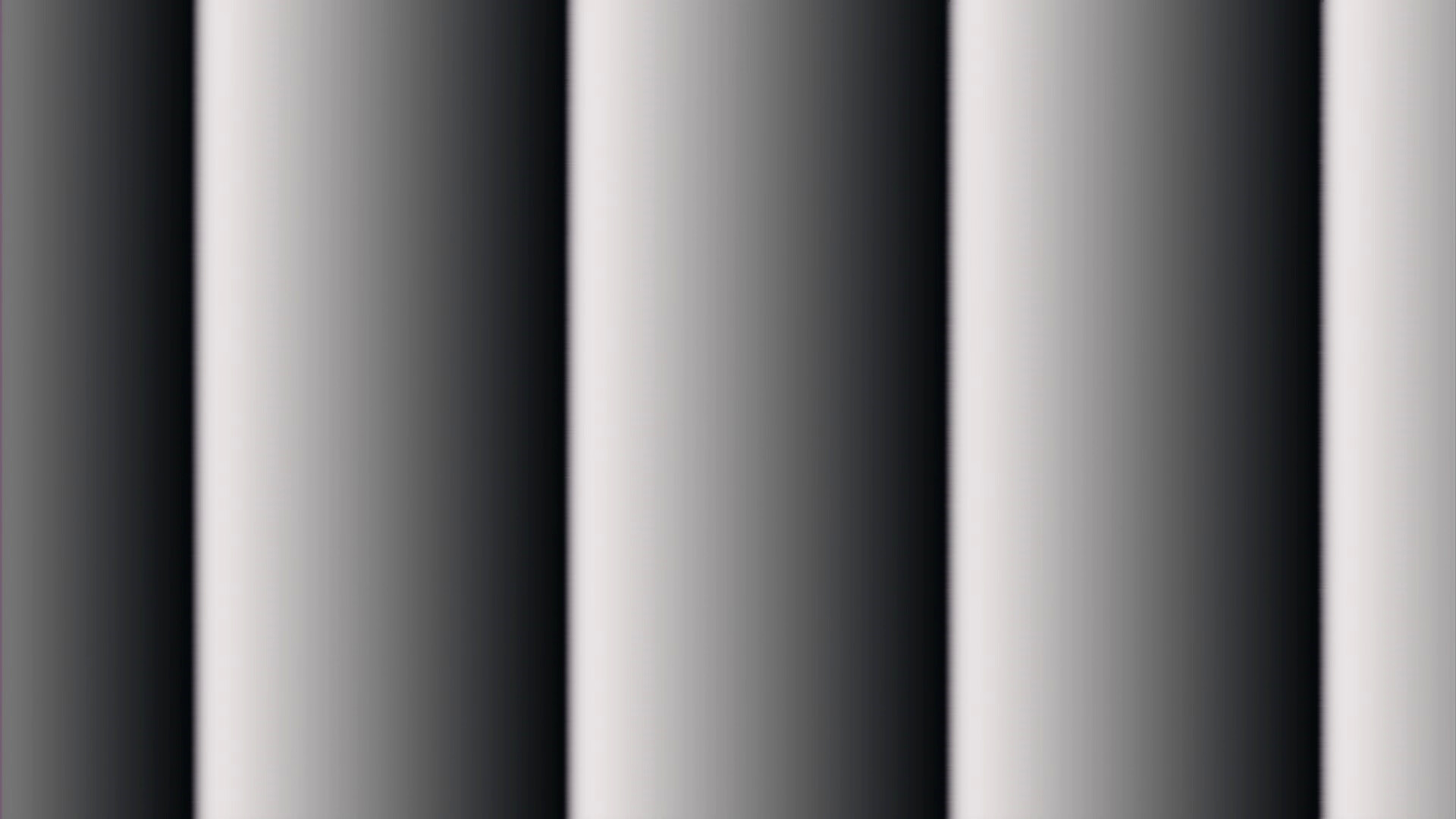
Here’s a video showing 1) DWO3 #1 V-sync, DWO3 #2 H-sync, VU009 H-sync. This is a better video than previous posts, with less compression.
Throughout the process, in H-sync mode (vertical bars), the noise is worse on the right side of the screen. In V-sync mode (horizontal bars), DWO3 shows noticeable jitter. I didn’t capture VU009 in V-sync mode, but it didn’t show any jitter.
Overall, the noise is variable from day to day. I’m wondering what the X factor is. Temperature? Spirits of grief and mischief? EM interference? Should I move the Wi-fi router farther away? It’s not in the rack, but only a few feet away.
The current status quo is probably within spec, and suitable to the artistic practice of some, but I would like to bring the noise down as low as possible. Certainly the DWO3’s should look as good as the VU009’s, if not better.
Thanks
#32 — brownshoesonly · 2023-01-30
in the video I only see the hard edge of your v-sync waveform flickering slightly. i dont see the frequency showing any jitter
V sync waveforms with hard edges will always show slight tearing. as the "wraparound’ of the oscillation will not automatically line up with each line start. this is something that is ultimately very hard to perceive with scrolling. but apparent in sync. similar to @wiatrob 's attention to the diver edge statement above.
#33 — creatorlars · 2023-01-30
dryodryo wrote:
The current status quo is probably within spec, and suitable to the artistic practice of some, but I would like to bring the noise down as low as possible. Certainly the DWO3’s should look as good as the VU009’s, if not better.
DWO3 is likely a little noisier for 3 reasons: the FM response bandwidth is higher, it uses a linear-to-exponential current source for frequency modulation (V/Octave scaling rather than V/Hz scaling), it is a triangle core oscillator with a sawtooth shaping circuit, instead of a sawtooth core oscillator. All 3 of these factors are a recipe for adding more noise to frequency stability, and part of why designing an analog triangle VCO core for video is such a challenge. Where the triangle core shines is with it’s ability to create multiple phase accurate output waveshapes without a waveform discontinuity caused by the sawtooth core’s hard edge (which is always going to have its own time constant/interval.)
NOTE: I could be making assumptions on the VU0009’s circuit architecture, which I haven’t seen. I’m just commenting based on what seems likely.
So I think it is much more to do with the architecture of the oscillator core (sawtooth vs triangle, expo vs linear, FM bandwidth, etc) where you are seeing a difference. In the LZX designs, we use ramps when we want a precision spatial reference, and VCOs are for modulation and FM textures. So we’re going to lean into the differences between the two approaches when designing the modules. In other words, the VCO focuses on what the ramps can’t do, and the ramps focus on what the VCO can’t do.
The vertical jitter you’re seeing is, as Nick described, because the hard edge of the waveform is hitting the center of the scanline. That’s another artifact of how video synthesis with oscillators reveals the nature of the video signal itself. With the triangle and sine outputs, you won’t see the same artifact. If you need a frozen vertical bars, key out a ramp based shape, or use an hsync clock divider based approach.
It looks like you resolved the noise issue that explained the differences in performance between the VCOs, is that right? That was my main concern.
As far as what you should do with this stuff, make some art and don’t be afraid to finger paint! You might read up on all the pigments and fluidity of some new paint series in advance… but you still need to spend many hours getting used to how the pigments mix with each other and how it flows on the brush, and what painting techniques work best with it, before everything is put into context. Watch the demo videos on the modules or wait for a demo before purchasing, if you’re unsure if the results are what you’re after. There’s nothing we’re seeing in this thread that isn’t also in Johnny’s overview video, or previous LZX oscillator demos.
I know, it’s not your first instinct to explore before analyzing – it’s not really for me either. I was the kid who read the full software manual before installing the computer game, and spent more time in the level editor than actually playing the game. But that’s part of what I love about analog so much – there’s a sparkle of chaos in every signal. You’re not defining the outputs, you are driving them.
#34 — syntonie · 2023-01-31
As for a previous comment about VU002 being apparently less noisy than Stairs, I think it also comes from the fact that bandwidth is probably not as good on VU009 than DWO3, as the hard edge on VU009 isn’t that hard, so this area is a little blurry, which may hide the noise. Someone once said “with great bandwidth comes great responsibility” (or maybe it was power

), what I mean is that reduced bandwidth will help in hiding high frequency noise/ringing at the cost of a blurrier output, which I guess is one of the reasons behind the efforts put into the Gen3 power solution: reducing power induced noise as much as possible as HD will reveal what wasn’t always visible in SD.
creatorlars wrote:
NOTE: I could be making assumptions on the VU0009’s circuit architecture, which I haven’t seen. I’m just commenting based on what seems likely.
It is PLL (CD4046) based, as it is derived from Castle Clock Oscillator and T. Henry X-4046.
creatorlars wrote:
Where the triangle core shines is with it’s ability to create multiple phase accurate output waveshapes without a waveform discontinuity caused by the sawtooth core’s hard edge (which is always going to have its own time constant/interval.)
Was wondering why the sawtooth output on DWO3 was twice the frequency of other waveforms, though looking at triangle to sawtooth waveshaping techniques, inverting the triangle using the square yields a clean sawtooth waveform, at twice the frequency of the initial waveforms. Then the square can be summed again with the resulting sawtooth to get the initial frequency, though it would ask for precise trimming to avoid discontinuity, and even then, there would still be a small glitch, which I guess would be particularly visible when using it to FM a H synced VCO.
On the other hand, full wave rectifying a sawtooth does produce a triangle, but once again, there is a glitch at the top/bottom of the triangle, depending on how “hard” the edge of the sawtooth is, but even with a really fast edge, it would still be visible.
So triangle core VCO definitely makes more sense for video oscillators. It’s fun cause those glitches are not much of an issue in audio, as it will only produce a bit more harmonics, which may or may not be heard, however, even a tiny glitch in a waveform used for video will be visible.
dryodryo wrote:
Rebuilt the rack, re-routed sync. Previously the chain was ESG3 → FKG3 → DSG3 → VU009 → VU009 → VU009 → DWO3 → DWO3. The new chain is ESG3 → DWO3 → DWO3 → DSG3 → FKG3 → VU009 → VU009 → VU009 → 75 ohm BNC terminator. Results nearly as good as the stripped down configuration, still noisy to my eyes.
Since VU009 uses a passive sync thru configuration, I think it is better to place them at the end of the chain as you did, so it doesn’t effect all the other modules which have buffered sync I/O.
#35 — scuto · 2023-01-31
All I can think of after reading these recent posts is the classic eurorack trope of “get both”! (Edit: that I personally want both!) Having both tri and saw core oscs in an audio eurorack case is useful for their respective strengths, and it appears to be true for video as well. Though of course the core is only one factor to an osc’s character, the nuances are fun to explore.
#36 — creatorlars · 2023-01-31
syntonie wrote:
Was wondering why the sawtooth output on DWO3 was twice the frequency of other waveforms, though looking at triangle to sawtooth waveshaping techniques, inverting the triangle using the square yields a clean sawtooth waveform, at twice the frequency of the initial waveforms. Then the square can be summed again with the resulting sawtooth to get the initial frequency, though it would ask for precise trimming to avoid discontinuity, and even then, there would still be a small glitch, which I guess would be particularly visible when using it to FM a H synced VCO.
Yes, that’s right. Our triangle core uses a comparator with complementary outputs to drive complementary inputs on the OTA. So it forces the square wave out to be in phase with the triangle out perfectly, regardless of frequency. Since we have Triangle & Square in phase, we can use the square wave to invert half of the triangle to create a sawtooth wave shape without any waveform discontinuities.
In the original VWG (Video Waveform Generator) module, we doubled the triangle frequency using a rectifier based approach after sawtooth shaping, so that the triangle and sawtooth would come out of the front panel at the same frequency. After thinking about it since, I like having the base triangle frequency and 2x saw instead. If you think about the waveshapes more visually, sawtooth is like a linear sequence, and triangle is like a “ping pong” sequence, where the direction reverses at Clock divided by 2. So I didn’t want to lose the ability of thinking of it this way – it makes a big difference when you are combining patterns, that half of the triangle = all of the sawtooth.
For Prismatic Ray, we dropped the sawtooth output entirely, so for DWO3 I wanted to bring it back. The sawtooth waveshaper from a triangle core is not the same as a sawtooth core, though – that is to say (for anyone reading), that VU002 should have a place in the rig beside DWO3, even though both have sawtooth output – as are different types of cores with different characters.
So triangle core VCO definitely makes more sense for video oscillators. It’s fun cause those glitches are not much of an issue in audio, as it will only produce a bit more harmonics, which may or may not be heard, however, even a tiny glitch in a waveform used for video will be visible.
It entirely depends on the module’s identity, in our world. We are not needing to quantize all our frequencies to musical scales, for example. It is HV phase lock and frequency ranges up to 1MHz+ that are the only core requirements for a video oscillator. Everything related to waveshape outputs and resting noise floor are where the character is, or “what it looks like.” So for DWO3, the module’s identity tries to align very much with an idea of “basic dual oscillator for a video synth”, and in this case we wanted all basic waveshapes present (sine, square, tri, saw), and we wanted to focus performance on a very wide FM range and on the waveshape accuracy and waveshape output phase accuracy. We wanted a module that was cost effective and practical in any system. We also wanted to emphasize what was different from this module compared to DSG3 (ramps based shape generator.) If using it as a dual LFO, you would not think “ugh I am wasting this module’s capabilities”, was another priority.
So I think, VU002 has a distinct identity as sawtooth core VCO, and there are plenty of reasons to have that in a rig also. Bajascillator is another example of a different VCO core from DWO3 as well, and is the only one of these providing multiple outputs at different phases. If you want a wide palette of oscillator textures, all of them is a good answer.
#37 — dryodryo · 2023-01-31
Thank you all for your expert responses. I don’t pretend to understand all of it, but I try.
Bottom line is, I was able to get both DWO3’s to the same level of performance. Still hoping to eke that little bit of quality out of it. The stripped down configuration was slightly less noisy than the current status quo.
I had considered that the “jitter” I was seeing in DWO3 V-sync mode, but not in VU009, was due to a sharper rising edge on the DWO3. Thanks for that confirmation.
Had also considered the fact that DWO3 is a way wider band oscillator than VU009. It’s trying to do so much more. Maybe that’s not really at issue. Didn’t know about the other factors, FM bandwidth, exponential scaling, triangle core. That’s all great to know.
Regarding finger painting… another bad analogy.
But I get it. Here’s another crap analogy: cooking. My approach is a little bit of the precision baker and a little bit of the “f*** the recipe and use your senses”.I’ve experienced so much pent-up desire for this stuff. Simply could not wait for demo videos to come out, need to be in line for that first production run. Otherwise, who knows? There may not be any other opportunity. The uncertainty of market availability is a real factor. One thing that’s a lot less uncertain is the enduring, and even increasing, value of these instruments. So again, even if something doesn’t meet my needs, it’s no big deal because I can easily find someone who will put it to good use.
On a “problem” scale of one to ten, I’d rate this as a two or three. Once I got the VU009’s at the end of the chain, things got better. But I was a bit surprised by that, because of course in the pro video world, a loopthrough, unterminated signal doesn’t cause any issues unless the daisy chain is super long. Buffered outputs are great to have, but usually not necessary in a video studio.
Thanks again
#38 — creatorlars · 2023-02-01
dryodryo wrote:
But I was a bit surprised by that, because of course in the pro video world, a loopthrough, unterminated signal doesn’t cause any issues unless the daisy chain is super long. Buffered outputs are great to have, but usually not necessary in a video studio.
When thinking about sync connections, it’s probably best to consider your whole modular synth as the “device”, more like the components inside a self built PC, than each module having external genlock in/out like a broadcast studio rack. In other words, the sync I/O is meant for syncing modules, adjacent to each other, with short cables. I’m not sure why going thru the VU009’s loopthru caused signal integrity issues (or if that was the root issue), but I’m glad you got it working well now.
I think the cooking example is a great analogy. For example, there will always be some random factor of chaos when someone cooks food – even if you measured every ingredient on a gram scale, timed every operation with a stopwatch, there would still be countless little variations that you learn to navigate through experience. And if you’re wanting to try a new ingredient you’re unfamiliar with, you would likely experiment with it in a couple different recipes before saying whether you like cooking with it or not. Or maybe it’s just the wrong ingredient, and not for you. I don’t know! I love analogies though.
#39 — creatorlars · 2023-02-01
I guess in the end my point is less “embrace the chaos! turn your brain off and just play!” and more “travelling the wasteland rim requires an experienced driver who’s used to navigating rough terrain.” You aren’t going to have the same perspective if you are just doing test drives on the roadway – you need to get those new wheels out in the badlands for a few weeks, to see what they do best.
#40 — thenoiseoftime · 2023-02-01
Honestly I have absolutely no idea what I’m doing when I patch videosynthesis. These discussions about how accurate things tend to pop up every now and then. The most inspiring posts for me were patch diagrams so I have a starting point to explore. I would probably never find out if a module would have an error and I honestly don’t care because I feel super overwhelmed with what I already have achieved with two rows of gen 3 and Syntonie modules.
Beside from that comparing analog with digital, feedback and noise is way much more fun and beautiful to explore. Same goes for Audio Modular…
#41 — nerdware · 2023-02-01
I treat it all like circuit bending. Internal feedback really makes things go wild, so I’m alrways eager to try that with each new Gen3 module. This thread makes HD VCO feedback sound most promising. Thanks.
#42 — Pagoda · 2023-02-01
1000% how I am taking this ride in video and audio patching!
#44 — dryodryo · 2023-02-01
thenoiseoftime wrote:
The most inspiring posts for me were patch diagrams so I have a starting point to explore
Veering off topic here, but…
Absolutely. I intend to continue my contributions to the community through video tutorials. Patch diagrams need to be part of that. I haven’t yet found a diagram software that does what I want quickly and easily. Not interested in command line, it has to be GUI so I don’t invest time learning a new language. Output needs to be custom styled and formatted for display on a video screen. Things like positioning and line width are super important. I could do it all in Photoshop or Illustrator, but that is very slow because there is no semantic meaning involved. I.e. if I move a box, the connecting wires are not going to stay connected. Does anyone have any suggestions for an application like this for Windows?
#46 — dryodryo · 2023-02-02
Thanks, I am looking for Windows software that I can run locally. I’m allergic to browser-based online tools. Because I need to own my data.
I’ve been using AVSnap but it has a fatal flaw where it’s not rendering the nodes to PDF, so no way to export a graphic and preserve the content.
#48 — dryodryo · 2023-02-02
Cool, thanks! I will give it a try.
#49 — Rik_bS · 2023-02-03
Lucidcharts and Visio come to mind
#50 — wednesdayayay · 2023-02-03

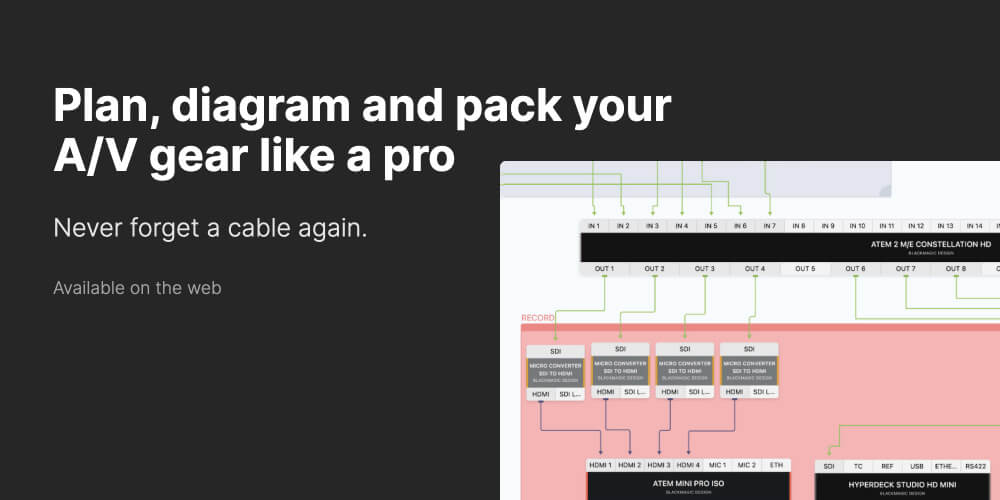
https://h2rgear.comPlan, diagram and pack for your next gig.
Link: H2R Gear
this is one that came out recently that I will try if I ever find graphviz to not be the ticket.
having a working palette is the most important piece that I need. It just doesn’t work for me if I have to remake the memory palace each time I want to use it in a patch.
but I’m also not going to pay a subscription fee for something like this.
I added the graphviz workflow to my stream deck yesterday so now I’ve got 50 defined modules, a patch initialization template, and some generic IO patching all at my finger tips.
I should be able to patch along with the next LZX 3 patches video in real time with just a bit of cleanup and organization at the end!
I’ve documented just shy of 100 patches at this point for the community and would love to find something that can actually make graphviz unnecessary.
In my opinion a generic flowchart app will not do that for anything more precise than super broad scope DIVER > keychain > contour > FKG > ESG type patch diagrams. If this isn’t the case I’d love to see some examples!
sorry for the hijack
when I’ve got the rest of the generic IO in place and have done a couple patches up with the new stream deck setup I’ll release the full profile on here in an accompanying thread.
#51 — dryodryo · 2023-02-03
wednesdayayay wrote:
I’ve documented just shy of 100 patches at this point for the community > and would love to find something that can actually make graphviz unnecessary.
WHOAH. That is incredible. I had no idea that existed. What an amazing resource. How can you promote this so everyone knows about it?
#52 — wednesdayayay · 2023-02-03
I’ve made posts about it on here and the Facebook and the discord. I mostly have been bringing it up on the discord lately as I’ve added the more recent 3 patches videos.
LZX Patch book (WIP) here is that original post
#53 — dryodryo · 2023-02-03
I’m on the discord, but never, ever check it. Too many platforms. Also the UX is horrible. Also not archived, so what happens on the discord stays on the discord, until it’s purged and / or swept away by the next wave of posts.
This is the only platform that’s even remotely archival. Even that is dodgy. As I recall, the previous iteration of the LZX website went into a hacker-induced memory hole. Same thing happened to me, it’s a sad state of affairs.
Honestly, this stuff needs to be documented in PRINT. You can laugh, but it’s the only non-volatile format. Plus, a book can be held in one hand while patching / twiddling with the other. Laptops, tablets and phones are terrible at this. I bet if you self-published this you would at least make back the production costs.
At the very least, a resource like this should be prominently featured here and on the FB channel. Obviously needs to be identified as user-created, unofficial content. But deserves to be put in the spotlight. My $0.02