LZX Gen3 Modular Releases 2021-2022
Category: Forum · Tags: eurorack, gen3 · Posts: 393
#1 — creatorlars · 2021-08-27
Hello everyone!
Here is a preview of the six modules we’ve had in development this year. Two of these (FKG-3 and SMX-3) are in production now. These six designs extend directly from our Gen3 design efforts; which are a complete redesign of the system’s core circuitry from the ground up.
This design era includes Chromagnon, and the release of Topogram from Expedition series was our transitional module into new design practices using discrete OTA cores, 6-layer PCBs, ultra-low noise integrated power supplies, and direct 9-18VDC input power (from EuroRack or any other DC power supply.)
Developing these modules this year was only possible through the dedication and growing skillset of my design partner Jonah Lange – the rest of the R&D team (myself and Ed) have been thoroughly tied up in firmware development for TBC2 and Chromagnon – so it’s a testament to Jonah’s ability to tackle a long string of PCB layout projects independently that we’ve had bandwidth to make these modules a reality.
While we would prefer to save all stock of these modules until Chromagnon’s shipment date, we may be in the cashflow position to need to offer some up for sale earlier, so we can keep things running. Maybe you have an opinion about this, and if so I’d like to know it.
So with that out of the way, here they are:
- ESG-3 Video Encoder & Sync Generator
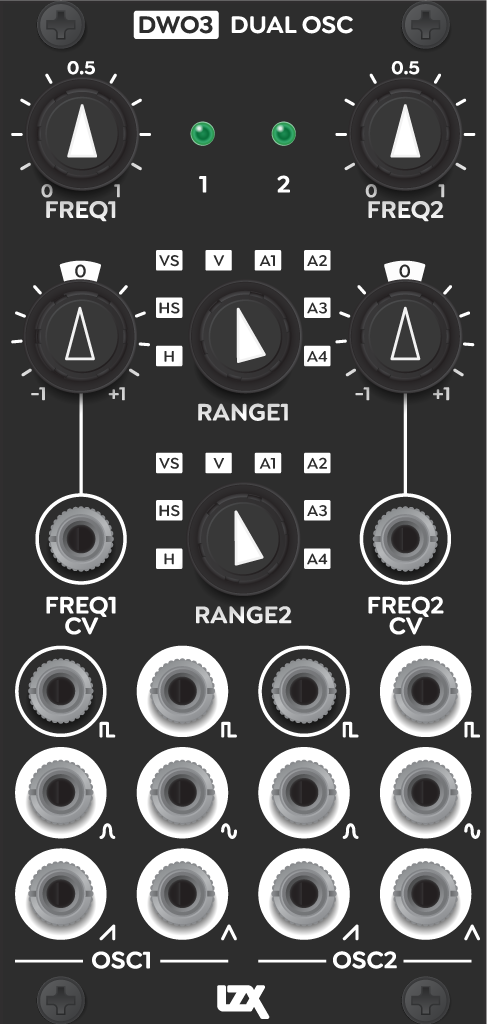
- DWO-3 Dual Wideband Oscillator
- FKG-3 Fader & Key Generator
- SMX-3 Summing Matrix
- DSG-3 Dual Shape Generator
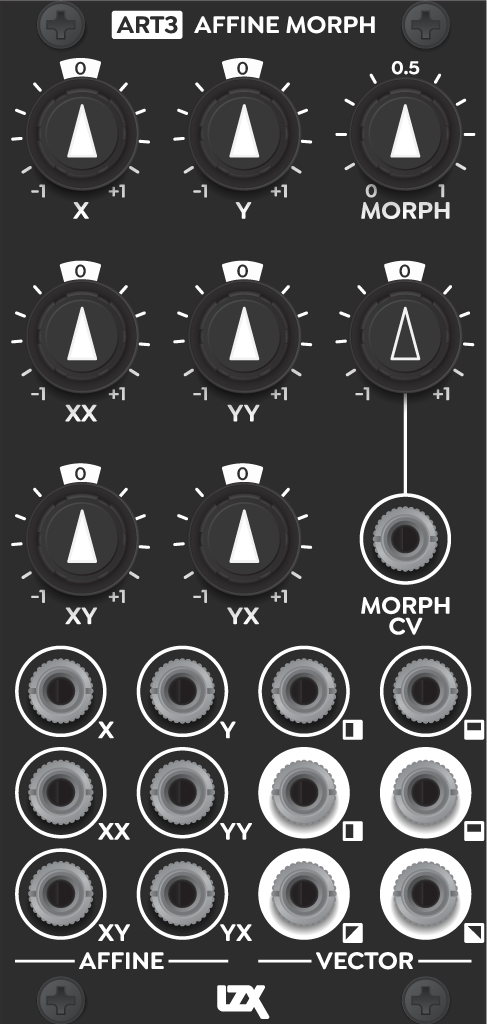
- ART-3 Affine Ramp Transform
All modules are 12HP and priced at $399 each.
DSG-3 and ART-3 both feature a new analog HV ramps generator core which auto calibrates to the incoming video standard. The DWO-3 has some automatic range switching when genlocked to HD vs SD standards. So these are all ready to go for your analogue HD workflows!
NOTE: These frontpanel designs were revised after reviewing user suggestions in this thread. The titles to each module previously only included the model number with no accompanying functional description. This version has additional descriptors added to the right of the model number.
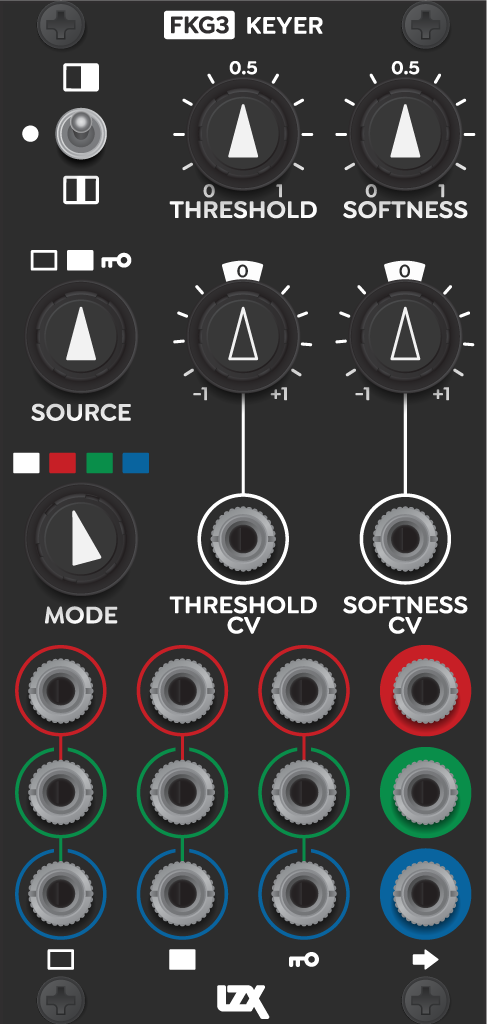
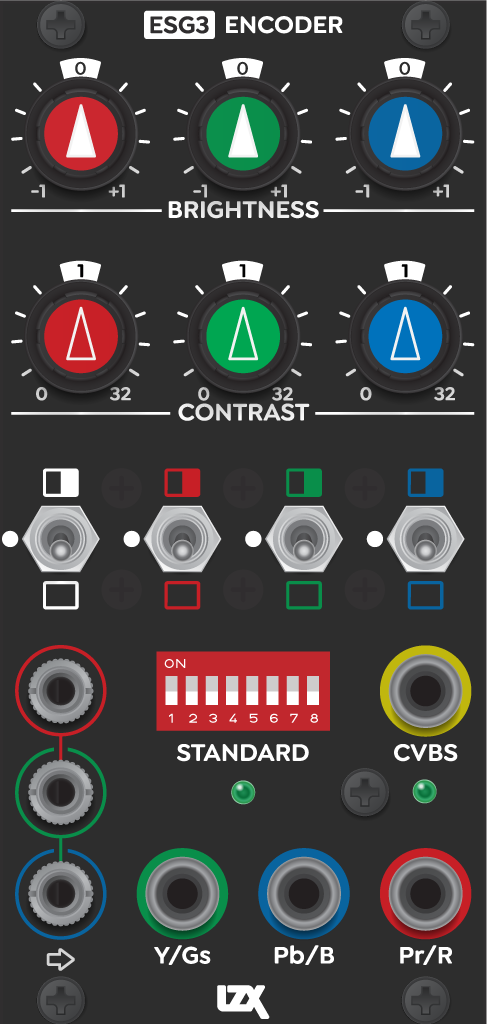
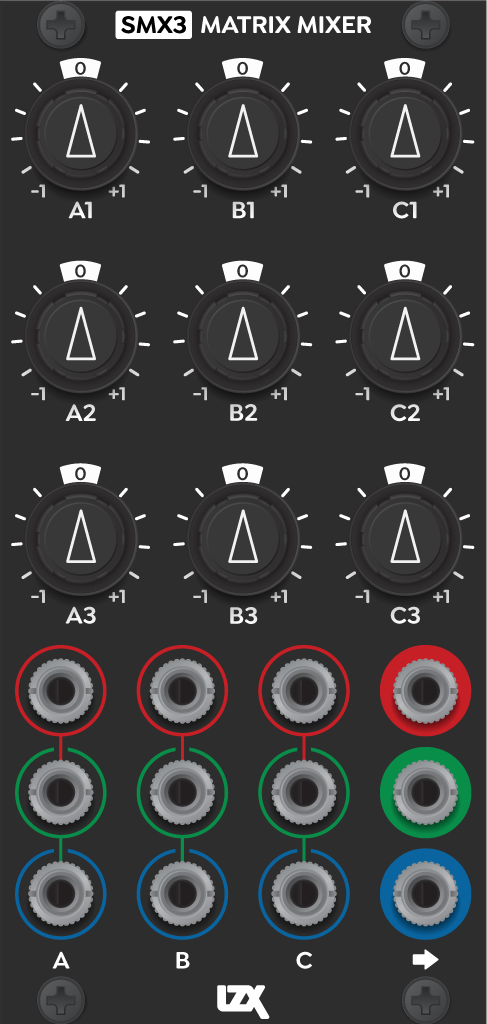
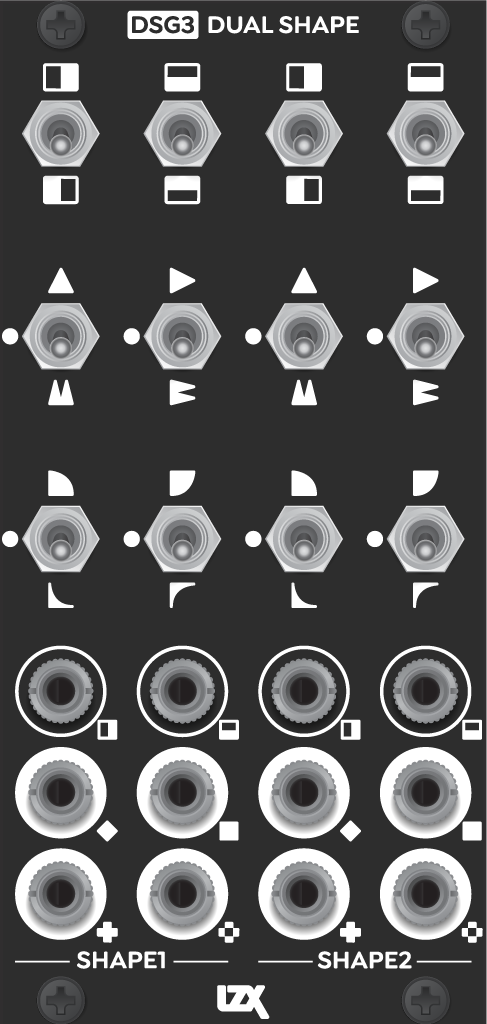
Please keep discussion in this thread if possible, so that I do not overwhelm our sales/support team with answers to questions about features or availability that they may not have answers for yet.
Thanks Team Video. This has been a tedious year but y’all keep us going!
Lars
#2 — joem · 2021-08-27
On the ART-3 you have two YY knobs but I think maybe the second one is supposed to be YX, if they’re supposed to match the jacks below.
#3 — joem · 2021-08-27
I love and want them all, btw! Really excited about these!
#4 — creatorlars · 2021-08-27
Thanks! Looks like I grabbed the wrong PNG in my export folder. Fixed now.
#5 — peloazul · 2021-08-27
My body/vessel is ready! Looking great there!
#6 — drumasaurusrex · 2021-08-27
This is really exciting!
Cheers to you all and your endless strive to innovate and adapt and provide.
One love.
#7 — Michaelstein · 2021-08-27
Available for pre order?
#8 — DarlingLucifer · 2021-08-27
I would buy a esg today if it gives me a way to get video into my mods. Sold my cortex and vidiot to fund my chromag and tbc2 preorders so really need a video in option.
#9 — VitreousSpaghetti · 2021-08-27
Fkg-3 it s what I need for my setup as vj with 2 mp, are you guys read my mind whyle I dream about module?
#10 — creatorlars · 2021-08-27
We’re not taking any sales yet – probably on the other side of a Chromagnon demo video push, in September. Right now I just want to give a preview of what is coming, as it has been a dry spell for our modular community!
#11 — creatorlars · 2021-08-27
Thanks for sharing that thought – it helps us gauge what to do next. We’re getting close on Chromagnon/TBC2 as well.
#12 — VitreousSpaghetti · 2021-08-27
If I understand fkg, it is like a matrix keyer between two sources + the key source (if for example I wanted to keyer source 1 with itself on source 2, I have to insert source 1 in the keyer as well).
but is there the possibility to make an alpha or luma matte too (like the visual cortex key input)?
#13 — creatorlars · 2021-08-27
FKG-3 is at its core fairly simple.
Think of the input columns as singular inputs. You can patch in either an RGB color image or a monochrome source (a ramp, a shape, etc) via the top jack. So there are three input images: Foreground, Background, and Key.
The Source (for the keying between FG and BG) can be selected from either the FG, BG, or the Key channel. So for example, using this as a wipe generator, you can patch your shape into the “Key” and use that to wipe between two separate RGB sources (like your Memory Palaces.)
The “Mode” has four options: Luma Key (extracts luma channel from selected source), or Chroma Key Red/Green/Blue. The chroma keys are color channel exclusion based, on analogue MIN/MAX circuits. So for example, the Chroma Key Green is based on a “Green And Not Blue And Not Red” analogue minimum value. If you are patching a monochrome source to the input of the “Key” channel, then the luma key behaves as an “Alpha Key” or just direct external key input.
You can also repatch and misuse this in any way you can think of, scrambling up color channels, sharing source components across inputs, feeding individual color channels back to CV inputs, etc, or using it as a general purpose “triple fader w/ common drive control” function in any other part of your patch.
FKG-3 is really a single channel of an infinite-layer priority mixer / colorizer as well, in multiples, due to the Windowing mode.
#15 — sean · 2021-08-27
Doesn’t really affect me, but prioritizing the ESG-3 in the timeline would seem to make sense, since it seems there are a fair number of people who cannot start their system (or have started a system but cannot use it yet!) for lack of an encoder module.
#16 — creatorlars · 2021-08-27
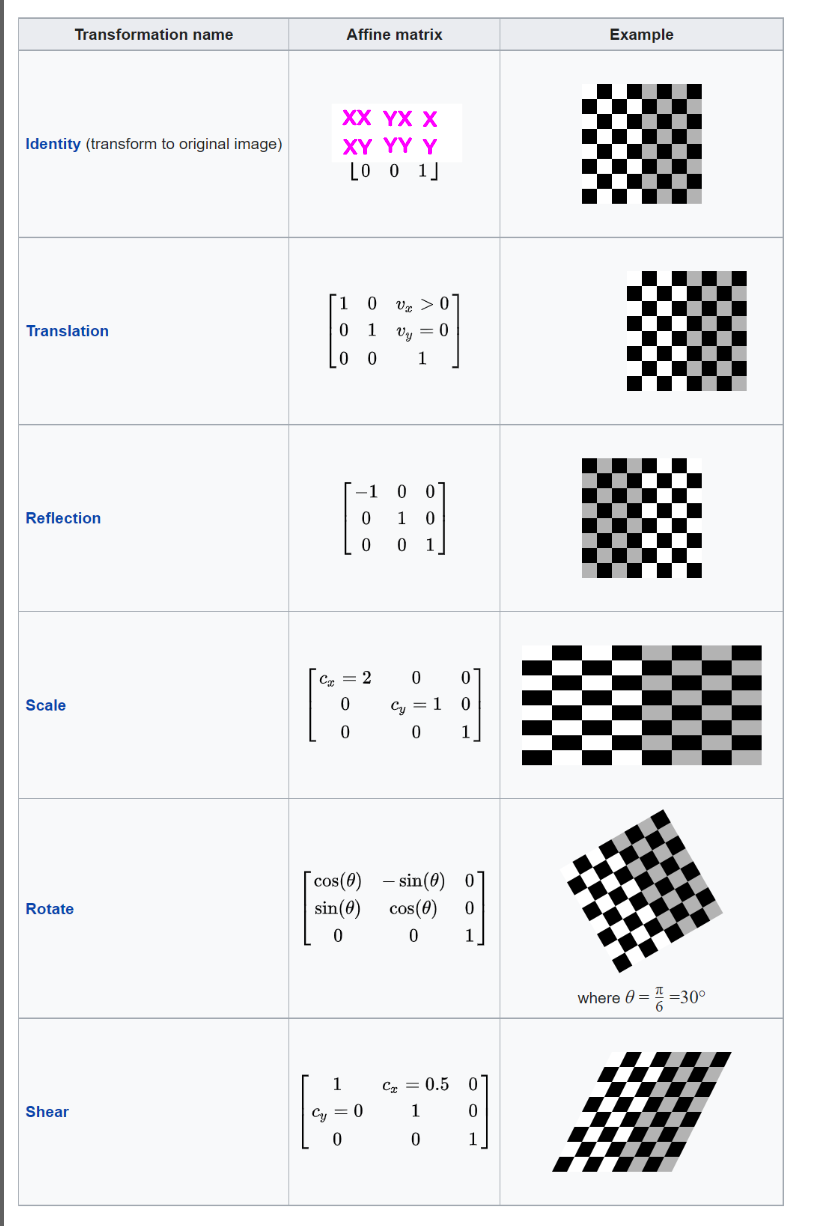
Here is a doctored screenshot from Wikipedia’s page on Affine transformations that shows how the ART-3 parameters work. This is an analogue implementation of what is typically a graphics function. It is the maths behind much of Chromagnon’s transformations and it’s predecessors (Navigator, Shapechanger) presented as a singular, low HP transform (the Transform CV works like a Dry to Wet control for the entire transformation.)
#17 — creatorlars · 2021-08-27
Definitely, ESG-3 is most important. If other modules are available before ESG-3, it would only be because ESG-3 is not ready yet. Generally speaking, these 6 are a core set that are part of the same production/release batch, whether or not there is any intermittent staggering. We are planning 18-26 modules in total for our core modular system – this is the first set, and the second set would be Q2/Q3 2022.
#18 — everyoneismyfriend · 2021-08-27
I’ve been wishing I had another sync source for a while now. Will definitely pick up the ESG-3. Will there be a DIY option for these?
#19 — creatorlars · 2021-08-27
We will be offering a DIY option with pre-assembled SMT sometime after the initial production run. There is a new OEM/DIY catalog coming, with some of the sub assemblies too.
All six of these are triple PCB stacks with low profile SMT headers on the rear – populating all that SMT by hand would be quite a challenge. But we have said that bare PCBs could be made available for advanced DIYers with SMT experience.
#20 — Rik_bS · 2021-08-27
This is some fkg exciting news

#21 — wednesdayayay · 2021-08-27
we have tbc2/chromagnon pre ordered and wouldn’t mind pre orders for any of these modules going up before tbc2/chromagnon are shipped.
It is exciting that this line is able to be developed while TBC2/chromagnon are moving forward.
There is a lot to like here but the ESG-3 is particularly striking
Is the dip switch on the front dealing with resolution/sync?
the shape gen looks like it will end up being a good partner for a doorway/Escher sketch/memory palace painting workflow.
#22 — wednesdayayay · 2021-08-27
so if you used a Topogram with a LFO as the input could you use the outputs to drive the transform CV for several ART-3s to make a multipoint transformation? Where each step would be set individually on an ART-3.
#23 — creatorlars · 2021-08-27
Is the dip switch on the front dealing with resolution/sync?
Yes, it is the same as one of the two DIP switches on the rear of Chromagnon, it selects the default video standard when the sync generator is free running. When sync is attached in the rear, ESG-3 will auto-detect and switch to the format of the rear sync input. Anything with a video IO on it in Gen3 will also be a sync generator module. Chromagnon and TBC2 work the same way.
So in other words, you only need to worry about the DIP switch setting on whichever module is the original sync source. Everything sync’ed downstream will auto-detect.
so if you used a Topogram with a LFO as the input could you use the outputs to drive the transform CV for several ART-3s to make a multipoint transformation? Where each step would be set individually on an ART-3.
Yes, definitely! Think of the ART-3 as a chainable vector transform bus, the same way that the FKG-3 can be chained as a multi-layer priority keyer. There will be other vector (polar to cartesian rotator, etc) and RGB workflow modules (porter-duff compositor), but these first two are meant to be universally powerful and flexible. That’s the common thread with this first set, is they establish a foundation of core, universal functions in a very high functional density per HP: oscillators, ramps, shapes, keyer, encoder, mixer.
So in designing a system with these modules, you can pursue concepts previously impossible – like having 14 VCOs or a 7-layer priority keyer in 84HP, for example.
#24 — VanTa · 2021-08-27
Particularly excited about esg and art/dsg. Diver slowly became a central piece in my Patching, can’t wait to see it in combination with art.
And finally being be able to ditch my cadet encoder in favor of a more complex solution like esg-3

#25 — creatorlars · 2021-08-27
VanTa wrote:
sg and art/dsg. Diver slowly became a central piece in my Patching, can’t wait to see it in combination with art.>>>> And finally being be able t
Diver, DSG-3 and ART-3 will indeed all work together really nicely! As they will with Chromagnon and Navigator/Shapechanger.
DSG-3 is effectively a “Quad Programmable Arch”… You feed it any two waveforms or ramps, and get a full range of programmable shapes/patterns out. If you don’t feed it anything, it uses its own ramps, so you can use it with the inputs unpatched as well (ART-3 works the same way.) It represents a cohesive output function module that I feel like was missing (or sparsely distributed) in Expedition series.
#26 — drumasaurusrex · 2021-08-27
Amazing. Yes, plz! What magnitudes of shear can this do?
#27 — creatorlars · 2021-08-27
The shear and scale functions (X to X, Y to Y, X to Y, Y to X) are CV inputs for 4x four quadrant multipliers with a 2Vpp input range. So they do a shear scale of up to 2x if you’re summing in some external modulation. If you want really high gain shearing, that might be a special module, an affine keyer or something.
#28 — sean · 2021-08-27
A quibble:
While I am in principal in favor of a naming schema based on description of functionality, not sure I am much of a fan of then abbreviating said description. Especially when there is an “ESG” and a “DSG,” seems like it might always take a bit of mental unpacking to remember which module does what.
I assume this naming convention was at least somewhat based on limited panel real estate for labeling?
#29 — meudiademorte · 2021-08-27
Puuh, looking forward and afraid my wallet will get hit hard!
Will there be something like a index which of the old modules will work in HD resolution?
Or is hd only important for ramps, osci and encoder who need sync to have to be “HD ready”? So most old modules will work?
Are there news on the diver firmwareupdate?
#30 — MrDys · 2021-08-27
With how I patch, I’d preorder a DSG-3 right now. Ramps and Arch is a primary signal workflow for me.
I feel like I need to say something about the panel designs and naming: they’re maybe too far on the end of utilitarian. I know for some of these modules it’s a lot to convey in 12HP, but it’s lacking an approachability and, well, whimsy that I’ve seen in previous panel designs/module names. If you’re aiming for a more already-established video user, that’s fine (I sure can figure out what knob I need to turn to get what I want), but I’m not sure a new user (or a new-to-modular video user) would look at these and go “ah yes, clearly I need a DWO-3 in my setup”. Demo videos will help, I’m sure, but are all 26 of these going to get their own video manual?
#31 — Rik_bS · 2021-08-27
Regarding the naming, I’m slightly disappointed they’re not as creative as Expedition range - where the module names fit in with the whole theme.
That said, wary I’m paraphrasing a very crude idiom, you don’t look at the module name when you’re plugging in jacks.
Shame the wooly mammoth and friends didn’t make it to the panel art

Edit: MrDys posted at the same time - whimsy is a great word to describe it!
#32 — Apfelmann · 2021-08-27
been wanting something ESG-3 to free the vidiot and create more outputs of my system to be sent so mixers and stuff. and i hope diver will finally get the much needed firmware update
#33 — prakodr · 2021-08-27
Can I set up an account where my paycheck directly deposits into LZX bank?
#34 — dubpixel · 2021-08-27
wow wow wow! Solves many things and opens new pathways
What a wonderful surprise to wake up to today.I would certainly be interested in preordering any or all. Esg especially… ART, FKG… sheesh all of them especially hahahaOnward & upward!
#35 — Agawell · 2021-08-27
haha - now I need to get a job!
I can see at least 4 of these in my future - dwo-fkg-dsg-art - probably, we’ll see… I think I’m going to have to hold out until at least next year when hopefully the pre-populated smd pcbs will be available…
is there any information regarding power draw?
#36 — drumasaurusrex · 2021-08-27
I just love the whole patchable-deformation-matrix of this.
#37 — creatorlars · 2021-08-27
The modules have 3 letter acronyms as a reflection of our brand name itself: LZX. They are ID codes rather than names.
We had debated various names, but they were all shot down for being either too wordy (Video Fader & Luma / Chroma Key Generator) or not specific enough (Encoder, Keyer, etc) or weird in a bad/obfuscating way. Like I wanted to name the FKG-3 “Claviger”, but no one knows what that means. So in our team and focus group the consensus was a more minimal approach.
We’re going to focus documentation and promotion on small systems rather than the individual modules. So the sexy names will be for groups of modules in the documentation/videos rather than individual ones. It’s in the context of those named groups, like “Claviger Array” or “Op Art Menagerie” that the modules will be introduced and explained. We are planning to write a patch book rather than individual manuals this time, and videos will focus on the patches/systems. We’ll also offer bundled systems with the fun names.
I want to encourage people to see these modules as component pieces of something bigger – an arm, a leg, a kneecap – rather than a personality. They are building blocks. Together they form personalities – I don’t want to assign those personalities at the individual module level like we did with Expedition – I want the user to see them more as LEGO bricks they can build their own video instrument with, and then give that system their own name.
It’s good to know everyone’s having difficulty kind of differentiating the modules, though. Maybe there is something we can do to present it better. We’ve purchased a couple of the faceplates, but our supply chain is much more flexible there now. If anyone has second or additional opinions on this, I’d like to know. That’s part of why I’m making this post rather than staying quiet until launch day.
#38 — creatorlars · 2021-08-27
is there any information regarding power draw?
FKG-3 is 125mA on +12V, and I expect the others to vary between 100mA and 200mA.
They draw about the same or a little more than Expedition modules, on the +12V rail. There is no -12V draw at all, and they can all be powered via DC wall wart barrel (EuroRack power is optional on all of these.)
#39 — vhsdestroyer · 2021-08-27
So does this mean rotation is included as a function of this module? I was a little unclear on that. I’m also curious if y’all have any price point in mind for the DIY options?
#40 — cinema.av · 2021-08-27
Just under 84hp with room for growth, gonna make for the most pure synthesis package yet. Just gimmie that new filter and we’ll be on our way!
#41 — sean · 2021-08-27
Honestly, the first time I saw them, I didn’t think twice about the names. They made sense.
Only when coming back after more comments were in the thread and having to scroll up and down a bunch of times to remind myself which was which did I miss the somewhat arbitrary but more memorable names in the Expedition line.
#42 — creatorlars · 2021-08-27
So does this mean rotation is included as a function of this module? I was a little unclear on that.
You can program a rotation angle with this module, but to do spinning/angle based cycling you need an angle generator (Polar to Cartesian circuit or quadrature oscillator) that will be in a set #2 module. If you have something that generates sin/cos/-sin (like a quadrature oscillator such as DWO-3) you could patch up a spinning transform.
ART-3 is more for the stretch/warp/crush/squeeze/rotate-out-of-axis weird deformations AND the simple “I want this shape to be at this spot on the screen, and I want it to be this big” type transforms. It is the raw maths in one step. Good for sequenced morphs, etc. This module is part of a concept called “Marionette” I was working on for a while, in that it puts control over several parameters under a single transform, or “puppet string.”
The set #2 module is tentatively Linear & Rotary Motion Generator. It combines an affine transform with a polar-to-cartesian circuit and phase modulator to introduce continuous spinning and scrolling.
Also don’t forget, Chromagnon has a full rotator with two spinning Polar-To-Cartesian circuits inside!
#43 — emooh · 2021-08-27
The functional density, minimalist design, and commitment to the ‘deck building’ style format is greatly appreciated. Will TBC2 ship this year?
#44 — creatorlars · 2021-08-27
I’m also curious if y’all have any price point in mind for the DIY options?
We price everything based on costs. Since we moved to discrete circuits and similar stackups, most of that cost is in the form factor (which is why all of these modules cost the same.) So the DIY offerings will be the cost of the SMT assemblies, which is all of the SMT assembly and circuitry. I expect this to favor system builders with some DIY skills that end up with a 15%-35% discount on the overall system purchase, in return for doing the thruhole and final assembly/calibration themselves.
Thruhole options of these modules are possible, we’d just probably want to look at a different form factor for that. They are each triple PCB stacks packed with SMT right now. So that means variants that are much larger HP sizes, extremely deep edge card style modules, or a different approach.
DIY is very important to me, so it will be an ongoing conversation. For our sake, it is important that we are focused on “one way of doing this at LZX, the Gen3 way” right now and for the near future. It’s taken a ton of work to consolidate all the circuitry into a common approach, so we need to seal that in, before considering something else.
#45 — gzifcak · 2021-08-27
I like the new names, I personally prefer functionally descriptive names to quirky ones (though I don’t mind the quirky ones and they don’t get in the way once I know what the module does). I get the point about the abbreviations taking an extra mental step to translate. The best for me would be a basic functional name that doesn’t need to describe everything about it: Keyer, Ramp Transform, Wideband Osc, Encoder, etc are enough when the jack and knob labels tell the rest of the story. They’re also distinct enough to convey a personality, which the abbreviations don’t really do for me.
#46 — gzifcak · 2021-08-27
These all look great btw!
#47 — creatorlars · 2021-08-27
Will TBC2 ship this year?
Yes. We would have shipped in August already, but we’re investigating a potential issue that has required a new board rev to investigate, so that meant some waiting (so we hopped on Chromagnon). TBC2 and Chromagnon are both loitering right near the finish line. We have to nail this, both in firmware and hardware, so we’re being extra cautious. Hopefully our pending stock of TBC2 shipments will not require further hardware work and we’ll be able to ship shortly after finishing our testing and firmware. In the worst case scenario, it will drag out a couple more months, but still ship this year.
#49 — VanTa · 2021-08-27
I’m a big fan of the expedition series naming and design language.
The point of series3 being building blocks, I totally get it. And the acronym names enforce that idea.
Something simple like what some people already mentioned would make things clearer thigh, mostly for newcomers.
Out, mix, trans or transform, etc. These name also convey the idea of little Lego blocks IMHO.
The good thing about this community is how engaged we are. I know lzx is a private company and not a democracy for us to decide on names or release dates, but why not to take advantage of all the creative people here in the forum?
Maybe some good names show up, maybe not, lzx can use them or stick to their vision, which is of course more than fine.
#50 — vhsdestroyer · 2021-08-27
Are the “A” functions on DWO supposed to be summing functions similar to pendulum?
#51 — creatorlars · 2021-08-27
Are there news on the diver firmwareupdate?
I have started a new thread for this topic:
Let’s discuss issues and features with the current Diver firmware, and what you would like to see in a bugfix oriented firmware update soon. > On my own list of issues to investigate: >>> Sync robustness. I have had several reports of an intermittent “blip” that occurs in the waveform at longer, but random intervals (1-2 minutes apart). I can see and confirm this issue here as well. I have a few solutions to try. >>> Texture wrapping / scanline discontinuity. Improvement here may not be possible …>
#52 — creatorlars · 2021-08-27
vhsdestroyer wrote:
Are the “A” functions on DWO supposed to be summing functions similar to pendulum?
No, these are Animation (LFO) ranges. DWO-3 is intended to be a dual utility oscillator, it has two entirely separate and identical VCOs with ramp, tri, quadrature and clock outputs.
You can use ART-3 and DSG-3 as waveshaping and modulation expanders, or 2D mixers if you want a “complex VCO” type of workflow. By putting the core VCO and shapers on separate modules, the relationship between the two is part of the patch – which can be very powerful in the video synth context. So DWO-3 is a potential “engine” you can use to “drive” the other two synthesis focused modules.
DWO-3’s main sexy feature is that you get two full featured video oscillator cores in 12HP! And they are equally useful for patterns as well as motion, so this allows you to adjust the ratio of usage on a patch by patch basis. In other words, a patch could be animation heavy or texture heavy, and use the same modules to get to both places.
#53 — creatorlars · 2021-08-27
VanTa wrote:
The good thing about this community is how engaged we are. I know lzx is a private company and not a democracy for us to decide on names or release dates, but why not to take advantage of all the creative people here in the forum?>>>> Maybe some good names show up, maybe not, lzx can use them or stick to their vision, which is of course more than fine.
Oh definitely! We’ve had a focus group of users we’ve been iterating with, on this too. So it hasn’t been an isolated conversation. Names have been very hard, with this set, in general. I think the solution we have for now is that there are no names on the panel, just an ID. If we add a name, we can still keep the ID as a model number. I think it’s more the lack of a descriptive word for the module that’s making it difficult, and that is more of a product identity issue. So I’ll have to think on that a bit, and appreciate the feedback.
We also plan to be a lot more responsive about offering alternate panel options or user customization resources in general, with Gen3.
#54 — a_digital_index · 2021-08-27
These look great. Loving the Triple Video on the FKG-3 and that SMX looks to be a streamlined VBM update. It’s a RGB wonderland!
#55 — creatorlars · 2021-08-27
DesertMuseum wrote:
“ The best for me would be a basic functional name that doesn’t need to describe everything about it: Keyer, Ramp Transform, Wideband Osc, Encoder, etc are enough when the jack and knob labels tell the rest of the story.”
This is where I had been leaning most heavily too. The problem is that they’re not specific enough to disambiguate whether you are talking about a module, or whether you are describing something else.
For example, “patch to your output encoder” means something different from “patch to your Encoder”. So then we could add a model number, but now we’ve inherited a mouthful: “patch to your ESG-3 Encoder”. It’s a lot to say.
So while I agree with this sentiment, it’s been a puzzle.
#56 — Z0NK0UT · 2021-08-27
I think about the Visionary series (which Gen3 is inspired by), where the names had the opposite effect. The full names were printed on the panels, but everyone abbreviates them to acronyms because they’re so long. Gen3 abbreviates for you!
#57 — wednesdayayay · 2021-08-27
Z0NK0UT wrote:
Gen3 abbreviates for you!
I hadn’t thought about it in that way. That makes a lot of sense
VC > MP > MI > VC
ESG seems like it would slip in there really well!
#58 — a_digital_index · 2021-08-27
Same. Will we be seeing a MMF-3 in Gen 3?
#59 — creatorlars · 2021-08-27
Will we be seeing a MMF-3 in Gen 3?
Yes, there are two filter modules slated – one for triple channel processing and one focused on more detailed outline extraction – so an RGB filter and an outliner.
#60 — a_digital_index · 2021-08-27
Super! Excited to see these new modules! Don’t care about the names. You kinda started it with TBC2 (although Bell Tower was quite good!).
#61 — sean · 2021-08-27
creatorlars wrote:
DWO-3’s main sexy feature is that you get two full featured video oscillator cores in 12HP!
This is definitely appealing to me!
#62 — northerntao · 2021-08-27
Will the ESG have 14 pin sync?
#63 — creatorlars · 2021-08-27
Will the ESG have 14 pin sync?
No, the 14-pin sync standard has been deprecated. Part of the point of Gen3 is to eliminate variations in how we’re handling different circuits like sync and power especially. If you have older systems that need 14-pin sync, we recommend you hang on to your C1, Cortex, or Visionary VSG, and use it as a video/RCA sync to 14-pin sync converter.
#64 — emooh · 2021-08-27
100 keep the acronyms! long live lzx!
#65 — Fox · 2021-08-27
This one may be a little farfetched, but might the “clean-power backpacks” become available separately as OEM parts for DIY projects?
“new power entry board”
#66 — creatorlars · 2021-08-27
This one may be a little farfetched, but might the “clean-power backpacks” become available separately as OEM parts for DIY projects?
“new power entry board”
Absolutely! That’s what the OEM catalog is all about. We also have a library of Diptrace PCB template projects with the header parts, pinouts, for a core or control PCB all standardized, and library of subcircuit schematics, that we are planning to open source as DIY/community owned resources. We are just getting through the first production cycle on this stuff first, so that we can be confident in the material and have had time to work through all the issues. This has been @eyesnoface 's world this whole year.
So there will be tons of ways Gen3 circuits can be made DIY, or recombined into other module concepts, or benefit from the new power standard, even if LZX isn’t the one doing all of that. We just want to provide a singular design reference for everyone, that represents the best of our work with this so far, rather than a version of it that may or may not be outdated or conflict with current standards.
#67 — Fox · 2021-08-27
Incredible! I’m really looking forward to more of the lzxdocs.
#68 — jnoble · 2021-08-27
creatorlars wrote:
Is the dip switch on the front dealing with resolution/sync?
Yes, it is the same as one of the two DIP switches on the rear of Chromagnon, it selects the default video standard when the sync generator is free running.
Is there a list of these modes anywhere?
#69 — motejo · 2021-08-27
No, the 14-pin sync standard has been deprecated. Part of the point of Gen3 is to eliminate variations in how we’re handling different circuits like sync and power especially. If you have older systems that need 14-pin sync, we recommend you hang on to your C1, Cortex, or Visionary VSG, and use it as a video/RCA sync to 14-pin sync converter.>
Well, that’s a huge bummer. I picked up that recently refurbished 14-pin sync Prismatic Ray based on prior posts about a forthcoming 14-pin / RCA sync distro module.
Anybody got a 14-pin sync generator they don’t need? Or, sadly, the inverse: anybody need a Prismatic Ray?
#70 — Z0NK0UT · 2021-08-27
I think the revised Cadet I will still have 14-pin sync? @pbalj ?
#71 — creatorlars · 2021-08-27
I think the revised Cadet I will still have 14-pin sync? > @pbalj> ?
Yes, that is correct.
However, I am confused – there has never been a Prismatic Ray with a 14-pin sync input on the rear. The first version accepts sync via the frontpanel sync input or the CV/Gate bus on the EuroRack power header. So you can still use Prismatic Ray, by syncing it from the front, from a sync out, a ramp, or anything else – you just won’t have the automatic rear distribution via the Euro power bus (which is probably a good thing.)
#72 — motejo · 2021-08-27
Ah, got it. I was under the impression that I’d need a sync gen module that delivers sync from the power header, and from Chromagnon onwards, that wouldn’t be possible. But, if the front panel sync works just as well, that’s good enough for me!
but fr if someone has an unloved VC, I’ll still take it
#73 — creatorlars · 2021-08-27
Sync that Prismatic Ray to one of those ART-3 outputs and patch the other 3 to it’s CV ins. That would be monstrous!
Another cool use of the Ray you might be underestimating is how awesome it is even in low frequency ranges, to have those simultaneous slope outputs. In the low speed/animation context, you get subtle “response curve” variations that can lead to very organic animations. I feel like Prismatic Ray is underappreciated as a low frequency modulation source.
#74 — creatorlars · 2021-08-27
jnoble wrote:
Is there a list of these modes anywhere?
There are 15 supported sync generator standards, programmed across the first 4 bits of the DIP switch. There is a 5th bit to select YPbPr vs RGsB output colorspace modes. The last 3 bits are currently unused.
The CVBS output is only enabled in the NTSC/PAL modes.
CVBS + Component Encoders Enabled
NTSC/486i5994
PAL/576i50
CVBS Encoder Disabled / Component Encoder Enabled
486p5994
576p50
720p50
720p5994
720p60
1080i50
1080i5994
1080i60
1080p2398
1080p24
1080p25
1080p2997
1080p30
Note
This isn’t the same as input formats for TBC2 (which supports VESA standards and has its own integrated format converter/scaler.) So the list of supported TBC input formats is longer. This is the list of “house sync” standards recognized across all Gen3 modules. It’s the same list for TBC2 and Chromagnon.
#75 — jnoble · 2021-08-27
ESG-3 plus Cadets[1] and Expedition = 1080p24 cinematic experience???
That would be a really cool upgrade path if so.
[1] Probably including a revised C1 for VCO and ramps sync
#76 — creatorlars · 2021-08-28
ESG-3 plus Cadets[1] and Expedition = 1080p24 cinematic experience???>>>> That would be a really cool upgrade path if so.
Yes! Maybe add the FKG-3 as an ESG-3 frontend, so you have a Cortex keyer type workflow. But Marble Index or Color Chords would work well in that spot too.
A few in this first set of Gen3 modules are designed to pad out some missing parts of Expedition series for sure, so if your Expedition/Cadet set is lacking sources, the DSG, ART, and DWO are all good for “packing in the missing functions,” as each is an independent dual oscillator or dual ramp gen.
But yep, ESG-3 is all that’s needed to start encoding HD video immediately.
[1] Probably including a revised C1 for VCO and ramps sync
There is an off the shelf eval board for the LMH1980 (the sync separator on all Gen3 modules) that anyone could use to add HD/SD RCA sync to Cadet VCO or Cadet Ramps.


https://www.digikey.com/en/products/detail/texas-instruments/LMH1980MMEVAL%2FNOPB/2506815?utm_adgroup=&utm_source=bing&utm_medium=cpc&utm_campaign=Shopping_DK%2BSupplier_Other&utm_term=&utm_content=&utm_id=bi_cmp-384720322_adg-1301822093609990_ad-81363949567673_pla-4584963495352066_dev-c_ext-_prd-2506815&msclkid=9d46e698a6091faf14e387b1d88c9eb5Order today, ships today. LMH1980MMEVAL/NOPB – LMH1980 Video Processing Video Evaluation Board from Texas Instruments. Pricing and Availability on millions of electronic components from Digi-Key Electronics.
Link: LMH1980MMEVAL/NOPB | Digi-Key Electronics
Maybe we can make a little LMH1980 based RCA sync IO adapter board that can be easily retrofitted onto those Cadets.
You may want to make a couple kludges to the frequency range (maybe different caps) as well, but that is all possible. For a DIYer “tuning up” to a specific video standard of choice, I imagine any of these modules can be tweaked to taste.
I’m happy to consult on any DIY project like this.
Remember, the jump from SD to HD is not huge! It is about 3-4 times faster than SD, that’s all. That’s an octave and a half, or two. By comparison, that’s not nearly as much as the speed difference between an audio and a video synthesizer (the video synthesizer is more like 500 times faster than an audio synthesizer!)
#77 — bentoncbainbridge · 2021-08-28
creatorlars wrote:
It’s good to know everyone’s having difficulty kind of differentiating the modules, though.
I like the names and layout—everything reads clearly and I can already picture patches. I would prefer plain metal or white panels for better legibility in the dark rooms where I often work
#78 — bentoncbainbridge · 2021-08-28
I’ll take that PR!
#79 — kevotebasura · 2021-08-28
I think these look beautiful. The names are difficult for me to remember because I’m not good with acronyms and I like interesting names. To me Visual Cortex is one of the absolute coolest names ever. If cash flow is an issue, I am glad to buy any of these you put out. I’ve scanned the thread, but want to ask about the SMX-3. Is that similar to the Color Chords?
#80 — bentoncbainbridge · 2021-08-28
VCO LFO SEG CRT PWM ENG LCD
3-letter diminutives are quite familiar to me, as are 3-letter model names / prefixes, like BVM BVU DVR CCU
#81 — dubpixel · 2021-08-28
creatorlars wrote:
I’m happy to consult on any DIY project like this.
I’m somewhere in the midst of making a mashup of bits of cadet 1 and lm1980 to make an rca->old sync adapter. Idk if you were suggesting that, as a DIY project but I’d appreciate any insight you’ve got on what I’ve sketched so Far if you feel you’re able. Will post in its state once cleaned up a bit .
#82 — sean · 2021-08-28
After living with them a little while longer, I think the main thing that trips me up with the names is that three modules include a G for “generator” — but they’re all generating different things. So the shared letter isn’t really meaningful in any way.
…And then two of those different things being generated both start with S: “shape” and “sync.” One would expect two *SG modules to basically be two flavors of the same thing, would they not?
Having each name/abbreviation be as distinct as possible would certainly help with mnemonics. Or, if there is going to be redundancy, it should be meaningful. Multiple “duals” seems helpful/descriptive, actually.
OUT-3 (output encoder), TKF-3 (triple keying fader), DSG-3 (dual shape generator)?
(Full disclosure: part of my design work includes “branding” stuff where I sometimes have to help name things. Which isn’t to claim any special authority on the matter, but just to say that things like this probably get stuck in my craw more than it would/does others.)
#83 — creatorlars · 2021-08-28
bentoncbainbridge wrote:
3-letter diminutives are quite familiar to me, as are 3-letter model names / prefixes, like BVM BVU DVR CCU
Yep, that’s the idea. Eventually the acronyms become synonymous with the function or device itself. Short acronyms are also common in the language of color and video in general: RGB, YUV, CVBS, CCIR, etc.
I would prefer plain metal or white panels for better legibility in the dark rooms where I often work
Since we have based our supply chain in FR4 panels, that means variants are easy to manage. So we don’t have some big investment cost/lead time involved in a variant. That means we can offer alternates as a customization option via our OEM store. White panels is probably the best sensible variant.
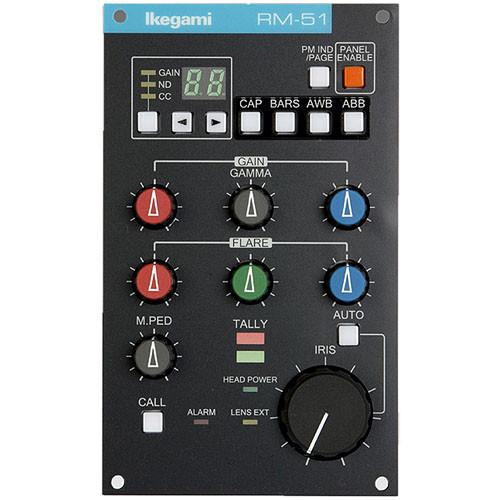
The design language of the dark panels is inspired by classic Ikegami and Sony CCUs:
#84 — creatorlars · 2021-08-28
sean wrote:
Having each name/abbreviation be as distinct as possible would certainly help with mnemonics. Or, if there is going to be redundancy, it should be meaningful. Multiple “duals” seems helpful/descriptive, actually
All great thoughts, thank you for caring so much!
We had a discussion about this today. The one that is bugging us most is DSG vs ESG. “SG” is being used to describe different functions (Sync Generator vs Shape Generator). The other one I don’t like is SMX-3, as “MX” is being used for “matrix.”
ESG is a descendent from the Visionary series Video Sync Generator (VSG), so the rhyme helps the lineage there.
FKG likewise is a descendent from the Visionary series Triple Video Fader & Key Generator (TVFKG) so that is where it comes from.
DWO and ART I think are both good. It sounds like the first is a VCO of some kind, and the ART just makes me laugh. Hell yeah I make ART (Affine Ramps Transforms)!
DSG is also similar to the Serge DUSG (Dual Universal Slope Generator), so that could be confusing.
So we’re considering changing DSG-3 to DQG-3 – Dual Quadrilateral Generator, pronounced “DAWG THREE”.

#85 — creatorlars · 2021-08-28
dubpixel wrote:
I’m somewhere in the midst of making a mashup of bits of cadet 1 and lm1980 to make an rca->old sync adapter. Idk if you were suggesting that, as a DIY project but I’d appreciate any insight you’ve got on what I’ve sketched so Far if you feel you’re able. Will post in its state once cleaned up a bit .
Awesome. Best way I can review is if you post a thread here with a screen shot of the schematic, with all reference designators readable, and number your questions in a list.
#86 — creatorlars · 2021-08-28
kevotebasura wrote:
I’ve scanned the thread, but want to ask about the SMX-3. Is that similar to the Color Chords?
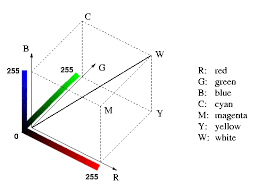
Yes. SMX-3 is an RGB matrix mixer. Unlike Color Chords though, this one has full polarizing controls and individual inputs for all 9 knobs. So it is a bit closer to the original Visionary series Video Blending Matrix. It is more minimal because I consider the “3X3 RGB Matrix” to be primitive and important graphics/video function. This module is the basic building block for YPbPr to RGB and RGB to YPbPr conversions in the utility sense, and “anything to anything” in the video art sense.
#87 — Agawell · 2021-08-28
that;s great @CreaterLars thanks!
looks like a tiptop mantis case will be able to hold and power 17 of these modules, then - with 4hp spare - or better yet half a dozen or so and probably the rest filled with expedition series - the negative rail was always the problem!
#88 — pitfiend · 2021-08-28
Interesting to see how the Foundation series has developed since the roadmap was posted. ART and DWO seem to fulfill some functions originally intended for the 8hp Verbs series?
Hope this isn’t too much of a tangent: how do the standalone instruments (I’m thinking of Solarium, Covidiot, and the (scrapped?) texture instrument) fit into gen 3? I’ve been fascinated by the whole Automata/Chrono series idea.
#89 — Gavin · 2021-08-28
Could you explain how the new modules relate to the Expedition series in terms of resolution? I know Chromagnon can output higher digital resolutions. Do the old modules get upscaled at final output via Chromagnon? Or are other things going on before this point if you’re patching these back and forth with Expedition modules? I have a VC as my final out at the moment, and have all of Chromagnon’s functions in Expedition format, but it’d be nice to have an upscaling output.
I like the short functional names much better than the playful ones, which added to a steep learning curve for me, but I don’t like the black panels so much. White text on black is significantly less legible, especially in the kind of eye-strain flickering darkened room of most video artists.
Also, for pure aesthetics, there are so many eurorack black panels in music modules already, and the grey of Expedition really gave them their own identity as video modules, and recalled my own nostalgia for machines and devices that were those colours. I’d love distinctive-looking modules in Quantel Paintbox/Amiga Toaster beige, or which leant into the fonts, colours and aesthetics of 70s and 80s video mixers and VHS tape logos.
#90 — joem · 2021-08-28
sean wrote:
Having each name/abbreviation be as distinct as possible would certainly help with mnemonics. Or, if there is going to be redundancy, it should be meaningful.
I think the names are the least important part of the modules, but since it’s being discussed, I fully agree with this post from @sean. ESG vs DSG is the main thing that was tripping me up, and I’m pretty sure it’s because they share 2 letters in the exact same spot yet those letters stand for different things.
#91 — joem · 2021-08-28
From the first post and examining the module images, I was already pretty psyched. But then reading @creatorlars replies with more details about the various modules, I got even more psyched! I love the comfortable density of function!
re: DWO-3, am I correct in interpreting that the two oscillators to have independent (from each other) front-panel sync inputs? And does that mean one would therefore be able to sync them via the front panel to a Cadet system?
#92 — kevotebasura · 2021-08-28
Well the SMX-3 sounds like what I’ve been looking for. Can’t wait! Thanks for the info Lars.
#93 — creatorlars · 2021-08-28
joem wrote:
re: DWO-3, am I correct in interpreting that the two oscillators to have independent (from each other) front-panel sync inputs? And does that mean one would therefore be able to sync them via the front panel to a Cadet system?
Yes and yes.
The frontpanel sync inputs are always active, too – on the range controls, when you are in the “HS” or “VS” modes, hsync and vsync are taken from the rear. These are combined with the frontpanel sync input. So for the first time, they are a “reset” input. In other words, you can be synced to hsync and still reset the VCO multiple times before the next hsync via the frontpanel jack.
There a number of behind the scenes improvements too. The A1 range for example is sampled & held at vsync, allowing for clean switching strobes.
#94 — vhsdestroyer · 2021-08-28
Hey lars, I’m not sure If I saw any responses to the availability of these modules. Personally I don’t have much of a strong preference for whether they are available before or after chromagnon. Though having some new modules sooner would be cool. Will these be preorders or will they hit the LZX store when ready? I’m also curious how many will be available and what the production schedule will look like going forward with gen3? Im also wondering as well if there are any plans for a new liquid tv?
#95 — creatorlars · 2021-08-28
pitfiend wrote:
Interesting to see how the Foundation series has developed since the roadmap was posted. ART and DWO seem to fulfill some functions originally intended for the 8hp Verbs series?
The way things evolved, we found that 12HP was the way to go as a base size, as it is also the minimum size for a module that has Sync IO in the rear (which all of these do, except for SMX-3).
So yes, ART is the first “verb”. It is designed to be chained so that you have transformations you can modulate in steps. It is the AFFINE TRANSFORM verb, and covers MOVE (X & Y knobs), SCALE (XX & YY knobs), SHEAR (XY & YX knobs).
The next verb would be MOTION based, and cover SCROLL & ROTATE/SPIN.
Another big thing that changed is that ART (and future verbs) have auto calibrating HV ramp generators integrated into them. So that means each verb is also a standalone shape/figure generator. When you patch into the HV inputs (the ones with the little icons) you are overriding the internal ramps.
DSG (Dual Shape Generator) is then an output function bank for the vectors created or modified by ART (or DWO). A typical patch could have a pair of ARTs patched into the HV inputs of a DSG to generate 2 shapes that are then “movable, shearable, and scaleable.”
Hope this isn’t too much of a tangent: how do the standalone instruments (I’m thinking of Solarium, Covidiot, and the (scrapped?) texture instrument) fit into gen 3? I’ve been fascinated by the whole Automata/Chrono series idea.
Different levels of abstraction is the main difference. Think of it like zooming in.
If we zoom all the way out in LZX land, we have instruments. Memory Palace, Chromagnon, and future Automata instruments. The instruments are like very complex patches with a performance interface, and cover some functional territory that would be prohibitive to try to patch on a modular system. And may include functions that just aren’t practical in a single module.
So think of the instruments like an Oberheim SEM voice or a monosynth. They encapsulate a complex but usable workflow, in a way that allows them to expanded like a polyphonic instrument (these comparisons only work if you are a music synth user too – so forgive me if I’m being obtuse.)
Now, we zoom one step further into LZX land, and we find that the functions in the instruments are composed of modules. Once we are done with Gen3 modular you should be able to patch up most of what Chromagnon and other instruments do. Modules have a different design priority – a system user can create a modular system that is more like building their own instrument with modules. So things like function density and a more straightforward approach to “1 primary function = 1 module”, and small modules you can use as building blocks is key here, as those goals empower the user to create whatever they want. With modular we are presuming you are buying several modules so you can design your own system. And there will be plenty of recipes and bundles we will offer for that, too.
Expedition series often combined multiple functions in one module. This was great within the scope of what we were trying to do – explore a world of new experimental ideas for video synth functions – but eventually a module gets so big that it makes more sense to include the holistic workflow (video input, video output, compositing) along with whatever primary function is involved.
For example, Visual Cortex – we did something right there, but it’s not really a “module” in the building block sense – it’s the first prototype for an instrument. Visual Cortex ultimately limits modular expansion in the sense that you cannot have multiple fader/compositor sections or multiple output encoders, or multiple ramps, without taking up a lot of space. War of the Ants, Fortress – also great examples of mini instruments.
So the idea in this gen3 era for us is to eliminate some redundancy and reorganize. It is a spring cleaning and update of all the circuitry. Things that were previously hybrid mini voices (like Fortress and War of the Ants and Cortex) will get expanded and made into full instruments. Things that were previously hybrid functions will get put on 12HP modules that encapsulate a functional step (like generating 2D waveforms, keying/compositing two RGB layers, etc).
We are trying to not be concerned with any market trends and just do what we feel like empowers the user best.
So with “LZX video synthesis” you really have a few options:
- Stick to the instruments like Chromagnon, and expand/patch between “voices.” Like a studio full of monosynths you are mixing.
- Use an instrument like Chromagnon as a “base station” and add modules to it as expander functions. For example, adding a DWO to Chromagnon is very useful!
- Go “pure modular” and roll your own instrument/studio/88 band colorizer, etc. In this case you’d want to start with ESG-3.
Please let me know if anyone has questions on this. This is a description of our core philosophy/approach right now – one which is ultimately hoped to benefit/empower the community!
#96 — sean · 2021-08-28
creatorlars wrote:
ESG is a descendent from the Visionary series Video Sync Generator (VSG), so the rhyme helps the lineage there.
Seems like it has a lot more in common with Color Video Encoder, especially as far the front panel feature set goes.
#97 — pitfiend · 2021-08-28
[quote=“creatorlars, post:95, topic:3397”] Each verb is also a standalone shape/figure generator. When you patch into the HV inputs you are overriding the internal ramps.
[/quote]
So they’re almost like a self-oscillating filter? They can modify an incoming shape, but also act as an oscillator? Do all the gen 3 modules have both processing and generating capabilities?
creatorlars wrote:
So with “LZX video synthesis” you really have a few options
Very neat to consciously have semi-modular, hybrid, and fully modular workflows in mind. I can’t speak to market trends, but Chromagnon is my first step into video synth.
creatorlars wrote:
Things that were previously hybrid mini voices (like Fortress and War of the Ants and Cortex) will get expanded and made into full instruments
Do these correspond directly to Spritechild, Texture-Instrument, and Chromagnon, or are they examples of intermediary forms between module and instrument? WOTA as a full noise instrument sounds brilliant.
#98 — a_digital_index · 2021-08-28
Just thinking out loud here so scroll on. I get you on the SG (sync gen vs. shape gen). I think “signal generator” because that is what we have it named in our routers at work. If there is still a debate, I would just called it ENC for Output ENCoder as that is the language you had on Visual Cortex. To my mind, sync gen is just a part of the RGB to Component/Composite conversion. That said, you can call it “Left Handed Shampoo Dispenser” and I’ll still buy a few.
#99 — creatorlars · 2021-08-28
sean wrote:
Seems like it has a lot more in common with Color Video Encoder, especially as far the front panel feature set goes.
Yep, it is both: CVE + VSG → ESG. We are trying not to use “Color” or “Video” in the acronyms, so it shortens perfectly. We don’t have separate modules for sync generator or video input/output any more – any input/decoder/TBC module or output/encoder module will also be capable of being a free running function (and distribute sync to other modules.)
Moving forward (and including Chromagnon and TBC2), anything generating a video output is also capable of generating its own sync and distributing that sync to other modules. So the ESG module is more like a “node”, that can operate independently or be synchronized to a parent node.
So the ESG is a generator in the sense that when you turn it on, it starts generating a video signal.
#100 — creatorlars · 2021-08-28
pitfiend wrote:
So they’re almost like a self-oscillating filter? They can modify an incoming shape, but also act as an oscillator? Do all the gen 3 modules have both processing and generating capabilities?
You’ve got the right idea. Think of it in graphics terms, like with the DSG-3 Dual Shape Generator. The “default” generator is basic HV Ramp Generator, AKA SCREEN COORDINATES. The shapes will be generated from the geometry of the video frame itself.
In other words, if you make a triangle with DSG-3 (without patching the inputs) it will be the same size as the screen. No input / ramp gen / oscillator required.
Now say you want to make the triangle bigger, or smaller, or reposition it on the screen.
You can do that by patching the outputs of an ART-3 to the DSG-3 inputs. Now when you turn the X & Y knobs, your output shape can move around and morph into different affine quadrilateral projections as you turn the knobs.
Now say you replace the H ramp input with a ramp out from a DWO Dual Wideband Oscillator instead. Now you have not just one triangle, but a variable number of tiled repetitions of a triangle pattern. The DSG-3 is using the ramp waveshape from the oscillator instead of it’s local screen coordinates as it’s base.
Now say you want to sequence it so that your shape gets bigger and slides to the right, then gets smaller and slides to the left. You chain up another ART-3 in series with the first one, and mult the triangle out from your unused DWO-3 oscillator to the TRANSFORM CV inputs on both ART-3 modules. You adjust so that when one transform is active, the other is muted, and the two bounce back and forth across the settings on the two ART-3 modules. You program in settings on both sides as desired, and you get a 2-phase morph.
The key point of this workflow is that you are using something simple – a single ramp LFO – to transition between two groups of settings. It is like a marionette, where only a few strings may control many joints in the puppet.
If you allow some breathing room between transformation depths, you get spaces in the movement where both transformations are fully attenuated – so now your shape morphs back and forth between the original screen coordinates and two different sets of transform settings.
So by the time you have a couple pairs of oscillators and transforms, you can get into a level of programmability that can be difficult when not approached in this step-by-step transform + output function (shape generator) type of workflow.
#101 — creatorlars · 2021-08-28
pitfiend wrote:
Do these correspond directly to Spritechild, Texture-Instrument, and Chromagnon, or are they examples of intermediary forms between module and instrument? WOTA as a full noise instrument sounds brilliant.
Anything on the roadmap is just a code name for an evolving R&D project, not necessarily a product plan. They are themes in our development flow, areas we have identified that we plan to go. So as you can see how the Verbs/Foundations concepts evolved into where we’ve arrived at in the OP, all of the other instrument concepts will likewise be evolving concepts until we arrive at a conclusion on product identity.
Thru the first few Automata instruments we will likely be looking for “places for the Expedition to land.” Chromagnon is one such place, and consolidates the vision of modules like Navigator and Shapechanger.
The luma/texture instrument will consolidate the vision of modules like War of the Ants and Prismatic Ray, various filter modules over the years. It’s the “raw texture synthesis” module.
The Solarium/RGB instrument – it will be consolidating the vision of modules like Marble Index and Visual Cortex – also it could be considered the LZX video mixer (two external sources).
That’s just the loose plan. We won’t be working on any new Automata instrument designs until we’ve completed all our current projects with Chromagnon/and get Memory Palace/TBC2 shipped and into regular production.
#102 — sean · 2021-08-28
Nitpicking aside, I really do like the overall concept here, separating functionality out into more discrete blocks.
And for what it’s worth, my initial reactions to each are the following:
FKG: Nice. A little sad not to have the separate key outs from the OG Triple Fader, but a fine tradeoff for the much trimmer package. Don’t really need it myself, as I already have three mixing modules, but could possibly see swapping out one for it.
SMX: This is the only one where I feel a little bit that the price perhaps exceeds the functionality…? But given that others are the inverse, where it seems like you are getting relatively a lot for one’s money, all’s fair. But, yeah, probably already have this functionality covered in my system, personally.
ART & DSG: These are the kind of modules that don’t quite feel like they were built for me and my workflow (I am more into image manipulation than shape generation per se) — but also, precisely because of that, their functionality are a hole in my current setup and could probably be very interesting to “misuse.” Awaiting demos to help me fully grok the possibilities.
DWO: Love it. Love two oscillators in small package. Love separate sync and sync reset functionality. Love the density of outputs. This is probably the one of the bunch that feels like it is almost exactly what I wish it would be. Now, not sure more oscillators are what I need either, but could again certainly envision swapping out one/some currently held modules for one of these.
ESG: Have been interested in integrating a second output encoder into my system, but maybe realistically just want a more stripped-down, 4hp one (hoping maybe revised Cadet includes a 4hp component encoder??). …I too am tempted by HD. But, I dunno, the 80s/90s kid in me sort of prefers the low res SD flavor.
Edit:
creatorlars wrote:
There aren’t any > > rules> > to break here though – so crosspatching between formats may be a cool glitch world to explore for some of you.
You have just made me 1000% more interested in the possibilities of HD.
#103 — creatorlars · 2021-08-28
Gavin wrote:
Could you explain how the new modules relate to the Expedition series in terms of resolution? I know Chromagnon can output higher digital resolutions. Do the old modules get upscaled at final output via Chromagnon? Or are other things going on before this point if you’re patching these back and forth with Expedition modules? I have a VC as my final out at the moment, and have all of Chromagnon’s functions in Expedition format, but it’d be nice to have an upscaling output.
These are big questions but let me try to sum it up.
- Visual Cortex, ESG-3 and Chromagnon are all encoders and sync generators. In all cases, the encoder runs at the same timing as the sync generator.
- Visual Cortex supports 2 sync generator modes: NTSC & PAL
- ESG-3 & Chromagnon & TBC2 support 15 sync generator modes: NTSC, PAL, 486p5994, 576p50, 720p50, 720p5994, 720p60, 1080i50, 1080i5994, 1080i60, 1080p2398, 1080p24, 1080p25, 1080p2997 and 1080p30.
- These are all analogue video encoders. There are no digital formats involved. The output is HD component analogue video. In NTSC/PAL modes, composite video outputs will be active. In all modes, component video outputs will be active.
- TBC2 & Chromagnon, in addition to their other functions, have tbc/scaler inputs. These inputs are a digital time base correction function for frame synchronization and upscaling/downscaling. The output format of the scaler is always the same as the sync generator mode. So these video inputs take the external video source, and convert that to whatever the current sync generator mode is.
- If you want to upgrade your Visual Cortex based system, you can do it a few ways : a) Just run all the new stuff at NTSC/PAL and don’t worry about it. Everything stays compatible. b) Start a new system with Chromagnon or TBC2 and Gen3 modules. Use the Chromagnon or TBC2 to upscale SD System Output to your new HD System Input. In this case cross patching between the HD and SD systems won’t really work out, or becomes a mental puzzle to figure out what you can use or what you cant. There aren’t any rules to break here though – so crosspatching between formats may be a cool glitch world to explore for some of you. If you aren’t doing any cross patching (using the Chromagnon as an independent upscaler / post amplifier / mastering proc) then this should work just fine with minimal headache. Separate cases would make a split workflow easier. c) replace any NTSC/PAL only modules (like Visual Cortex) with their Gen3 equivalents, so that your entire rig is “15 mode compatible.” Most Expedition modules will work fine in either system – anything without sync IO on the rear is going to be compatible without a thought.
That was longer than I wanted, but let me know if I can clear anything up.
#104 — bentoncbainbridge · 2021-08-28
creatorlars wrote:
DSG is also similar to the Serge DUSG (Dual Universal Slope Generator), so that could be confusing.
So we’re considering changing DSG-3 to DQG-3 – Dual Quadrilateral Generator, pronounced “DAWG THREE”.
Yes, most 'Wigglers will assume the “Dual Slope Generator” meaning of DSG. I like DAWG-3, Dawg!
#105 — bentoncbainbridge · 2021-08-28
creatorlars wrote:
Seems like it has a lot more in common with Color Video Encoder, especially as far the front panel feature set goes.
Yep, it is both: CVE + VSG → ESG. We are trying not to use “Color” or “Video” in the acronyms, so it shortens perfectly. We don’t have separate modules for sync generator or video input/output any more – any input/decoder/TBC module or output/encoder module will also be capable of being a free running function (and distribute sync to other modules.)
Since Sync Generation is no longer a modular function, and internal sync is included in all IO modules, and the ESG has no input decoder to derive sync, I agree with @sean that the ESG is more an Encoder than a Sync Gen, so I vote for “OUT-3”.
#106 — creatorlars · 2021-08-28
sean wrote:
Nice. A little sad not to have the separate key outs
There’s a “Triple Key Generator” coming, it’s just arranged as a a triple RGB proc/quantizer/solarizer w/high gain controls – the other (FKG-3) is an RGB switcher/fader w/keying input. Having switching and generating on separate modules has numerous advantages, as does having the keying control on the module doing the switching.
The 12HP limit on FKG-3 is very important, since it is designed to be used as “n-level priority mixer/colorizer/alpha compositor” in chained multiples – an RGB compositing bus, or infinite downstream keyer.
ESG: Have been interested in integrating a second output encoder into my system, but maybe realistically just want a more stripped-down, 4hp one (hoping maybe revised Cadet includes a 4hp component encoder??).
For power and sync related form factor reasons, the smallest module with any sort of video input or output will be 12HP. You can budget on that though – 12HP per IO channel. ESG-3 is a massive triple PCB stack of floor-to-ceiling SMT circuitry all designed so you can still fit it < 40mm mounting depth (with sync cables attached!) So it’s really a question of “mounting depth or HP width”. 12HP is the compromise that gets us the biggest amount of PCB area without prohibitive mounting depths, so it just solves a lot of problems right out the gate to not try to cut corners to make it smaller.
SMX: This is the only one where I feel a little bit that the price perhaps exceeds the functionality…?
In Gen3, any time you see an Attenuverter – it is an active control for 2x discrete VCAs that are controlling the signal path. No video signal actually runs through the pot you’re turning at all – it’s generating a nicely filtered and buffered control source that drives the complementary positive and negative VCAs. This is massively better for the signals and just feels better. True nulling with center detent, etc.
So with SMX-3 you’re really getting 18 discrete Video VCAs! And that’s why it costs what it does (and is similar in scale to these other modules on the inside.)
Some of the future modules will likely be less $ per HP than these 6. Some of them will only require dual PCB stacks instead of triple (aka half the non-power supply related circuitry) so we can lower the price on those closer to $299 or $329, even though they will still be 12HP.
We can also do some 8HP modules, but those would need to be modules not requiring sync.
#107 — sean · 2021-08-28
creatorlars wrote:
In Gen3, any time you see an Attenuverter – it is an active control for 2x discrete VCAs that are controlling the signal path. No video signal actually runs through the pot you’re turning at all – it’s generating a nicely filtered and buffered control source that drives the complementary positive and negative VCAs. This is massively better for the signals and just > > feels> > better. True nulling with center detent, etc.
So with SMX-3 you’re really getting 18 discrete Video VCAs! And that’s why it costs what it does (and is similar in scale to these other modules on the inside.)
Fair enough. And sorta figured this was the case — a lot of behind-the-scenes stuff making it work really nicely. Guess I was just thinking more on the level of what does it do, vs how well does it do it. I might also just be a little more of Geo Metro than a BMW kind of guy (or, in reality, I am a bike guy without a car at all).
But 100% appreciate the thought and care put into all this!
And, indeed, I think it makes a lot of sense to leave the down-and-dirty solutions to the 3rd party DIY developers and have LZX stuff be the top-shelf versions.
#108 — creatorlars · 2021-08-28
sean wrote:
Fair enough. And sorta figured this was the case — a lot of behind-the-scenes stuff making it work really nicely. Guess I was just thinking more on the level of > > what> > does it do, vs > > how well> > does it do it. I might also just be a little more of Geo Metro than a BMW kind of guy (or, in reality, I am a bike guy without a car at all).
But 100% appreciate the thought and care put into all this!
Well to be fair, the original VBM offered the same basic function – 9 attenuverters, with some extra IO points, for $599. Color Chords is a little less expensive, at $299 – but that’s because there are no multipliers in the signal path. Color Chords can’t also double as a triple RGB mixer (since you don’t have independent inputs) or as a YPbPr/RGB or RGB/YPbPr Colorspace Conversion Matrix (because you don’t have an attenuverter on each point in the matrix.)
So we feel like it’s about on par with what we’ve been offering at the same price-per-function, despite the performance upgrade. If you already have a VBM and/or Color Chords, multiple Passage modules, etc, and aren’t concerned with the performance upgrades then you’re right! You are good!
For us, it’s important that there’s consistency – it’s part of the reason to do a Gen3 core set. We can’t treat the signal in a hi-fi way on one module and a lo-fi way on the next. There’s definitely a big bandwidth increase in the fully active circuitry compared to older modules, and that’s only going to help with HD workflows.
But yes, if you wanted to, you can make a matrix mixer with some pots, jacks, and just three op-amps! It will soften your signals a lot, be a little noisier, mess with impedance – but if it makes you happy that’s awesome, and it would be cheap to build. LZX format is all about a wide range of this. Nobody has to get “gen 3 module certified” or anything! It’s just that for LZX modular, we’re aiming for robust, practical, super solid build, consistent signal expectations/ranges, etc throughout the core set. We’re not aiming for top shelf (that would be more like $3999 RF grade rack modules with digital control systems) – we’re aiming more for “pro gear for working artists.” We don’t need $50 switches… but are going to use the $2 ones over the $0.25 ones, for example.
#109 — creatorlars · 2021-08-28
I think of it as analogous to a mixing bus, I guess? For example – even if you’re feeding in all kinds of mess and noise and hum and weird musical instruments into your audio mix, you usually want to mix that all down using something more clinical and transparent. Making the mix dirtier again is usually a mastering process rather than something you want to be inherited by your summing bus. So FKG-3 and SMX-3 offer what is supposed to be a clean and transparent mix/switch of the signals.
#110 — petro · 2021-08-29
I love the idea of eliminating the need for a eurorack power supply. Would u ever consider doing an updated version of mempal like this cheers
#111 — creatorlars · 2021-08-29
I just want to add some long winded rambling to this thread, related to what I said above.
So with “LZX video synthesis” you really have a few options:
-
Stick to the instruments like Chromagnon, and expand/patch between “voices.” Like a studio full of monosynths you are mixing.>>2. > Use an instrument like Chromagnon as a “base station” and add modules to it as expander functions. For example, adding a DWO to Chromagnon is very useful!>>3. > Go “pure modular” and roll your own instrument/studio/88 band colorizer, etc. In this case you’d want to start with ESG-3.>>>>
1 This approach is a great place to start because you’ve got something “complete” without having to buy multiple modules or a case. It might also be the best answer for integrating into a workflow with video mixers and glitch boxes you already own and use. Also you may just prefer working with “complete voices” rather than “separate functions” – a ton of folks do.
2 This is probably the closest to what I’d consider a “modern EuroRack approach”, where you often have complete voices living alongside weird utility modules in the same environment. If you are putting Chromagnon inside your EuroRack case, this is probably where you fall. In this case, you can rely on the fact that Chromagnon is a complete workflow, and just add to it the modules that are especially exciting to you.
3 This is old school. This is more like what modular meant in 2006 when I was introduced to it (not that long ago) – it’s about dividing modules by function with “design/customize/tune your own instrument” as an end goal. It may involve some knowledge of physics and signal processing, some research – but that is all part of the fun and challenge of it. The functions should be navigable by and understandable by someone with that background. For many of you, thinking in modular function blocks consumes you! It is just a way of thinking that also relates to DIY ethos, etc. For many of you, this kind of granularity just gets in the way of making your art, which is perfectly valid as well.
“All of the above!” is valid too.
At LZX we’d like to cover this range of uses in a few instruments and a couple dozen modules, and then just do a really good job at supporting, extending and maintaining them. We hope many others will make compatible modules/instruments and lean on us as a foundation that makes their experiments possible.
#112 — creatorlars · 2021-08-29
petro wrote:
I love the idea of eliminating the need for a eurorack power supply. Would u ever consider doing an updated version of mempal like this cheers
Yes, Memory Palace Mk2 will follow Chromagnon’s release and be our second Automata instrument. It’s become necessary for supply chain reasons that we combine our hardware for the digital/FPGA heart of all our products to use the same core assembly, so this update will occur before Memory Palace’s next production batch in early 2022.
#113 — rempesm · 2021-08-29
Will Memory Palace Mk2 have different functionality than Mk1 or is this just a move to standardize the brain behind these offerings?
#114 — creatorlars · 2021-08-29
Will Memory Palace Mk2 have different functionality than Mk1 or is this just a move to standardize the brain behind these offerings?
A move to standardize the FPGA brain PCBA used across multiple products, and update Memory Palace to Gen3 power expectations. This won’t have any effect on future development – firmware will be running on the exact same platform (7Z010), so both versions of the hardware will run the same firmware image and have the same functions.
Usually we completely overhaul things when we revise something, but in the case of Memory Palace we don’t feel the need to make any big changes. So this is more of a form factor update so we can keep it in production and keep developing for it!
#115 — rempesm · 2021-08-29
Very welcome clarification, thank you!
#116 — creatorlars · 2021-08-29
Some hardware context may be important – right now we have separate board designs to host the FPGA and video encoders/decoders on TBC2, Chromagnon, and Memory Palace. These are very expensive assemblies, costing $100 - $150 each (our component cost!) to make. (NOTE: This is the cost of one of many assemblies, not the cost to make a unit. That is much higher.)
With minimum order quantities on production batch sizes come into play, this puts us in the position of needing to come up with orders for qty 200-250+ regularly, to get them down to the right cost for our budget. We can usually do that with one product at a time, but this ends up creating a rolling target where one project is always overstocked and the others are understocked. Since all three of these devices use the same part (7Z010), we can revise our core assembly to be shared across these products (really, they will all be getting the new board we designed for Chromagnon).
So it is a vital part of making the supply chain less wobbly, and future proofed.
#117 — wednesdayayay · 2021-08-29
creatorlars wrote:
Memory Palace Mk2 will follow Chromagnon’s release and be our second Automata instrument.
ooooh does that mean an enclosure like the one for chromagnon may be made for memory palace? Even if it is just for the new version that would be pretty great!
#118 — creatorlars · 2021-08-29
wednesdayayay wrote:
ooooh does that mean an enclosure like the one for chromagnon may be made for memory palace? Even if it is just for the new version that would be pretty great!
Yes, the Memory Palace Mk2 update will use the same 52HP enclosure and rear power/sync/digital boards as Chromagnon. The Automata instruments following it will all do the same. So there are two shared boards (power and FPGA) and each instrument either has one or two specialized boards on top of those. Chromagnon has a big analog computer board and a big analog control surface board, in addition to the two shared boards, for example. Memory Palace would keep it’s existing control board, with a few tweaks for new parts we’re using now, and of course where the power entry/sync comes in.
#119 — dryodryo · 2021-08-29
creatorlars wrote:
We had a discussion about this today. The one that is bugging us most is DSG vs ESG. “SG” is being used to describe different functions (Sync Generator vs Shape Generator). The other one I don’t like is SMX-3, as “MX” is being used for “matrix.”
The three-letter abbreviations don’t need to be initialisms nor acronyms. They can just be abbreviations that most succinctly convey the semantics of the full name. Commonly used words like “generator” can just be dropped for brevity and clarity. For example:
Video encoder and sync generator = ESY
Dual Wideband Oscillator = WBO
Fader & Key Generator = FKY
Summing Matrix = SMM
Dual Shape Generator = SHP
But I would leave Affine Ramp Transform as ART, because ART.
Also, I don’t see the need for the “-3” at the end of everything. Unless you’re making single channel versions of these, which I don’t think you are. If the only form of these is the triple-channel version, then the “-3” is superflous and just takes up panel space.
#120 — creatorlars · 2021-08-29
dryodryo wrote:
Also, I don’t see the need for the “-3” at the end of everything.
The number helps the brain see the acronym as a model number rather than a word that’s supposed to be read, was the conclusion we came to there. The -3 is generational, for “third generation.” Colloquially I imagine we will omit the number when talking about the modules in forum threads.
The three-letter abbreviations don’t need to be initialisms nor acronyms. They can just be abbreviations that most succinctly convey the semantics of the full name.
I agree, but part of it is how it sounds when you speak it, for me. I like all the D’s and G’s just from the rhythm of the phonemes they give in speech. “LZX ESG” and “LZX DWO” has better meter than “LZX ESY” and “LZX WBO” for example.
I think maybe “no rules except it’s 3 characters” might be the best approach – coming up with a ruleset for naming consistently is going to be difficult. Three characters is short enough where even a single character being different is enough of a difference. (And we are all nerds enough to have it all memorized within a few minutes of getting ourselves excited, I presume.)
FKG and ESG are set in stone simply from the perspective of lineage – they are concatenations of previous product names they are descended from. So we have TVFKG → FKG and CVE+VSG → ESG. Since there’s an existing precedent in the community for these names, it’s what makes sense.
DWO, DSG, SMX, we may have some wiggle room to reconsider. I like DWO all right because D rhymes with V, and it makes me think VCO.
ART, because ART – like ya said. That one’s good.
#121 — petro · 2021-08-29
the names you have chosen for these modules are perfect imo !
#122 — Jesse · 2021-08-29
I like the names & just want to add that I’m really stoked. It really seems like y’all have taken some deliberate time & effort with this new Gen3 move to do a top down reorg/reimagine of everything.
It’s like LZX has been cruising along for years & years, just making the next module or instrument, fully entrenched in the cycle… And now y’all took a week off (lol can you imagine, LZX take a week off), dropped acid, and looked at the whole thing from atop your intelligent design crane.
So basically, hats off to the crew. Y’all are amazing & it seems to me the future is brighter than ever.
Couldn’t be more thrilled about the “modular” lineup. The instruments are cool, but the building blocks are where my heart’s at.
Can you speak more on the dual discrete VCA’s on all the attenu’s? For instance on the SMX - just stack an LFO or envelope along with whatever video signal into A1 & the LFO will open the VCA’s allowing the video signal to pass? Is that the idea?
As a “voltage control absolutely everything freakazoid” it’s so easy to fall into “where’s the CV ins?!” when looking at these panels. What’s the response like?
#123 — creatorlars · 2021-08-29
Jesse wrote:
As a “voltage control absolutely everything freakazoid” it’s so easy to fall into “where’s the CV ins?!” when looking at these panels. What’s the response like?
The VCAs are all manual control on SMX-3 – it’s a signal integrity thing, to preserve bandwidths, and common across all the Gen3 modules. Whenever you’re turning the knob on the attenuverter, you’re creating an internal voltage offset that controls the VCA. So the signal path is entirely active. We could absolutely do a “giant bank of VCAs” or a “VCA matrix” style module too. Gen3 modular can and should have lots of raw function access and utility modules.
These first 6 are very focused on packing in the density of core functions, so that you can have more core functions in the same space.
For example, I want a 4-layer alpha compositor with luma/chroma keys on each channel, and that is possible with 4x FKG in 48HP. To do this in Expedition you’d need 4x Doorway + 2x Marble Index (72HP) – and there would still be no luma/chroma key functions.
There’s a focus on versatility with these modules. More rotary and toggle switches in general, making each module have several modes – this lets one module cover a lot of use cases, so that the same smaller case can cover a wider range of possible patches.
We’re trying to establish a balance of patchable (IO points), programmable (switched signal paths) and voltage control (attenuverters, CV inputs).
#124 — creatorlars · 2021-08-29
We also want to make sure that there are modules that are heavily slanted in all of these ways …
– programmable (switches, like DSG)
– inputs with attenuverters (FKG, SMX, ESG)
– inputs without attenuverters (directly patchable) (ART)
– source heavy (more outputs than inputs) (DSG, DWO)
– destination heavy (more inputs than outputs) (FKG, SMX, ESG)
– balanced IO (ART)
– special/complex function heavy (FKG, ESG)
Part of the point of the “building block approach” is to empower the user to have more control over the ratio of these items, by which modules they pick. It makes tuning the patchability of your system possible. This is also in the best interests of those of you with long term system investments that are lacking a ratio of certain key functions.
The 12HP slot is based on a 9 point control grid and a 12 point IO grid. It’s a ratio designed to fit all these “tetris pieces” as base footprints:
- 1x 9 control function
- 9x 1 control functions
- 3x 3 control functions
- 2x 4 control functions
#125 — Jesse · 2021-08-29
OK, so in the context of SMX the expectation would be VCA’s prior to pumping signal in. That makes sense, more of a building block approach.
Yeah make a huge fucking VCA matrix. Idk how everyone patches these systems without 20 VCA’s. Can I pay LZX to design the boards & I’ll pump them out ASAP
#126 — Jesse · 2021-08-29
I actually quite like this approach. Even more customizable & building block oriented. That’s Awesome. Thanks for the clarity
#127 — creatorlars · 2021-08-29
To everyone who had thoughts on the names: I hope I haven’t come off too combative or dismissive – we’ve enjoyed thinking about all of these names through endless permutations over the past year – so I’m merely trying to tell the story of how and why we ended up where we did. We’ll be processing everything suggested.
#128 — emooh · 2021-08-29
pffft let lars live!
#129 — dryodryo · 2021-08-29
creatorlars wrote:
I agree, but part of it is how it sounds when you speak it, for me. I like all the D’s and G’s just from the rhythm of the phonemes they give in speech. “LZX ESG” and “LZX DWO” has better meter than “LZX ESY” and “LZX WBO” for example
That makes sense… I was just trying to address the redundancy and similarity in the abbreviations. Jettisoning the interesting sounds of G’s and D’s gives you a lot more flexibility to assign unique names.
But I really should take the time to say, this is fantastic stuff. From a workflow design standpoint I think you’re hitting the sweet spot for me, and probably for many other users. High-level modules with many functions don’t give enough visual feedback; there’s just too much going on in there. Low-level modules require too much patching and it can become a PITA to even parse what’s going on, let alone document and repeat the patch. This new series seems to get it just right: mid-level modules with just the optimal level of functionality, mix-n-match and/or collections of modules, full RGB throughout, and a much more efficient, legible, and pleasing graphic style IMHO. So well done, this feels like LZX has reached a new level.
#130 — wednesdayayay · 2021-08-29
love the naming evolution!
the hyphen felt extra
and the basic function included is wonderful
I didn’t think I had an issue with what was up before but these are even better
#131 — creatorlars · 2021-08-29
We’ve made a subtle change to the module titles which we think will make a big difference – the images in the OP were updated if you’d like to see.
Even though the acronyms don’t match the functional descriptors perfectly, I think we’re going to keep the model numbers as they are. There’s some history involved now.
#132 — jwsmithwick1 · 2021-08-29
No FKG problems here!

#133 — saiteron · 2021-08-29
for some reason i wasn’t a huge fan of the panels at first. nothing to do with the abbreviations tho - didn’t really care either way re: abbreviations vs. full text before and i still don’t care… but with the model numbers in outline and the full words next to them the panels just feel so much more complete. i’ve always been a sucker for attractive typography (huge fan of the typeface on the Expedition panels as well) so not really all that surprised i guess

now start pumping these beauties out so we can get patching! 
#134 — jnoble · 2021-08-30
I agree with @saiteron, nice updates!
#135 — creatorlars · 2021-08-30
They do feel a bit better bookended now I think!
Here’s a few purely generative system ideas so we can see them in that context.
Video Drone
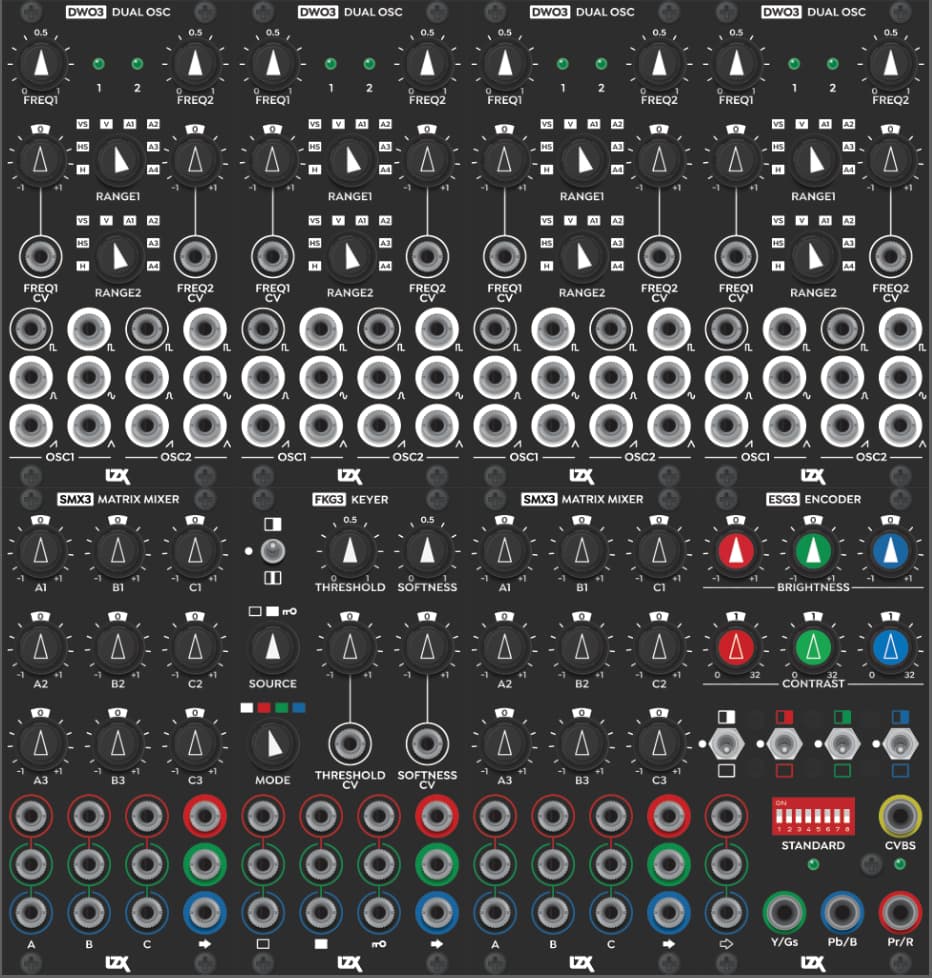
Primeval Shader
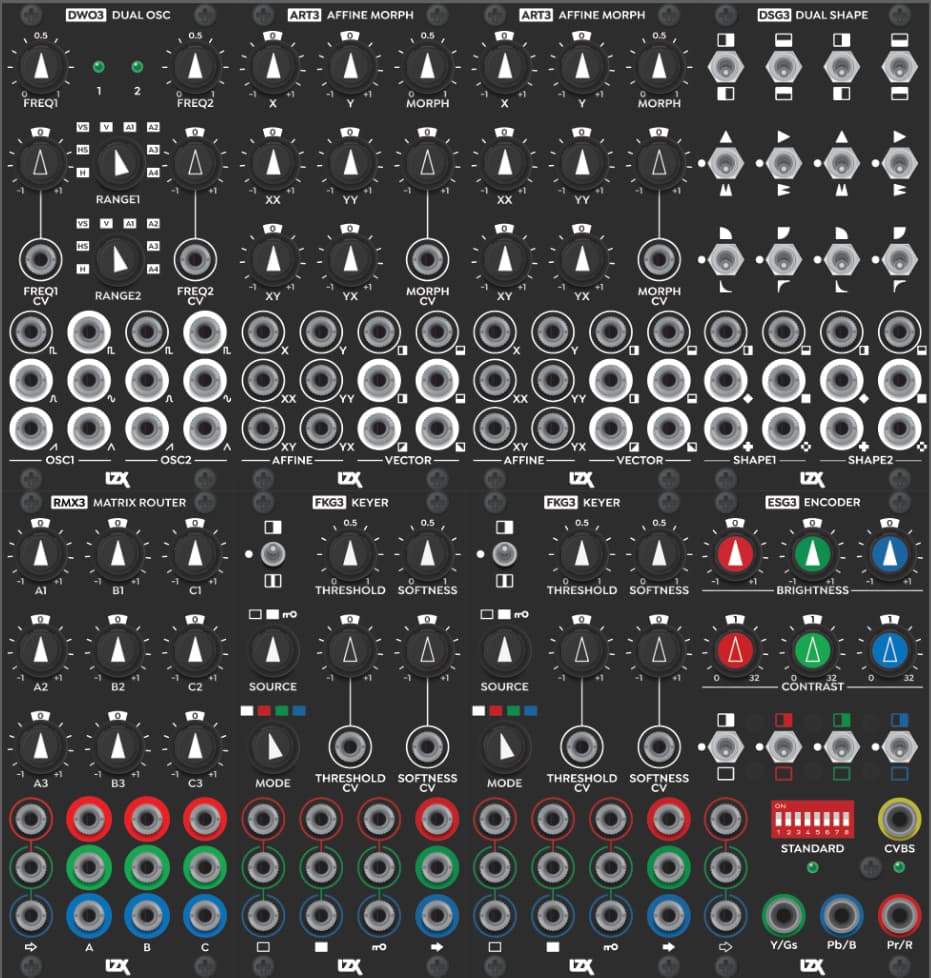
The Lost Hallway in Op Art Hell
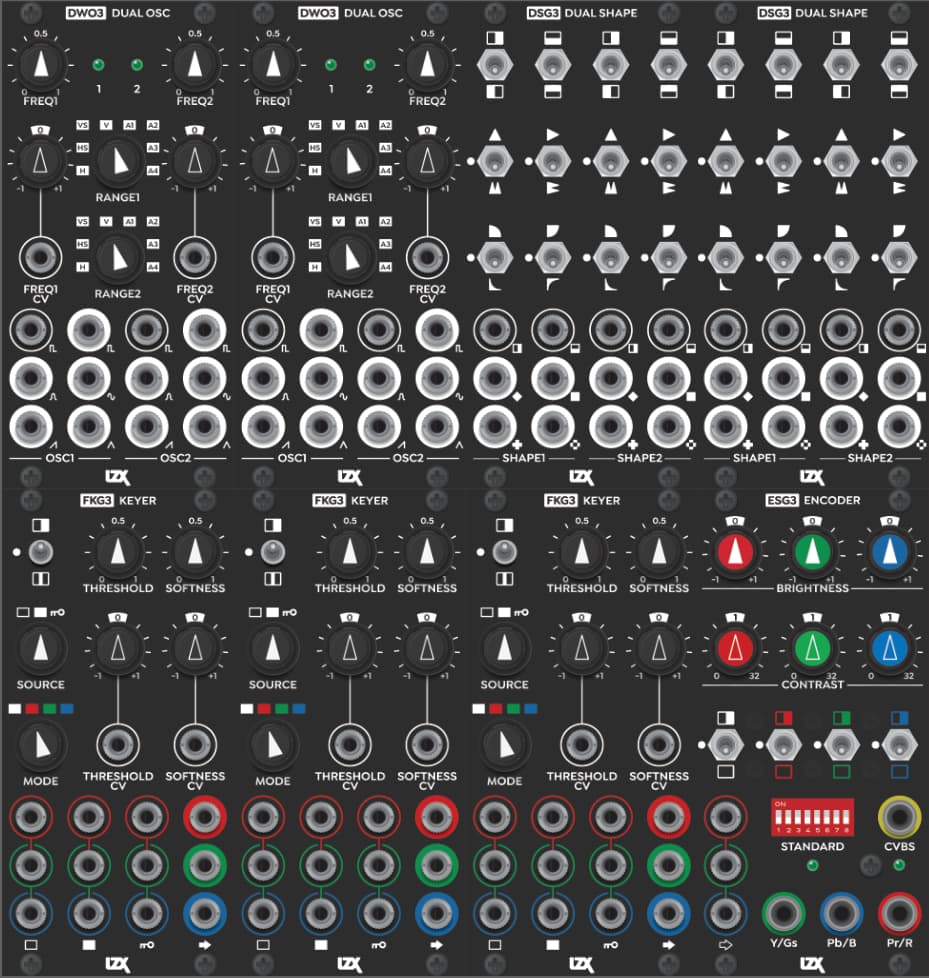
#136 — creatorlars · 2021-08-30
This is fun.
Funhouse (using Keyers as shape mixers)
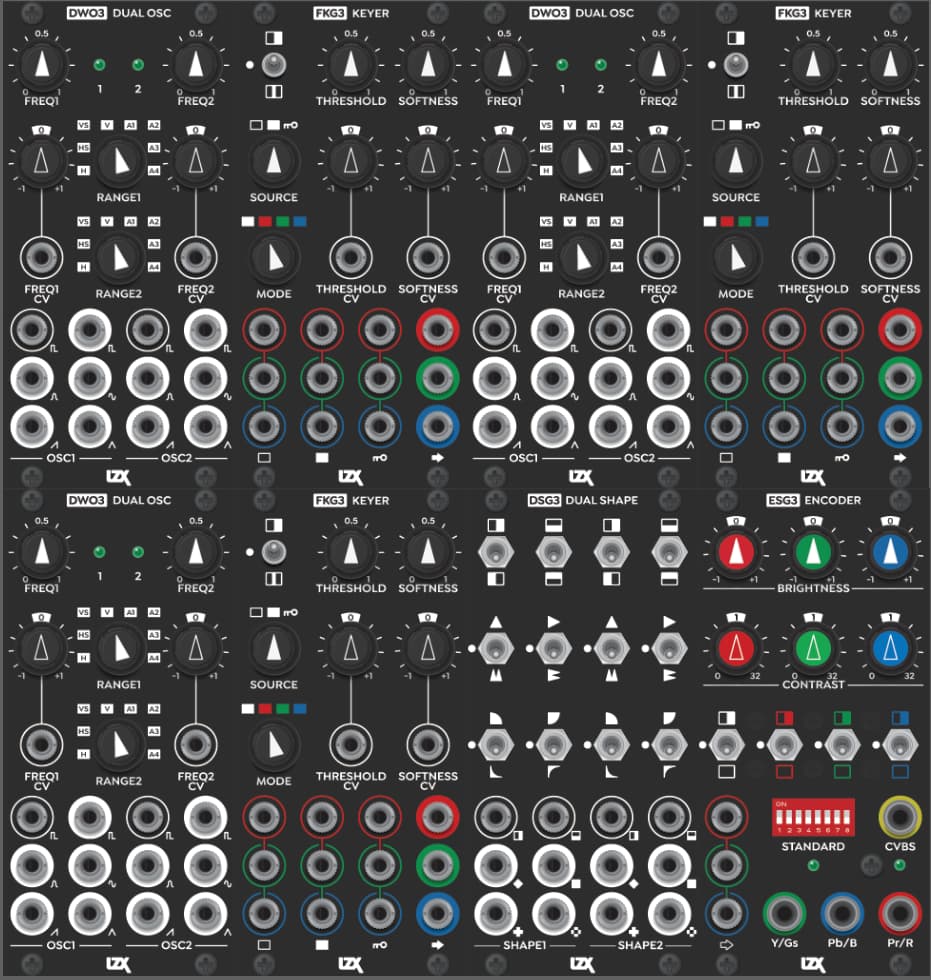
Dancer in the Dark
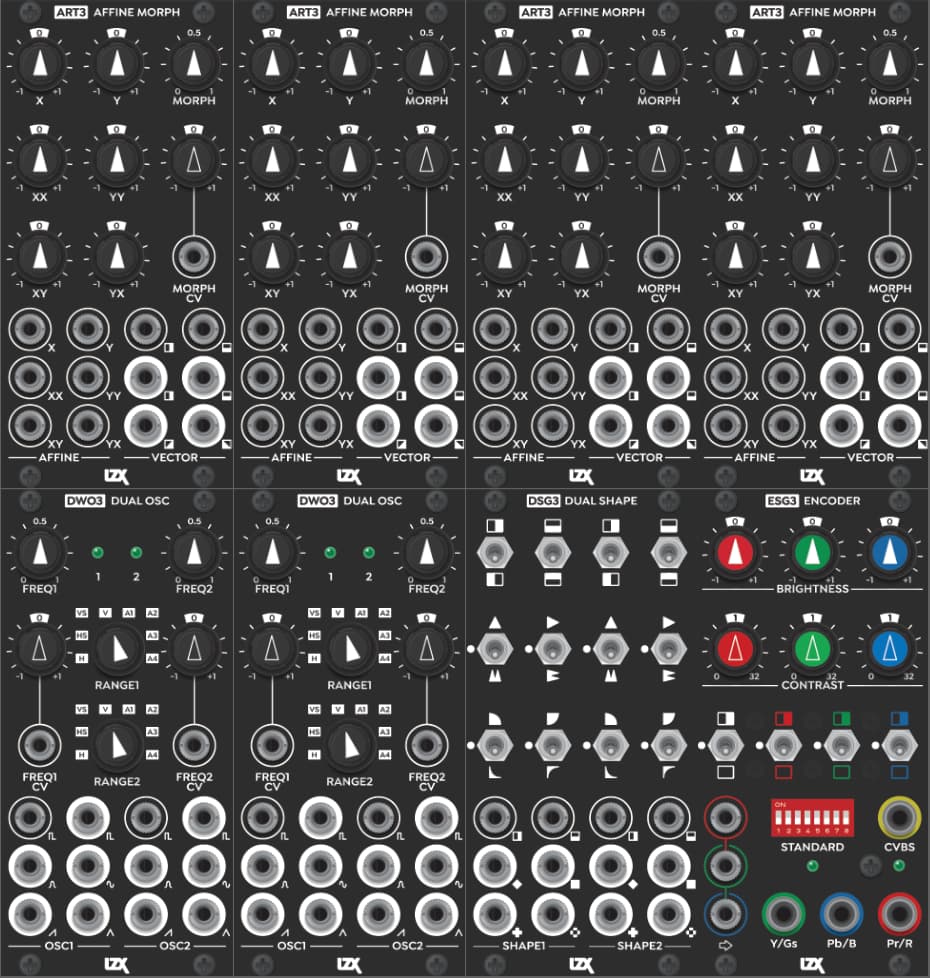
#137 — creatorlars · 2021-08-30
100,613,197,241,791,537,106,386,944 Ramps Under the Sea
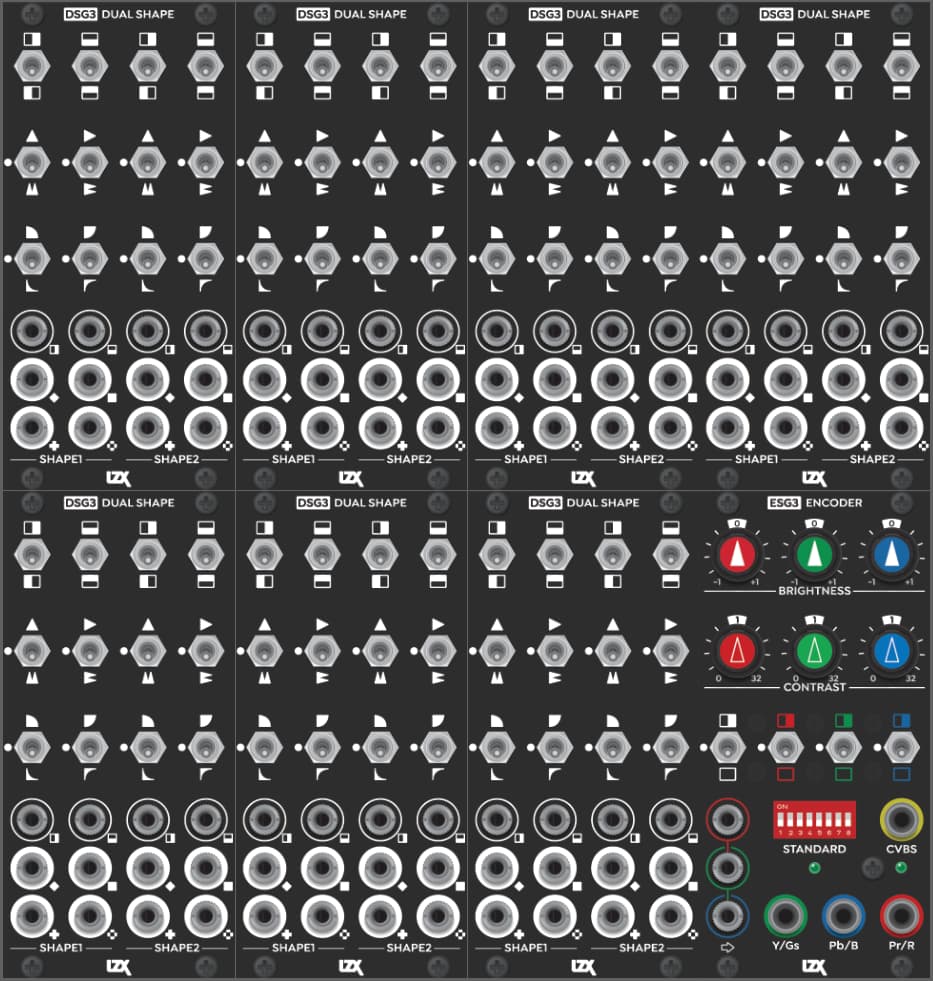
(and that’s just with the first patch!)
#138 — wednesdayayay · 2021-08-30
I’m trying to imagine the workflow for something like the titles in this clip using ART
How do we take a RGB image and apply this (ART) kind of morphing to its frame?
I thought MP at first but you could do this transition without the ART as it stands.
I’d use Escher sketch find the in point (XY MP controls), find my out point (ES pad), turn speed all the way up, set in point, press record, set out point, stop record, speed down, loop
Then I got to thinking oh maybe the SMX is part of the answer. RGB video into input one and then 2x ART outs>keyer into input 2. Depending on your matrix settings I think that would do more of a crop/negative crop than what I’m after though.
#139 — creatorlars · 2021-08-30
wednesdayayay wrote:
How do we take a RGB image and apply this (ART) kind of morphing to its frame?
(1) Memory Palace’s alpha / aux inputs, in mesh mode! You still need a texture mapper (digital frame store/GPU component) like Memory Palace. You would feed the ART’s HV outputs into the alpha/aux as an analog displacement mesh for the texture. In this case, you are using ART as an analog vertex mesh generator.
(2) This video looks like it may have been the Scanimate? That would be another way to do it, requiring a vector monitor and rescan/colorization workflow. In that case you’d feed the ART HV outputs into the XY of the vector monitor, the image of the text into the Z input, then rescan and colorize the vector image.
#140 — csboling · 2021-08-30
creatorlars wrote:
Here is a doctored screenshot from > Wikipedia’s page on Affine transformations > that shows how the ART-3 parameters work.
Does this mean that the X/Y/XX/YY inputs are bipolar inputs in the range [-1, 1]? To program a rotation with the DWO in quadrature mode, would you need extra voltage arithmetic to turn the [0, 1] sinusoidal oscillators into [-1, 1] oscillators, then invert one with the ART’s attenuverter to get a rotation matrix?
I notice that there are no DC/AC coupling switches as are found on most Expedition series CV inputs. These are notably not present on Topogram’s CV inputs either. I find these useful on the Expedition series but I understand this contributes to component count and design complexity, but I’d be interested to hear more about this choice.
I’m very excited about the whole series and the design philosophy being laid out here. It seems to strike such a nice balance between the micro-function modularity of the Cadet series and the somewhat more abstracted blocks from Expedition, which seems like a really lovely space for patch-programmability. The panel designs are awesome, I love all the shape-based visual aids.
#142 — creatorlars · 2021-08-30
csboling wrote:
Does this mean that the X/Y/XX/YY inputs are bipolar inputs in the range [-1, 1]?
Yes.
To program a rotation with the DWO in quadrature mode, would you need extra voltage arithmetic to turn the [0, 1] sinusoidal oscillators into [-1, 1] oscillators, then invert one with the ART’s attenuverter to get a rotation matrix?
This is a good point. The quadrature outputs on the VCO are +/-1Vpp. While we typically don’t have generators with bipolar outputs on LZX modules, this is actually the existing precedent with MAPPER / COLORSPACE MAPPER on the UV outputs, which is the only place we have a quadrature encoded output.
So I am thinking of “quadrature out” (sin/cos) as +/-1V polar coordinates, and this being different from “sine out”, which is a 0-1V texture source. I can definitely make that more implicit in the panel graphics.
But this all comes back to the point of using the ART3 as a rotator. We’re missing 1 piece, the inverted sine. I might as well introduce one of the other modules, as it’s an important piece we should probably make part of this first set, which is the RMX6 Matrix Router. So this is how you would probably be patching it:
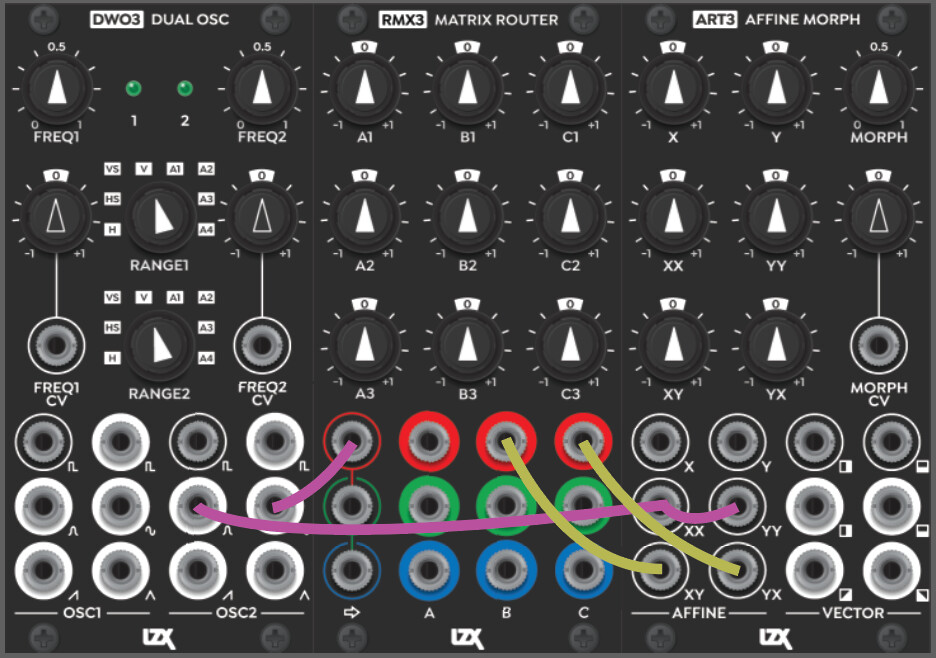
Now there is a second affine module coming, that is specifically a rotator / spinner. It has the affine, an internal quadrature oscillator, and a polar-to-cartesian circuit integrated, and is more like Navigator in that sense. So I think of ART3 as more raw access to Scale/Shear or just as a Shape Positioner/Sizer, whereas the next one will be more for angular displacement and rotation.
#143 — creatorlars · 2021-08-30
DesertMuseum wrote:
Could you speak a little to why we are seeing sync I/O on modules like FKG-3 when (the best of my knowledge) functionally similar LZX modules of the past did not have sync I/O. I imagine this has something to do with the new sync standards being implemented, was there something in particular that was discovered in sync testing that causing this revision?
Short answer; it’s because the toggle and rotary switch response is latched to the top of each video frame.
In the past, if you flip a switch on most LZX modules, this produces an abrupt distortion inside the middle of one of the transitioning video frame. Some modules circumvent this – like Cortex for example, has a big CPLD, so it latches things like this already. But most Expedition modules (anything without sync) will show you that glitch in the output any time you flip a switch. It may not be that big of a deal, but it’s an attention to detail that’s important if you are trying to record a live, hands on performance. So this is why Expedition preferred slide switches (a “programmed setting”) rather than toggles (a “live control”) in general.
From a form factor perspective, most modules will have sync IO. But they are ALL in identical, right angle tucked pockets on all modules. They will all fit any slot in any case identically. So as a user, it actually becomes easier to manage. You just expect that every module needs a short 6" RCA sync cable, to daisy chain to the next one.
#144 — creatorlars · 2021-08-30
Here are what will be the rear assemblies for all Gen3 modules. The white area will get a product specific label. Kudos to @brownshoesonly and the workshop team for the photos.
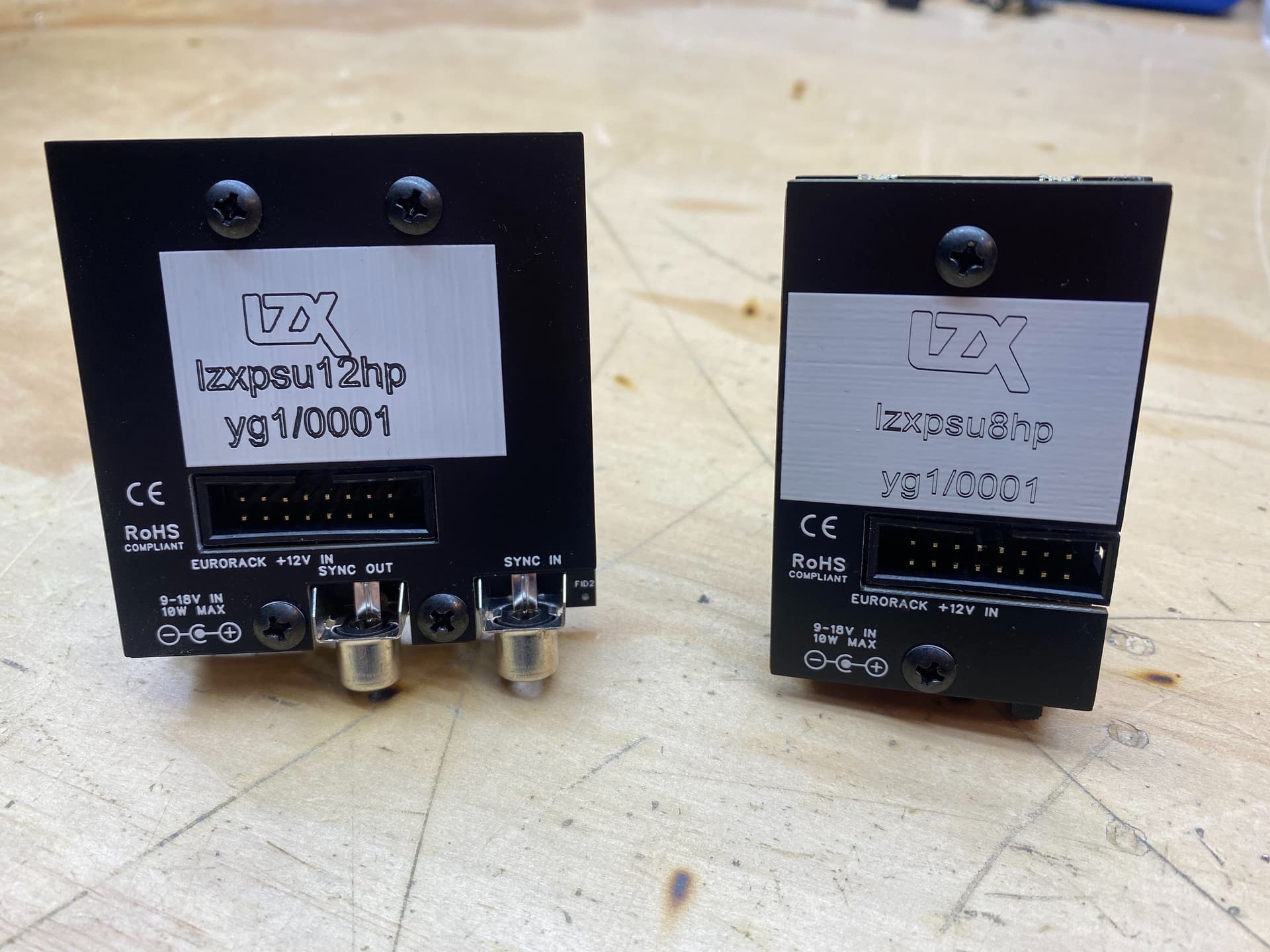
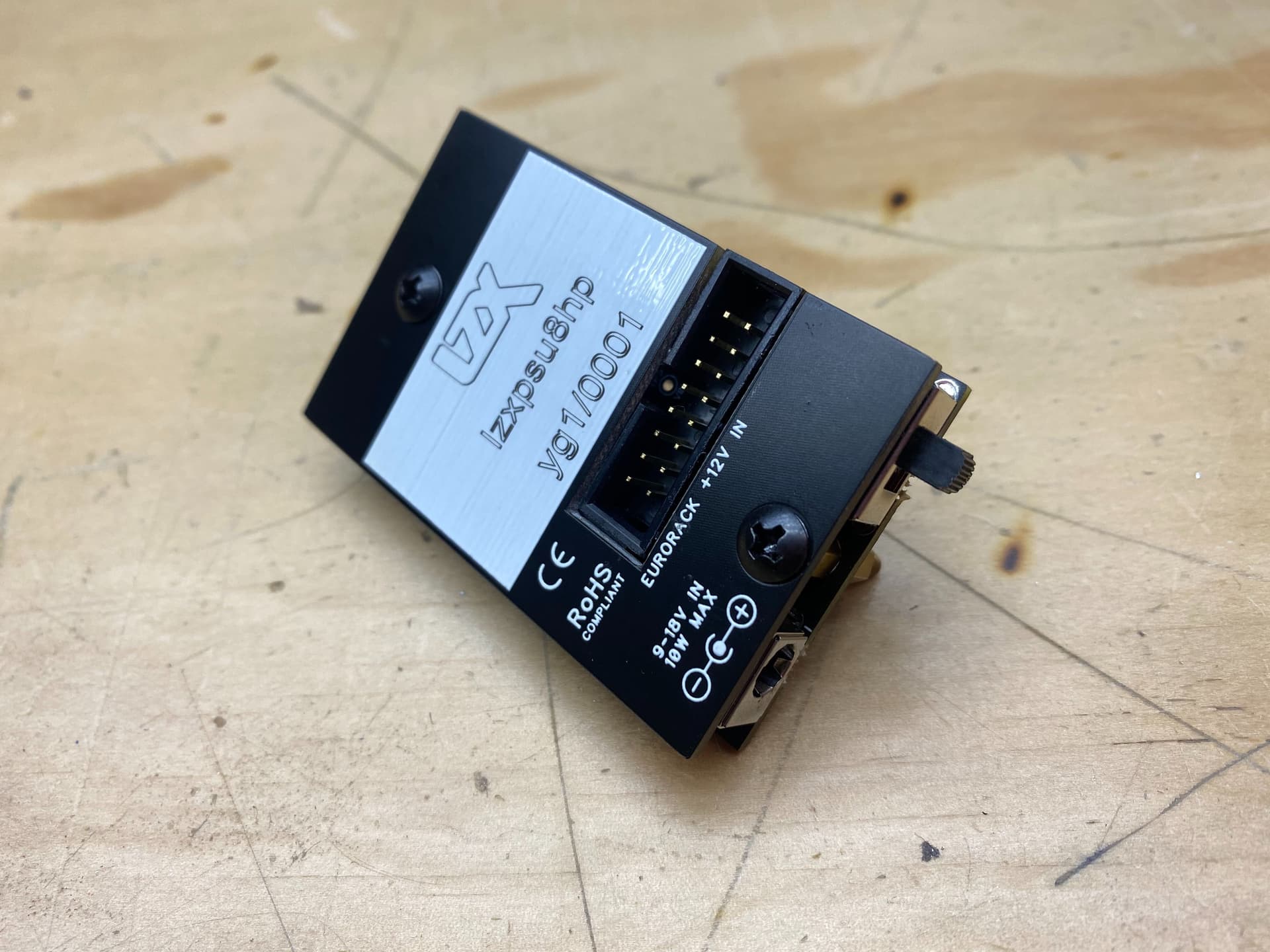
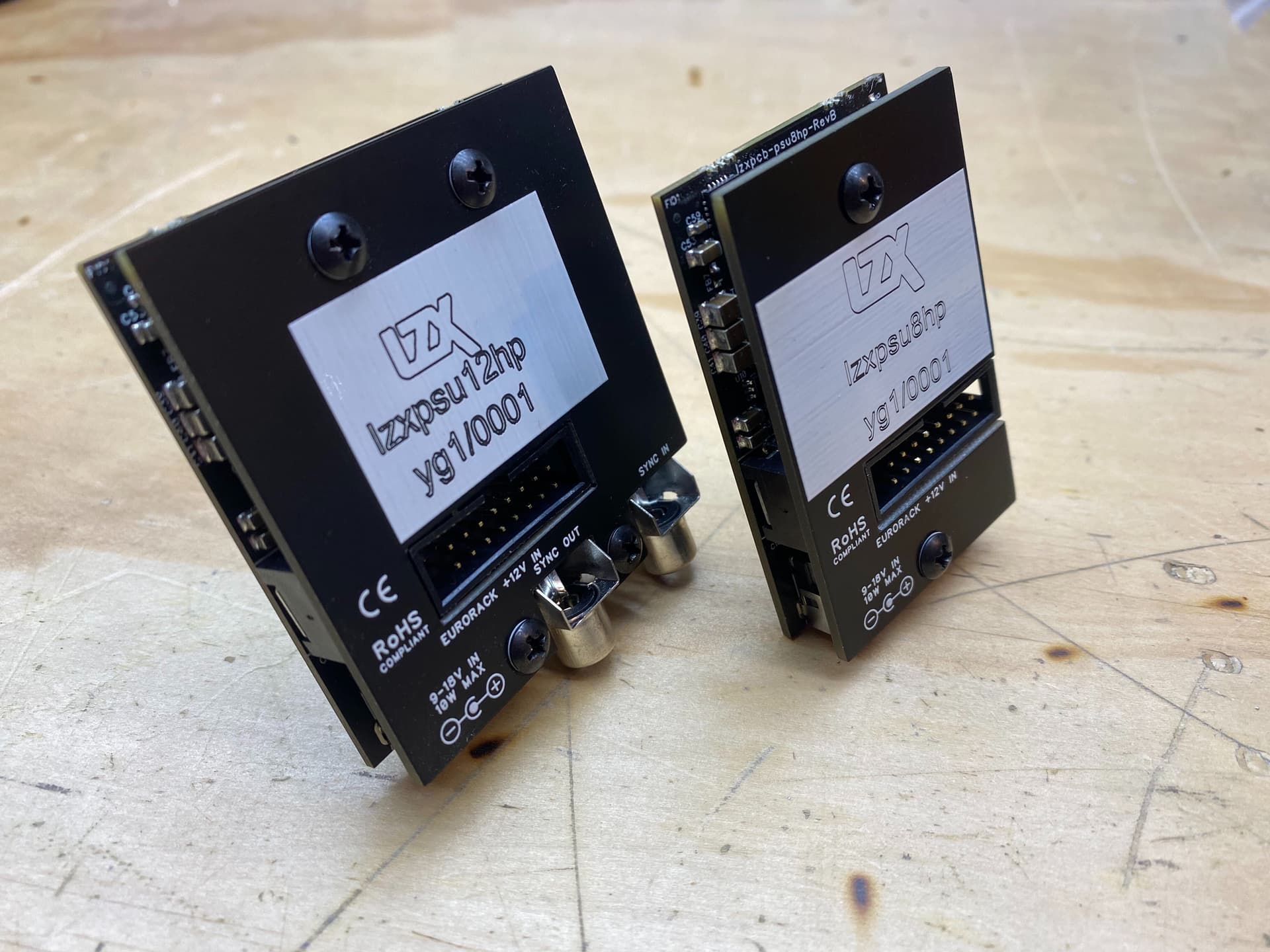
#145 — wednesdayayay · 2021-08-30
what are the 4 different outs on ART for? I see what looks like a H ramp and V ramp but then it looks like two diagonal ramps? Is there something that utilizes all four outputs at once? Or is it just about having a variation on the output?
perhaps a second memory palace isn’t that crazy…
Vector monitors are tempting maybe I should do some reading and at least get an idea of what that cost would look like. I’ve got a camera I really like for rescanning already so maybe vector rescanning isn’t that far off!
#146 — creatorlars · 2021-08-30
wednesdayayay wrote:
what are the 4 different outs on ART for? I see what looks like a H ramp and V ramp but then it looks like two diagonal ramps? Is there something that utilizes all four outputs at once? Or is it just about having a variation on the output?
They are 1:1 (45 degree rotated) mixes of H and V. So more in the vein of having useful variations.
#147 — creatorlars · 2021-08-30
csboling wrote:
I notice that there are no DC/AC coupling switches as are found on most Expedition series CV inputs. These are notably not present on Topogram’s CV inputs either. I find these useful on the Expedition series but I understand this contributes to component count and design complexity, but I’d be interested to hear more about this choice.
Sure! I suppose part of it is a move toward treating each element in that upper 3X3 grid as a very hands on, live element. So there’s a move away from using switches for “settings” – which is part of what I’d consider an AC/DC modulation switch.) Instead I’m trying to put settings into the patch itself.
So it would be more likely that we see more bipolar +/-1V outputs or AC coupled inputs on Gen3 modules, rather than AC/DC coupling switches.
And there are VCF modules coming – that’s what you’d want for deeper control over integration constants anyway.
#148 — vhsdestroyer · 2021-08-30
hey @creatorlars I’m wondering if you could touch briefly on the model for sales with these modules? Will these be preorders or for sale when completed?
#149 — creatorlars · 2021-08-30
We haven’t arrived at a decision there yet. We’re going to see how production on the first couple modules go this week and next week – and we are juggling with Chromagnon tasks, which have priority over the modules. But there will likely be some news soon.
#150 — petro · 2021-08-31
Will you make more vessels ? I just got one and would love to get another ! Best case
#151 — northerntao · 2021-08-31
Everytime a new generation of LZX modules is released, I realize a need a refresher course in trig and geometry!
#152 — creatorlars · 2021-08-31
petro wrote:
Will you make more vessels ? I just got one and would love to get another ! Best case
We are planning new 208HP and 52HP case designs for sure, but won’t be starting those projects until next year. So Vessel will be coming back with some updates.
#153 — Raoul · 2021-09-01
Hi! I am really excited about the new modules.
I am completely new to all of this, I ordered Chromagnon last year and bought some modules that I haven’t used yet, since I am waiting for Chromagnon.
I have Bridge, Passage, Curtain, Sensory, Prismatic Ray, BSO Scanner and Syntonie CVB001
Regarding to be able to use full HD resolution I have few basic questions. Sorry for the basic question, but I am struggling to understand… having never used the modules it is difficult for me to follow and understand this post and everything in general.
1 “ In NTSC/PAL modes, composite video outputs will be active ”.
It means if I stay in these modes I can not use component output from Chromagnon?
2 “ Most Expedition modules will work fine in either system – anything without sync IO on the rear is going to be compatible without a thought.”
From my list of modules, the only one that needs synch is Prismatic , correct?
3 Can I use prismatic and all the other modules with Chromagnon using “standard” resolution?
4 Patching between chroma and prismatic ray at full HD resolution, will be still possible, how?
Like using Chromagnon ramps output and mix or modulated them with prismatic ray and then going back to Chromagnon input in order to output the final results in full HD? I do not know if the example make sense
5 You suggested the DWO as a great addiction to Chroma… I remember reading time ago you also suggested a quadrature lfo. Will DWO work as lfo and as a quadruture lfo too?
I am thinking that if it is going to be too much headache making prismatic work with Chroma I will sell it and buy the new DWO.
Sorry again for so many questoins! Could you please reply in very simple terms…as if you are talking to a child Lol? Thanks so much
#154 — Z0NK0UT · 2021-09-01
Raoul wrote:
It means if I stay in these modes I can not use component output from Chromagnon?
You can still use component at NTSC (or PAL) resolution.
Raoul wrote:
From my list of modules, the only one that needs synch is Prismatic , correct?
Correct. Does your Prismatic Ray have an RCA sync connection on the back?
Raoul wrote:
Can I use prismatic and all the other modules with Chromagnon using “standard” resolution?
Yes.
Raoul wrote:
Patching between chroma and prismatic ray at full HD resolution, will be still possible, how?
You can sync Prismatic Ray using Chromagnon’s RCA sync output and then patch Ray’s outputs into any of Chromagnon’s inputs (or mix Ray’s outputs with Chromagnon’s outputs, as in your example).
Raoul wrote:
Will DWO work as lfo and as a quadruture lfo too?
Here is the suggested quadrature implementation using Gen3 Modules:
Yes. >> To program a rotation with the DWO in quadrature mode, would you need extra voltage arithmetic to turn the [0, 1] sinusoidal oscillators into [-1, 1] oscillators, then invert one with the ART’s attenuverter to get a rotation matrix? >> This is a good point. The quadrature outputs on the VCO are +/-1Vpp. While we typically don’t have generators with bipolar outputs on LZX modules, this is actually the existing precedent with MAPPER / COLORSPACE MAPPER on the UV outputs, which is the only…>
#155 — emooh · 2021-09-01
Is it possible to fill a 104HP row with Gen3 modules only? If not would you guys consider making an 8hp Gen3 module so that Vessel owners can fill their case with HD modules only?
#156 — Z0NK0UT · 2021-09-01
There will be 8HP modules to help fill 104HP.
#157 — creatorlars · 2021-09-01
Yes, we have both 8HP and 12HP form factors planned. None of the 8HP modules are in this group – this first set are all in the “bigger functions” category. Anything that is a generator (ramps or oscillators or sync), or that has control switches, needs to be 12HP or larger due to the need for video sync connection. This is a self imposed constraint, to keep all designs performing consistently in every case where sync is involved.
So 8HP modules will be similar to modules in the past like Arch, Bridge, Passage, etc. that provide direct access to raw functions. Utility panels.
#158 — emooh · 2021-09-01
8hp sensory translator or riot
#159 — sean · 2021-09-01
creatorlars wrote:
The quadrature outputs on the VCO are +/-1Vpp. While we typically don’t have generators with bipolar outputs on LZX modules, this is actually the existing precedent with MAPPER / COLORSPACE MAPPER on the UV outputs, which is the only place we have a quadrature encoded output.
So I am thinking of “quadrature out” (sin/cos) as +/-1V polar coordinates, and this being different from “sine out”, which is a 0-1V texture source. I can definitely make that more implicit in the panel graphics.
Just wrapping my head around this now.
So what you are saying is that the outputs I have labeled in yellow below are all 0-1v — as typical for past LZX modules — but then the pink ones are bipolar, +/-1v, right?
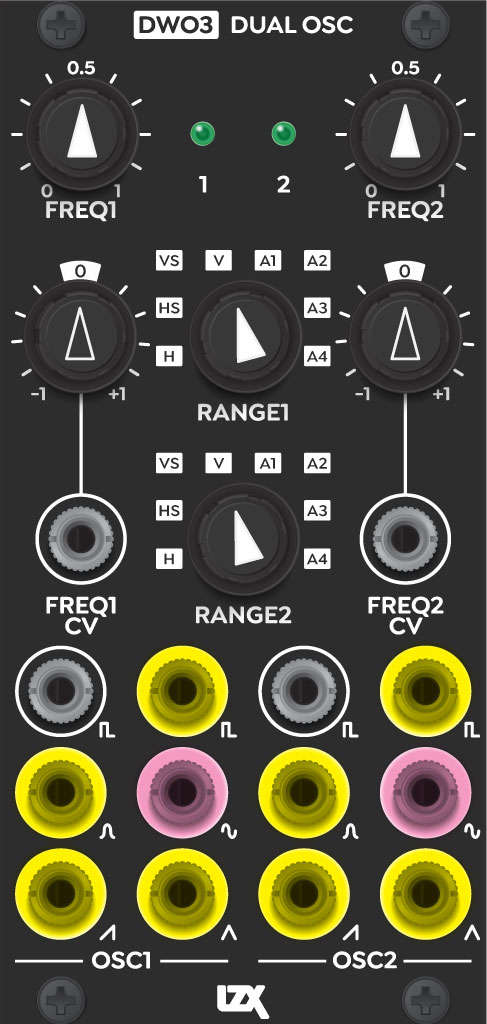
If that is the case, I think the labeling is pretty good, actually. If anything, maybe just its placement in the middle of all the others is a bit confusing? Perhaps the bipolar one could be up top, next to the sync input, so the 4 0-1v outputs all sit together? Like so…
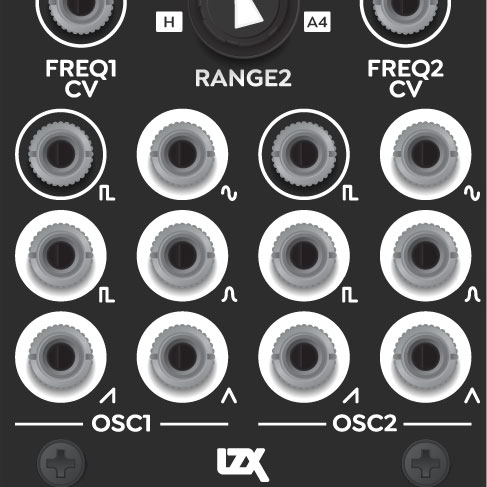
#160 — creatorlars · 2021-09-02
sean wrote:
So what you are saying is that the outputs I have labeled in yellow below are all 0-1v — as typical for past LZX modules — but then the pink ones are bipolar, +/-1v, right?
Here is how I changed the waveform output icons. The Sin/Cos are both bipolar/quadrature +/-1V out. Similar to the U/V outputs on Mapper.
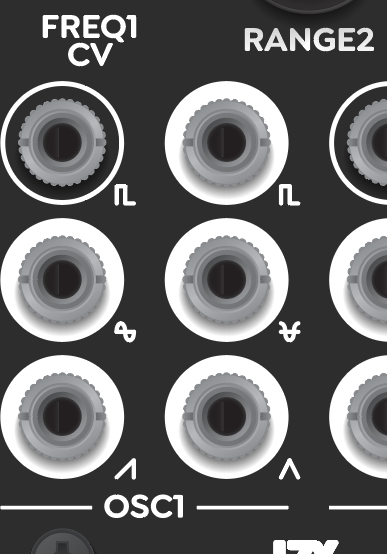
#161 — Rik_bS · 2021-09-02
Oh wow, that gets me excited - dual quadrature osc with resettable sync, stepping up possibilities in video-rate vector synthesis

Would having the DWO running without sync on the rear be possible, and just rely on front panel input for syncing? I can imagine some patching with castles or comparators or whatever…
edit: should I say… DWOW!
#162 — creatorlars · 2021-09-02
Rik_bS wrote:
Would having the DWO running without sync on the rear be possible, and just rely on front panel input for syncing? I can imagine some patching with castles or comparators or whatever…
There are free running modes in the range knobs (H and V vs HS and VS), so you can leave sync connected in the rear and still reset externally.
#163 — phosphenes · 2021-09-02
I don’t have anything to add to this thread other than to say that I am hugely excited about all of this and loving the forum activity!
#164 — vhsdestroyer · 2021-09-03
@creatorlars just occurred to me that there is a need for expandable I/O on ESG-3. Though the design is likely already finalized already if at all possible it would be really nice to see a header on the back of the module that could chain to another RGB and Component distribution amp.
For ESG-3 and chromagnon previewing and recording wouldn’t be possible without an external DA in HD resolutions. It wouldn’t surprise me if there is already a header for this like in the case of the Visual Cortex, but I’m curious if that’s something already integrated into the design.
#165 — rempesm · 2021-09-03
Are you looking for something like a 8HP distro amp (similar to Syntonie’s CBV001–EDIT: oops, I meant VU001) but intended for component outputs? Like it would have 3 RCA inputs and 9 RCA outputs in groups of 3? That way you could go take the output of your component encoder and route it to main projector, preview screen, and capture device.
I’ve got a half-done layout for this already.
#166 — vhsdestroyer · 2021-09-03
@rempesm Yes sort of, thats very close to what I’m thinking of. If there is a header that can bridge ESG-3 and Chromagnon with ribbon cable then it would eliminate the need for a front panel input and save some real estate.
I’d say it seems the likelihood of at least through-holes for a header on ESG-3 and Chromagnon is pretty high, but someone from LZX would have to confirm. It would be pretty sick to have 2 extra sets of component outputs in 4hp.
#167 — creatorlars · 2021-09-03
vhsdestroyer wrote:
@creatorlars> just occurred to me that there is a need for expandable I/O on ESG-3. Though the design is likely already finalized already if at all possible it would be really nice to see a header on the back of the module that could chain to another RGB and Component distribution amp.
You can get multiple ESG3s and mult to them if you want full control before output – or you can go from the Component or CVBS outputs to a distribution amplifier.
For monitoring, I would just use monitors that have loopthru for component sources. Most professional/broadcast monitors are designed with this in mind. If you are recording, your recording device likely has monitor outputs as well.
We can consider releasing a distribution amplifier utility module, that would be simple enough, if you want it inside the EuroRack. I think there are some DIY options for that, too.
#168 — creatorlars · 2021-09-03
vhsdestroyer wrote:
I’d say it seems the likelihood of at least through-holes for a header on ESG-3 and Chromagnon is pretty high, but someone from LZX would have to confirm. It would be pretty sick to have 2 extra sets of component outputs in 4hp.
There isn’t any extra IO on ESG3 or Chromagnon that is not already on the faceplates. But if you need extra IOs, it can be done with a distribution amplifier.
If you run in NTSC/PAL modes, you can use CVBS to monitor and Component for the main signal path.
#169 — vhsdestroyer · 2021-09-03
@creatorlars So just to clarify there is no video IO connection header or something similar like on Visual cortex for ESG-3? I would love to have the distribution amp in the case but in consolidating from 12u 104 to 6u 104, hp is precious lol. My hope was that there may be a similar header or test pads that could daisy chain to a component only DA, in something like 4hp. Or a least a way to hack one together.
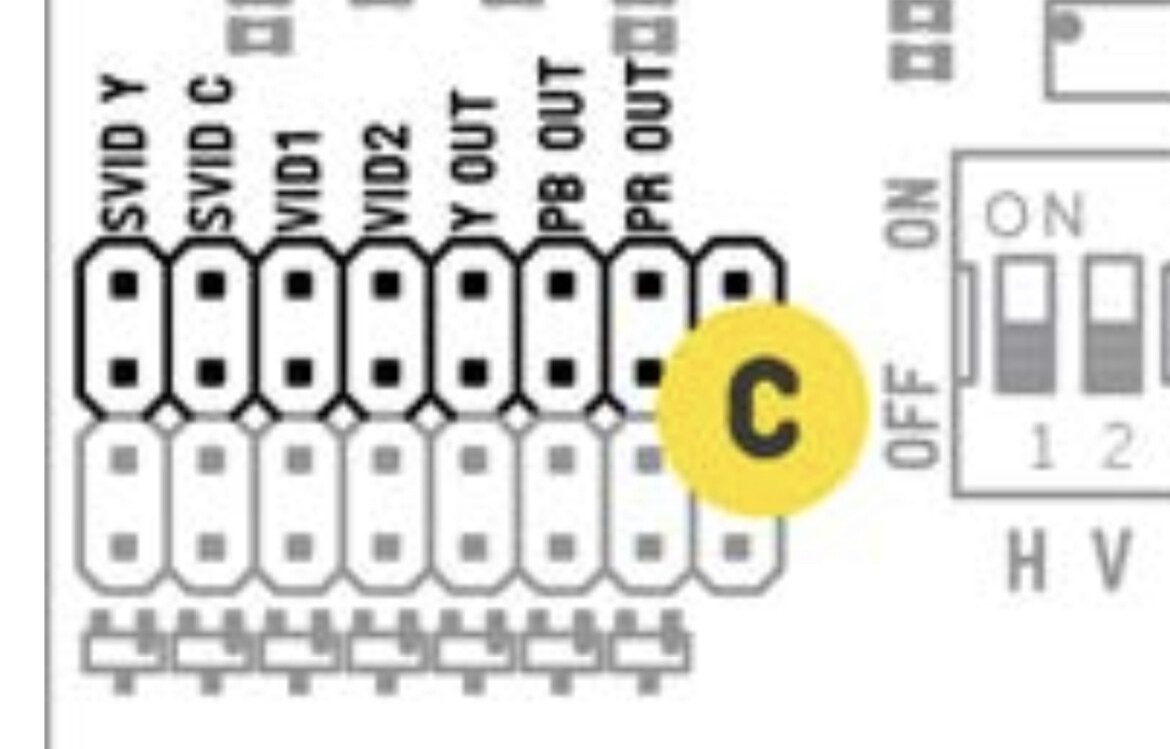
#170 — creatorlars · 2021-09-03
vhsdestroyer wrote:
So just to clarify there is no video IO connection header or something similar like on Visual cortex for ESG-3?
Correct. We’re being very strict about how video transmission lines occur in Gen3 (only thru 75R driven RCA connectors, with an individual buffer per output jack.)
We could have made a larger encoder module with a distribution amplifier and extra outputs built into it – but there’s always a cost – in this case, panel space. So that’s where we’re trying to adopt a specific philosophy on modules – in cases like this, the features are capped at 12HP and a distribution amp would be a separate module. The benefit of modular is that you can then build a system with extra IO only where you need it. It can be compact with multiple 12HP encoders, or have as many extra output amplifiers per encoder as you want (presuming a VDA module.)
If extra buffered outputs were a common use case, it would be a larger priority. Maybe we would have prioritized that over user adjustable RGB gain/offset on this module. But I’m not seeing cases for that yet. In the ESG3 to Chromagnon case, looping thru the monitor makes the most sense to me.
#171 — vhsdestroyer · 2021-09-03
Yeah in my particular use case I typically have the LZX linked to two projectors for live performances. I would love to see a DA around the 8hp format, similar to how @rempesm mentioned. Though the idea has now popped in to my head to work on component to 2xVGA distribution amp in 4hp, added benefit of locking connectors. Might be a little cramped though🤔
#172 — creatorlars · 2021-09-03
For two projectors, I’d want two output encoders! That way you can key sources to them symmetrically and give them different output palettes. I love those kind of patches.
Honestly though, I’d think of the VDA as part of your projection rig more than part of your video synth rig. Have a monitoring solution for your video synth rig’s output – that goes to DA, then on to projectors.
#173 — creatorlars · 2021-09-03
vhsdestroyer wrote:
ponent to 2xVGA distribution amp in 4hp, added benefit of locking connectors. Might be a little cramp
I think that’s a great idea. I’d consider making it more like 6HP or 8HP though, if we’re talking YPbPr input plus 2x VGA outs.
#175 — vhsdestroyer · 2021-09-03
Yeah 4hp is probably a bit too cramped, though it can’t hurt to dream. The potential though for running feedback from ESG3 > TBC2 > FKG3 has me mighty excited so I’m very likely gonna end up with a distribution amp in the rack regardless. I suppose a 1u tile might be a great space for that as well.
I guess even though this isn’t exactly in the same vein but I’m not sure if I saw it covered of how the toggle switches function for YRGB on ESG-3.
#176 — creatorlars · 2021-09-03
vhsdestroyer wrote:
I suppose even though this isn’t exactly in the same vein but I’m not sure if I saw it covered of how the toggle switches function for YRGB on ESG-3.
They are INVERT / ON / MUTE switches for each channel. The first one (with the white box) is a global invert / on / mute. So it works like a “kill to black” switch in the downward position, but without stopping video output. Very handy at a gig. Likewise the global invert is important in the feedback toolkit. If an RGB channel is inverted, global invert will un-invert it. So these work a bit like an output palette programmer in practice. I like being able to quickly get a few different color variations right on the output in a live setting, which is what the ESG3 controls are focused on.
#177 — Dr_Rek · 2021-09-03
Haven’t read the whole thread yet, about half way through, but chiming in that I would gladly preorder most of these too.


#178 — a_digital_index · 2021-09-03
@creatorlars Will the SMX-3 pots be indexed at the zero point like on the VBM v1? I find it quite useful but get it if the answer is no.
#179 — creatorlars · 2021-09-04
Yes, every time you see that little white mark, this denotes a center-detented pot with a true nulling range +/-10% from the notch. You will feel the pot click out of the center detent point before the gain starts being adjusted on either side.
#180 — a_digital_index · 2021-09-04
Perfect. Thank you! I’m very excited about these new modules.
#181 — creatorlars · 2021-09-04
Another note on that. In addition to center detents for all pots on ESG3, there are 6 frontpanel accessible color balance trimmers that correspond to the 6 pots. These trimmers will set the color balance of the null position of all knobs, so you can tune the encoder to a studio reference. (It’s very subtle in the artwork, currently, but the red lines below are pointing to trimmer access holes in the panel.)
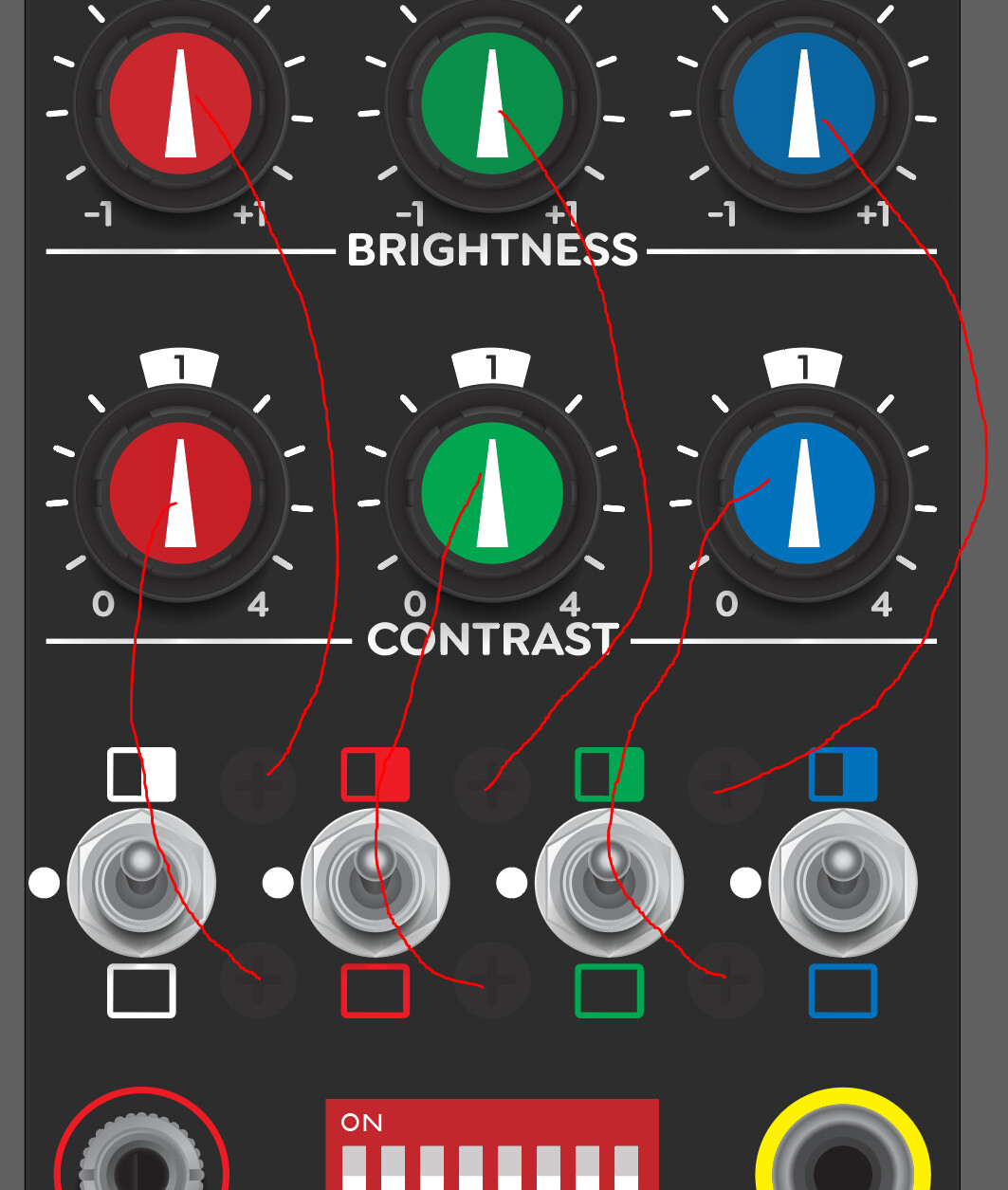
#183 — wednesdayayay · 2021-09-04
I love that the trimmers are a surprise hidden in plain sight just like the chromagnon!
#184 — Raoul · 2021-09-06
Thanks a lot for your reply!
I have the latest model of Prismatic, I think is the one that have also synch on the rear.
If I understand correctly what you said, you meant that if I use the Prismatic front synch instead of the rear synch I will be able to cross patching between Chroma and Prismatic at full HD without any problems and I will be able also to output the final result in full HD from Chromagnon?
From the Lars post I seemed to have understood that it was not possible. It says “ In this case cross patching between the HD and SD systems won’t really work out,…”
Thanks again
#185 — creatorlars · 2021-09-06
Raoul wrote:
If I understand correctly what you said, you meant that if I use the Prismatic front synch instead of the rear synch I will be able to cross patching between Chroma and Prismatic at full HD without any problems and I will be able also to output the final result in full HD from Chromagnon?
You understand correctly.
#186 — bentoncbainbridge · 2021-09-06
saiteron wrote:
i’ve always been a sucker for attractive typography (huge fan of the typeface on the Expedition panels as well)
I too love the groovy Expedition font, however I prefer the ‘pro’ look of the Gen3 typeface. What is the new font?
#187 — bentoncbainbridge · 2021-09-06
Dr_Rek wrote:
Haven’t read the whole thread yet, about half way through, but chiming in that I would gladly preorder most of these too.
Me 3!
#188 — creatorlars · 2021-09-06
bentoncbainbridge wrote:
I too love the groovy Expedition font, however I prefer the ‘pro’ look of the Gen3 typeface. What is the new font?
The typeface is Goldplay Semi Bold. Typeface is a big choice for me and I’ve tried to refine our choice over time. This typeface really works for me – it is legible and polished as a technical / academic font, anachronistically playful but not over the top, and design wise soft and geometric to represent our brand itself. It is, proportionately, the most circular font we’ve used to date – I feel like it really harmonizes well with all the other round elements on the panel and print.
There’s a free version of one of the line weights available for download here:
Free Fonts – 27 Mar 20https://www.freefonts.io/goldplay-sans-font/Unlimited Free Fonts Download Goldplay is based on Isidora Sans design yet features rounded shapes. Its rounded, soft terminals give it a friendly and expressive look, and its modern and contemporary style as well as its classic proportions...
Est. reading time: 2 minutes
Link: Goldplay Sans Font - Free Fonts
#189 — sean · 2021-09-06
creatorlars wrote:
The Sin/Cos are both bipolar/quadrature +/-1V out.
I guess, in my ideal world, these would be user-selectable as either +/-1v or 0-1v.
saiteron wrote:
with the model numbers in outline and the full words next to them the panels just > > feel> > so much more complete
Not sure if I already said this or not, but… Agreed!
My one kvetch on typography would be that knob labels feel uncomfortably close to the range markings:
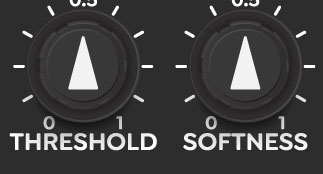
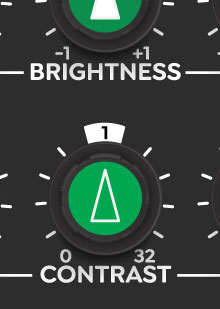
An extra millimeter or two would go a long way there.
#190 — rempesm · 2021-09-06
sean wrote:
I guess, in my ideal world, these would be user-selectable as either +/-1v or 0-1v.
Assuming SMX3 has normalled 1V reference to its inputs when they’re unplugged, you could just plug the bipolar outputs from DWO into one channel of SMX3, attenuate it by half (+/-0.5V swing) and then add 0.5V with another unused pot in the matrix for 0-1V swing. For quadrature modulations, it’s much more important that these come out natively as bipolar signals. It’s only at the encoder that signals are clipped 0-1V so a ton of processing can be done thru zero in between before it hits that. Being able to access these directly for vector applications is huge, too. Doesn’t seem like there’s much room for additional switches on DWO as well.
#191 — creatorlars · 2021-09-06
sean wrote:
I guess, in my ideal world, these would be user-selectable as either +/-1v or 0-1v.
Think of it like the DWO3 provides the positional element:
- Vector (Ramp Out)
- Mirrored Vector (Triangle Out)
- Phase Angle (Sin/Cos Out)
- Clock (Square Out)
And DSG3 provides the textural element:
- Parabolic Shaping (creating Circles)
- Exponential Shaping (creating Stars)
- Rectification (pattern divisions and multiples, Triangle)
So the Parabolic/Expo shapers on DSG3 are your textured sine outputs. It’s just that you are splitting quadrants across XY axes before the shaping occurs (so that you can rotate and split and fold and rectify the linear Cartesian Vector before the parabolic shaping occurs – where it is most powerful, inside the patch.)
The bipolar sines will feel pretty natural, even as default modulation/Texture sources. Just think of them as “Blank Circle Blank Circle” or “Circle Blank Circle Blank” waveforms when used directly as textures. If you want “Circle Circle Circle Circle” that can be done with the rectifiers on the DSG3.
So a Gen3 synthesis workflow goes like this.
- STEP1 Generate a positioning vector (HV ramps, sin/cos, etc)
- STEP2 Modify/processing/shape the positional vectors
- STEP3 Synthesize a color texture (RGB out)
And some notes:
- DWO3 is the most basic STEP #1 module. It’s optional because the other modules have default HV ramps internally.
- DSG3 is the most basic STEP #2 module. Ramp crunching waveshapers for making 2D patterns. It’s optional because you can always use DWO3
- STEP3 is you and your cables! It’s in how you patch the sources from DWO3 and DSG3 to an RGB input somewhere.
#192 — creatorlars · 2021-09-06
sean wrote:
My one kvetch on typography would be that knob labels feel uncomfortably close to the range markings:
They’re a little close I agree. If this were art for a poster I’d think about it a little differently, but in this case that’s an intentional decision for a few reasons:
- The type and all components are laid out on a 100 x 125 mil alignment grid, it’s been part of our standard since the beginning. That ensures that when it neighbors other LZX modules, headings and controls will all line up. This typeface is a point size larger than our old one in Expedition, but the knob sizes are the same – so that’s why it’s a little cramped
- Especially with the black backgrounds, it’s very easy to lose which label belongs to which knob if the spacing is at all ambiguous. You have to end up doing mental gymnastics like “well it’s closer than this other label is” or “all the labels appear to be under the controls, so it must be this”
Admittedly I love it when this happens – breaking a design rule, but it does so in sacrifice to maintaining some consistent usability logic. It throws you off at first, but then by doing so only strengthens the underlying ruleset. And it allows a history (and a conversation) to develop over time.
#193 — Yatsek · 2021-09-07
interesting font here (apparently debunked - does not improve recall):


https://sansforgetica.rmit.edu.au/Sans Forgetica is a typeface designed using the principles of cognitive psychology to help you to better remember your study notes.
Link: Sans Forgetica
Looks interesting, though.
#194 — Yatsek · 2021-09-08
I was/am curious how that font would look like on the faceplate of a futuristic LZX video synth module.
#195 — creatorlars · 2021-09-08
That’s a really cool font! Maybe we’ll play with it in the layout for the patch diagram book I want to do.
#196 — vhsdestroyer · 2021-09-08
I’m not sure if I saw this specified already but in the instance of TBC2 as the parent sync, will ESG automatically update its sync format or would you have to adjust the dip switches?
#197 — creatorlars · 2021-09-08
It will auto detect the format. The DIP switch setting only matters if it’s an independent operator.
There’s one exception, and that is that the YPbPr vs RGsB colorspace setting is defined on the DIP switch. So that setting is always local to the module, since we can’t decode a colorspace mode from the sync signal itself.
#198 — creatorlars · 2021-09-11
We had fun bringing FKG3 to life this week! (Non production faceplate / knobs). I’m excited to record some HD tests with this keyer, TBC2 and Chromagnon next to share with you all.
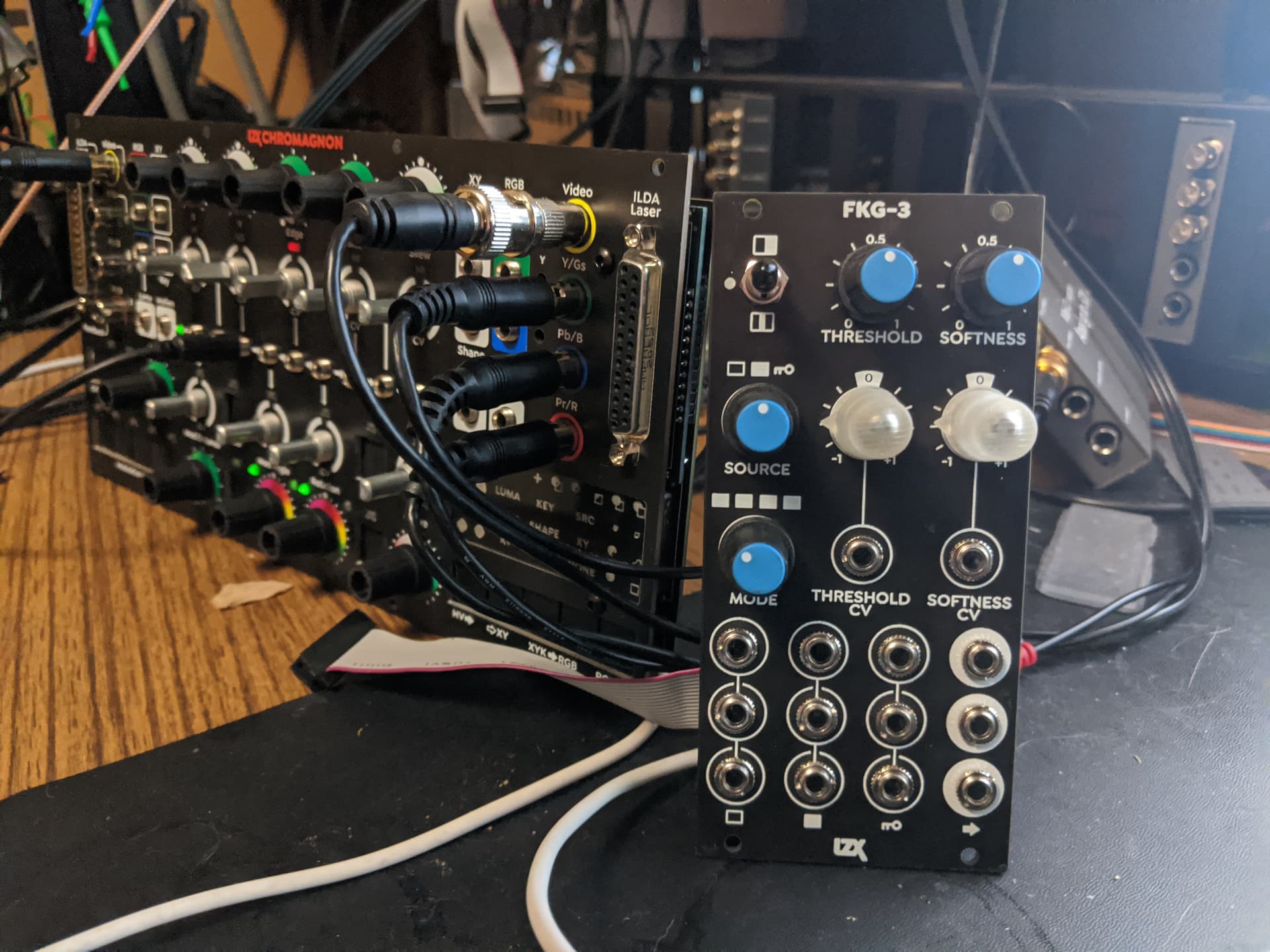
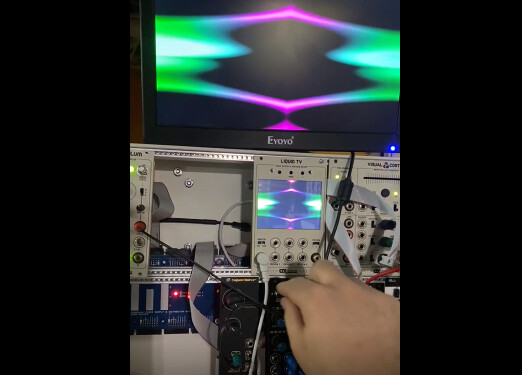
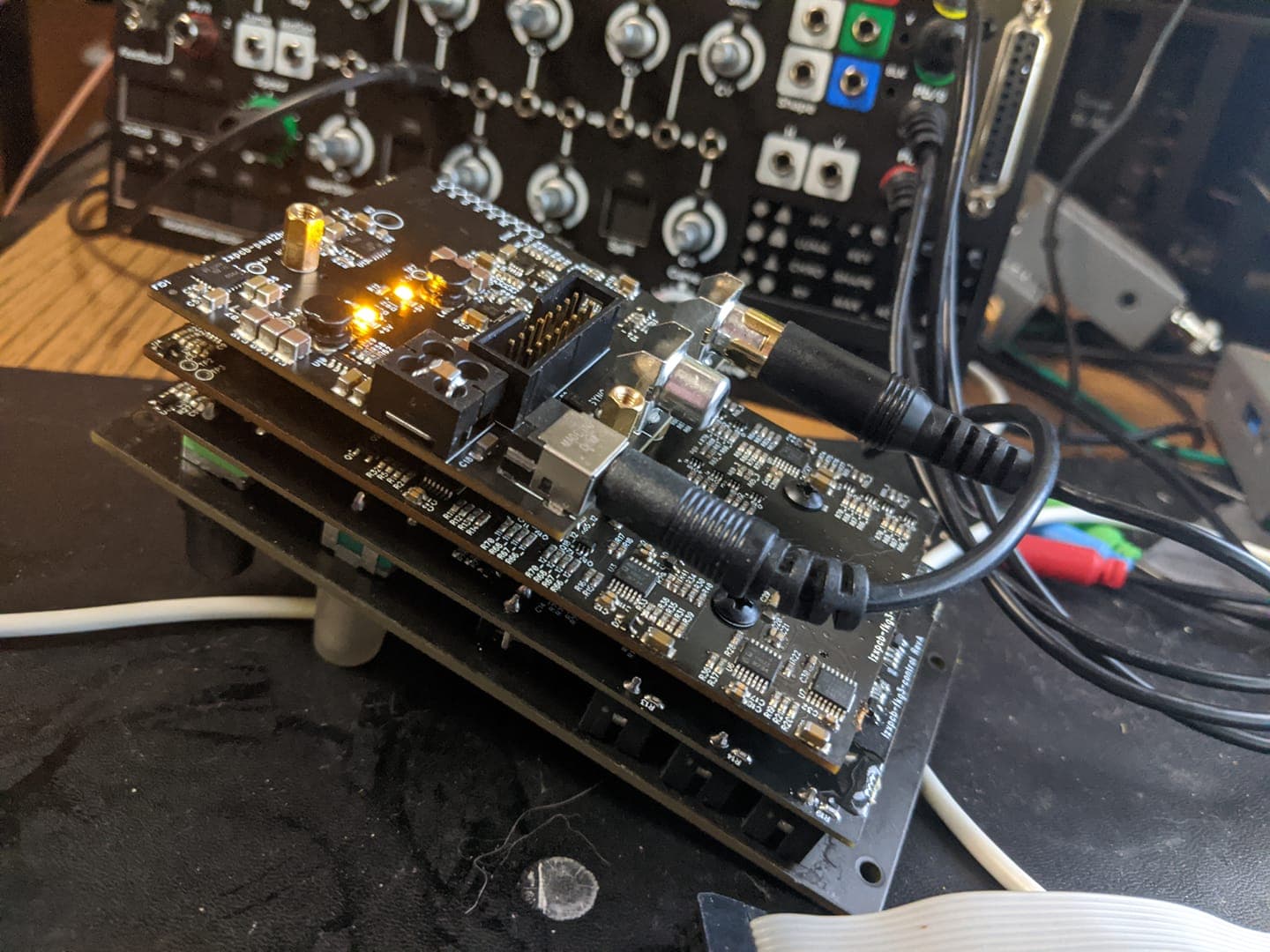
#199 — Chickenbone · 2021-09-11
I, for one, am very excited.
#200 — Z0NK0UT · 2021-09-11


https://lzxindustries.net/collections/gen3Link: GEN3
Two modules are now available for pre-order!
#201 — OccamsLaser · 2021-09-12
Is RMX-3 Matrix Router functionally an inverse SMX-3 Matrix Mixer? As someone with zero real knowledge of what the underlying circuitry for these things looks like, could the functionality of these two modules not be combined somehow, given how similar their interfaces are? Again, I don’t know shit and am pretty much just looking at shadows, I just think the interface/functionality seems unusually similar.
I love the functional design and aesthetic of these modules. And basically everything about them, the more I look and think about them.
#202 — creatorlars · 2021-09-12
Yes, they are inversions of each other – the Matrix Mixer expands your system’s total number of inputs, whereas the Matrix Router expands your system’s total number of outputs. If we put both functions on the same module then you can’t, as the user of this modular toolkit, adjust that IO ratio yourself.
Some systems won’t need the router. Some won’t need the matrix. Some may want multiples.
If you want lots of color mixing control of individual components, or to mix RGB sources with abstract RGB or luma sources, you want the Matrix Mixer.
If you want lots of modulation routing, animation rigging, flat color/palette programming, parallel motion paths, complex VCO control schemes, etc. you want the Matrix Router.
We’ve been considering some other approaches to the router. But as the concept is at the moment, they are intentionally similar so as to be symmetrical building blocks – like a left bookend and a right bookend.
#203 — bentoncbainbridge · 2021-09-13
creatorlars wrote:
Since we have based our supply chain in FR4 panels, that means variants are easy to manage.
Lars, just making sure I got it—are all Gen3 panels manufactured with FR4 laminates? thanks
#204 — creatorlars · 2021-09-13
Lars, just making sure I got it—are all Gen3 panels manufactured with FR4 laminates? thanks
Correct. Production modules will have black FR4 panels with UV color overprint. We print a translucent layer of color over the PCB silkscreen in house with our UV LED printer. It looks great, is durable, and ensures we can go from a PCB order to a shipped module within a couple weeks lead time. The black color + white silk coming from PCB fab is a design choice motivated by the color overprinting method, which would not work the same way on a white panel.
I think the FR4 panels look great. But would like to offer anodized or powder coated aluminum panels with 4-color silkscreen, or Metalphoto panels in the future,. Those would be offered as OEM replacement parts and not a base/assembled option.
I’m also happy to open source the dimensional drawings of the panels for anyone wanting to make their own replacements for personal use.
In general we want to offer more options with this series, and more customization, and keep this series as our core offering for many, many years – meaning an accessible OEM/DIY catalog of replacement/alternate parts, knobs, subassembly options, etc.
#205 — banyek · 2021-09-16
I am so happy to see the new shape transformation tool finally seeing the light of day.
I have always wondered what the maximum level might be for modules like this to work with still images loaded from an Andor1 for example. I know Memory Palace is the ultimate tool for deforming those complex images and videos, yet I have never seen a demo to know how far I could go with a shape transformation tool. Could it be “just” ramp like shapes or grids or what could the recipe be with them? I only saw Shapechanger in the 3 Patches series being used for processing external video, yet it only added some distortion/artefacts on the input. Hope you could get me even more inspired!
#206 — creatorlars · 2021-09-16
I’m not sure exactly what you mean. ART3 and Chromagnon are the same basic functions as Navigator/Shapechanger under the hood. They are analog computing functions that perform 2D math on voltages – they are not frame buffers than can reposition the pixels in an input image. (That’s the domain of digital processing such as Memory Palace.) The exception of course is if you’re doing vector rescanning techniques and using these to modify ramps sent into XY of the vector display. Then you are able to warp, spin, reposition where the texture appears on the screen in an analogue way.
#207 — banyek · 2021-09-16
Thanks Lars, you have just answered my question - I just wanted to comprehend a form or technique which is the last “outpost” between the analog 2D computing and digital frame buffer territory. I am sure I will try to have a go at it this way as I have managed to get Andor1 images and videos on my oscilloscope screen modulating the Cadet ramp and VCO. Hope to see ART3 available soon.
#208 — joem · 2021-09-17
I have a few questions about sync with the gen3 modules…
- Does the sync signal have to be a black video signal, or can it have video data also?
- Will presence of a color burst in the sync signal change anything for better or worse?
- Are some of the modules more tolerant to the above conditions in the sync signal than others?
- Do any of these answers differ depending on SD vs HD sync?
And specifically about the two that are up for pre-order right now:
- Do either of them take sync? (I presume the FKG3 does and the SMX3 doesn’t, and I feel like this has come up in this thread, but it’s kind of hard to search.)
- If either of them take sync, do you think they can still be useful without sync?
(Can you tell that I don’t really have an RCA sync generator (yet) and am wondering what I can get away with?
)
#209 — creatorlars · 2021-09-17
I love questions in lists!
joem wrote:
-
Does the sync signal have to be a black video signal, or can it have video data also?>>>>
There can be video present as long as the sync is clean. There’s an auto detecting SD/HD filter in the LMH1980 circuit (from their datasheet) that will filter SD more aggressively (to remove chroma artifacts that could interfere with sync.)
joem wrote:
-
Will presence of a color burst in the sync signal change anything for better or worse?>>>>
I can think of a few stray cases in which it matters, but in practical terms: no, you don’t need color burst. It’s something generated at the encoder/syncgen, on modules with CVBS output (like ESG3.)
-
Are some of the modules more tolerant to the above conditions in the sync signal than others?>>>>
No. The sync IO are on the rear power + sync assembly and the circuit is identical on all modules.
-
Do any of these answers differ depending on SD vs HD sync?>>>>
No.
-
Do either of them take sync? (I presume the FKG3 does and the SMX3 doesn’t, and I feel like this has come up in this thread, but it’s kind of hard to search.)>>- > If either of them take sync, do you think they can still be useful without sync?>>>>
FKG3 requires sync connection.
SMX3 does not require sync connection.
In the case of your existing system and using FKG3, you can just loop your encoder output thru it or your input source (if that is what you are genlocking your C1 to.) That should work no problem.
#210 — joem · 2021-09-17
Thanks, those are all what I was hoping/figuring!
#211 — a_digital_index · 2021-09-19
@creatorlars Can we discuss SMX3 and its functionality in relation to VBM I & II? Is SMX3 essentially a VBM I without the 1-n switches, ABS out, and xtra channels?
#212 — creatorlars · 2021-09-19
Can we discuss SMX3 and its functionality in relation to VBM I & II? Is SMX3 essentially a VBM I without the 1-n switches, ABS out, and xtra channels?
Correct, it’s the core “3x3 colorspace matrix function” without any of the extras. Implemented with Gen3 circuit designs for null band attenuverters. We feel like this is an important function that is complex enough as it is (patchable in several different ways) to encapsulate in 12HP. The other functions move to new homes in other modules.
There is a 12HP 2-channel blending module coming that will cover things like ABS outs and advanced blending modes from Marble Index (include Luma logic based blends we’ve never implemented before, like Screen and Overlay.)
Note that “1-n” and “ABS” (in addition to MIN and MAX) are also discrete functions of the DSG3 Dual Shape module. Definitely think of DSG3 Dual Shape as a Dual Multimode Mixer / Blending / Inverting Function when you’re thinking about processing RGB signals with this initial set.
So think about the case of a system with 2x DSG3 + 2x SMX3. This is two very different systems depending on how you patch it: a complex RGB ramp/shape synthesis toolkit when shapes go to matrix inputs – or an RGB layer blending / color correction engine with RGB gamma / RGB logic when matrix inputs are frontends for RGB blending functions patched across the two DSG3s.
#213 — creatorlars · 2021-09-19
So when adapting from thinking of the early approach, the SMX3 is really a “front end processor” or “sub mixer” more than anything. It’s designed to produce a single RGB output. Like a preamp or mixer channel insert in audio console. But instead of “RGB level controls” you have “RGB to RGB translation controls.”
So it’s “roll your own RGB workflow” in Gen3, effectively. The “VBM” concept is tunable based on the ratio of SMX3/DSG3/future blender modules you put in a row. Even if you’re just looking at 3 modules, there are several viable combinations that are each unique variants of the original VBM concept.
#214 — a_digital_index · 2021-09-19
Perfect. That is exactly what I thought. Can’t wait!
#215 — sean · 2021-09-19
creatorlars wrote:
There is a 12HP 2-channel blending module coming that will cover things like ABS outs and advanced blending modes from Marble Index (include Luma logic based blends we’ve never implemented before, like Screen and Overlay.)
Nice to get these blending modes in the mix (pun, I guess, intended?). Screening, especially, is a much better-looking way to mix RGB images than adding or multiplying in many cases. Looking forward to seeing that module!
Would also be cool to have a mixer module that, instead of just crossfading with an inverse linear ratio (center of fade is 50% of each channel), could blend 2 RGB channels with the following mix curves (center is 100% of each), and then with user-selectable blending modes:
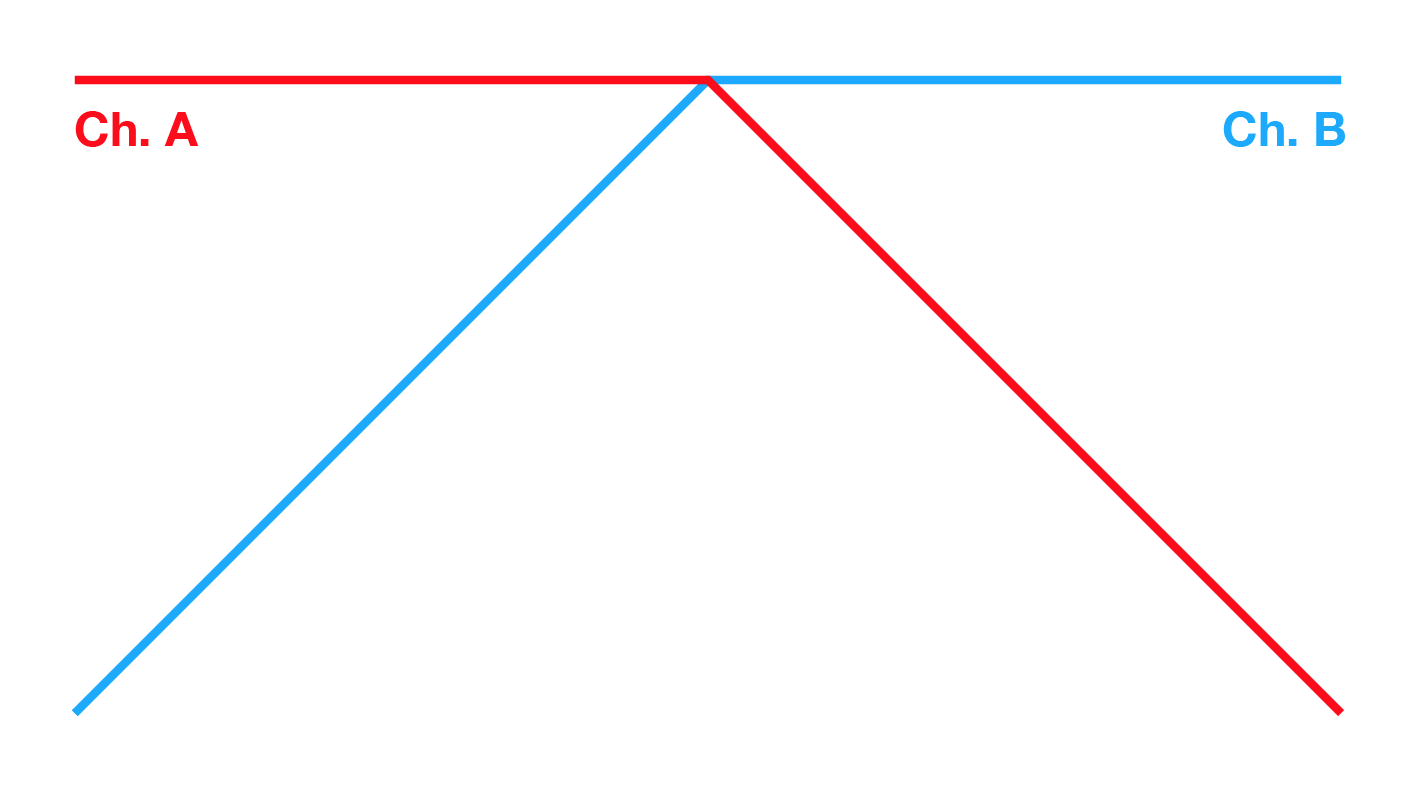
Maybe in the eventual RGB instrument (“Solarium”)?
NOTE: edited this to maybe be a bit clearer(?)
#216 — rempesm · 2021-09-19
Gamma shape the signal going into threshold CV of FKG and you could quite precisely adjust that curve however you want.
#217 — creatorlars · 2021-09-19
sean wrote:
Would also be cool to have a mixer module that, instead of just crossfading, could blend 2 RGB channels with the following curves, with user-selectable blending modes:
A curve like that would be part of a blending function itself – for example, the Screen and Overlay luma functions would look similar (but maybe the inverse of that.) The blending module will likely have individual inverts on both RGB inputs, so you can get 4 variations of each blending mode if you wanted to, for example do a “Negative Screen” or an “Inverse Screen.”, etc. Marble Index works this way (with the Clip / Solarize functions.)
What you’re showing is 1-DARKS for the B channel and 1-LIGHTS for the A channel. Discrete outs for DARKS & LIGHTS functions will definitely be part of the Outliner module, which is a rectifier/filter. So maybe some other options there for the more piecemeal style blending.
#218 — creatorlars · 2021-09-19
rempesm wrote:
Gamma shape the signal going into threshold CV of FKG and you could quite precisely adjust that curve however you want.
Absolutely! Or you patch the gamma shaping itself, by using FKG as a luma multiplier and then mixing its output back with the original RGB (using an SMX or more complex blending function.)
#219 — sean · 2021-09-19
I guess I was misinterpreting your original comment about “2-channel” as meaning two mono channels. But it sounds like you were speaking of 2 RGB channels, which is great! Excited!
#220 — creatorlars · 2021-09-20
Yeah! It would be an “RGB blender” in the same sense that FKG is an “RGB keyer.” Both are similar in the sense that are “RGB 2:1” functions.
SMX3 is an “RGB matrix” (RGB 1:1 function) or an “RGB mixer” (RGB 3:1 function).
DSG3 is a “Dual Multimode Mixer” (Mono 2:1 functions).
#221 — sean · 2021-09-20
Yeah, I was imagining something more like 2:many, like the left side of Arch.
#222 — creatorlars · 2021-09-20
Yeah, I was imagining something more like 2:many, like the left side of Arch.
Right, that’s what the 4x outputs on each “DUAL SHAPE” section are (SUM, MIN, MAX, ABS.) I guess I still consider it 2:1 (there’s just 4 variant outputs) where as a 2:4 would be more like a mux/router scenario.
Of course, you are right – it is missing the DARK/LIGHT outputs like Arch, but those will show up elsewhere.
#223 — banyek · 2021-09-20
I read the thread thoroughly, seeing that how each Gen3 module had its own HV ramps built in - just here to make sure that if I had a system with Expedition, Castle and Cadet modules (including the RGB Encoder on the output), that I could get my ART3 to either be the master sync for the Cadet system or slave it via the RCA sync in on the rear. I would also wonder what it or other Gen3 modules would do without input signals - sounds great not to have these “pre-filled” modules anyway!
#224 — creatorlars · 2021-09-21
banyek wrote:
read the thread thoroughly, seeing that how each Gen3 module had its own HV ramps built in - just here to make sure that if I had a system with Expedition, Castle and Cadet modules (including the RGB Encoder on the output), that I could get my ART3 to either be the master sync for the Cadet system or slave it via the RCA sync in on the rear.
ART3 is not a sync generator, it needs connection to a sync generator or video source of some kind. You can use your Cadet Encoder output and chain it through.
#225 — banyek · 2021-09-21
creatorlars wrote:
ART3 is not a sync generator, it needs connection to a sync generator or video source of some kind. You can use your Cadet Encoder output and chain it through.
Thanks for clearing that up - I was just reading on Modular Grid that “This module requires sync” - at first I thought it right just how it was with Shapechanger! Really looking forward to integrating it and adding DSG later on!
#226 — vhsdestroyer · 2021-09-22
@creatorlars I’m not sure if this thread or a new thread would be best for this post but I do have a request to make. I started building my LZX in July of 2020 and as we all know the availability of modules over the last while has made it very difficult for newcomers building systems.
I’m very excited about this first release of gen 3 modules and I know there have been a couple more mentioned. Rotate/Scroll, 2 Channel Blending, Filter/Fader, Edge Extractor, Routing Matrix, Triple Key are all I can think of getting specific mention off the top of my head.
All this is to say, I’m currently thinning out my system, in an effort to start fresh and build a system based on practicality for my use cases rather than just buying what has been available. Myself and I’m sure many others would probably appreciate a revision to the roadmap, with a little more clarity on future gen3 modules, if possible.
I’m sure there are some modules that have more concrete plans than others, but I can say for myself I’ve never quite had my system built the way I had hoped for seeing that everything has been so rare lately. Knowing some of the future modules would help avoid double purchases, or “redundant” functionality. (Though some redundancy in some areas wouldn’t be a bad thing)
#227 — Psychoflauge · 2021-09-22
Dont you know anytime you ask for a timeline update Lars just pushes everything back a month?
#228 — joem · 2021-09-23
I know you said you’re thinning out your system, but redundancy in almost every area of video synthesis is a good thing. Pretty much the only area that doesn’t (necessarily) benefit from redundancy is output encoders (but even then there can be times where you want multiple output encoders). Otherwise, redundancy just means more signal channels can be processed (R and G and B, or multiple sets of RGB!), or things can be processed in ways that you couldn’t before.
So don’t be afraid of redundancy. And know that as with most modular synth stuff, the resale value usually holds pretty well. Even before the covid-time LZX shortages pushed a lot of used-LZX sales to near (or greater than!) list price, there always seemed to be more people looking for old LZX gear than there were people selling it. So if you end up truly having an unnecessary redundancy, you will probably be able to sell it for a decent percentage of what you paid, even if it’s an older module.
#229 — Agawell · 2021-09-23
duplication (or more) of modules in modular synthesis (whether audio or video) is not a bad thing…
modules are only redundant if you don’t use them…
I’m keeping all my expedition/orion/cadet/castle and 3rd party modules and will add to them with whichever of the 3rd generation modules I think I will use…
#230 — Marizu · 2021-09-23
Redundancy in video synthesis is a great thing if you have enough space (and enough money).
I think that @vhsdestroyer is trying to plan a case that is specific to live performance. It needs to be transportable.
#231 — Agawell · 2021-09-23
very true, but there’s transportable and transportable…
and having a performance case does not exclude having a studio case 2
a performance case may just be a playback device feeding an effects unit and some modulation, for example
#233 — creatorlars · 2021-09-24
Myself and I’m sure many others would probably appreciate a revision to the roadmap, with a little more clarity on future gen3 modules, if possible.
This thread is a great reference for the state of Gen3 development, and future modular plans. There aren’t any hidden secrets, you are privy to all knowledge on the subject.
The roadmap for now is these 6 modules. And another set coming next year.I’m happy to chat about ideas and modular concepts always, but the *last* thing I want is anyone planning system purchases and making decisions on selling modules based around my rough drafts.
A couple newer ideas that are solidifying though include:
-
A dual wideband VCF in the same format as DWO3 (same OTA cores, frequency ranges, and sync modes.) Highpass, lowpass, and edge outputs, etc. This can also be used as an audio envelope follower.
-
A color-bar-palette-sampling 8-stage colorizer. An all analog sample & hold based palette memory, that samples input ramps to create an 8 value palette, then applies it to a separate input.
#234 — creatorlars · 2021-09-24
Here’s a fun look at simultaneous video sync + external reset trigger in our DWO3 simulations. The filter will work the same way. So say you’re smearing your input with a low pass – you can sync it with a separate pattern to flush the timing capacitor to black at any rising edge.
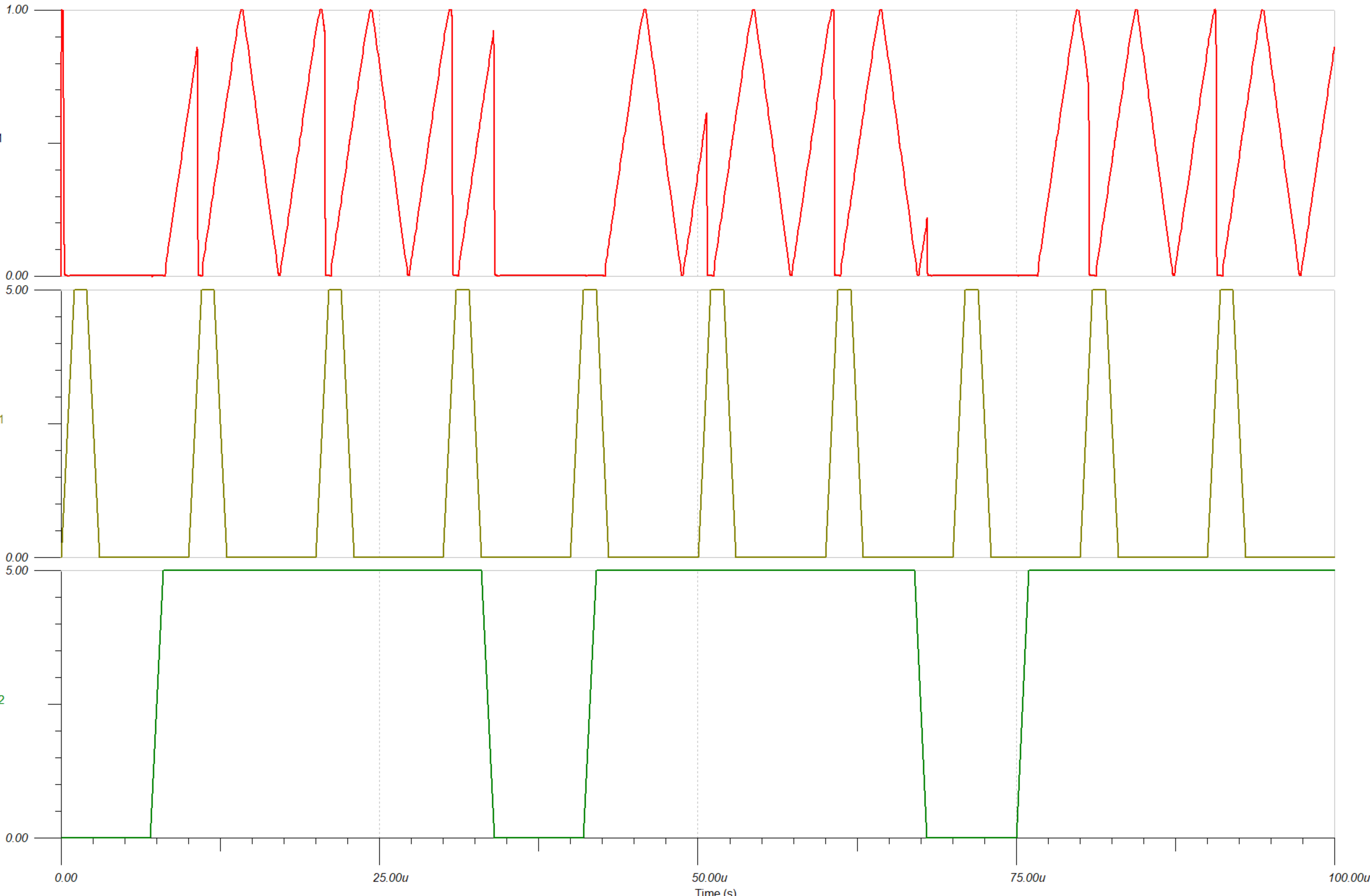
#235 — creatorlars · 2021-09-24
Regarding redundancy… it’s going to be an exercise in frustration to try to make things add up between series precisely. If you have an older module you like, that does a function you like, keep it. Even though it will show back up in Gen3, you may like the original way it was implemented better! I don’t know.
So – there are no Expedition or Visionary series modules in Gen3 and all of the Expedition & Visionary modules will be in Gen3.
From our perspective, it’s a reconsolidation of the master list of functional blocks we’ve been working on for over a decade.
#236 — vhsdestroyer · 2021-09-24
I guess that is more of what I have been thinking, less specifics, rather the concepts that ya’ll would like to cover. I guess an edit to my post might have cleared that up. Someone, can’t remember who said it, made a very fair point that committing to specifics now would limit the potential for new ideas.
As far as slimming down is concerned it is also in the interest of streamlining into my favorite portions of the LZX workflow and having the opportunity to build around those functions.
In relation to a new filter, I’m curious if there are still plans for an RGB filter? I also love the idea of color palates! That sounds extremely useful. I did read through the thread again, and intend to set aside some cash for the next set as well.
As always, thanks for the reply!
#237 — vhsdestroyer · 2021-09-24
I’d also like to say this is an extremely helpful point to keep in mind!
#238 — creatorlars · 2021-09-24
vhsdestroyer wrote:
In relation to a new filter, I’m curious if there are still plans for an RGB filter?
If you want the original TVMF style “triple filter”, that would be best in multiples of the presumable DWF3 (Dual Wideband Filter) module. 3x DWF3 would give you series/parallel VCFs for each color channel (6x VCF) for a 36HP “RGB filtering / mastering suite” approach. That’s a system concept all it’s own!
Yes, there will likely be an RGB enhancer / texturizer / filter / clipping amp, etc. That will use an RGB-to-luma style control input to drive three filters in parallel (along with keying amps) rather than a separate control per filter (which you can get with the DWF3.)
#239 — vhsdestroyer · 2021-09-24
creatorlars wrote:
Yes, there will likely be an RGB enhancer / texturizer / filter / clipping amp, etc. That will use an RGB-to-luma style control input to drive three filters in parallel (along with keying amps) rather than a separate control per filter (which you can get with the DWF3.)
The mentions of a texturizing workflow have me super excited for sure. Would these be broken into individual modules as functions or does this relate more to the idea of a texture instrument in the automata vein.
Also @creatorlars thanks for the clarification on the DWF3, I was anticipating likely wanting doubles of any filter module at least but voltage control over 6 filters sounds particularly nice.
#240 — creatorlars · 2021-09-24
vhsdestroyer wrote:
The mentions of a texturizing workflow have me super excited for sure. Would these be broken into individual modules as functions or does this relate more to the idea of a texture instrument in the automata vein.
RGB enhancer would be a 12HP module with multiple modes – same as FKG3 is an “RGB keyer”, this is an “RGB enhancer” concept. So just one module, but with different edge and gain/clipping/filter mode options. More of an RGB war of the ants?
#242 — vhsdestroyer · 2021-09-24
That sounds so sick, war of the ants was always a module that confused me a bit when I have used it in person. It always seemed like there was a ton of potential, but time limitations never quite helped unlock it. It seems like in conception the “RGB enhance” would cover a good amount of territory with the different modes.
Are there any plans for a glitch module of some kind anywhere in gen3? I’ve got a CBV001 from syntonie that is a definite favorite in the rack but I’ve always been curious to see what spin you could put on the circuit bent archer style glitch devices.
#243 — creatorlars · 2021-09-24
vhsdestroyer wrote:
Are there any plans for a glitch module of some kind anywhere in gen3? I’ve got a CBV001 from syntonie that is a definite favorite in the rack but I’ve always been curious to see what spin you could put on the circuit bent archer style glitch devices.
LZX patching by definition preserves / enforces valid sync at all times, and that type of device is well represented elsewhere, so I don’t plan on doing something like a sync distortion. The RGB enhancer would be our version of high gain / clipping types of “glitch” effects/distortion. I also see glitch as something you can inherently patch in the format, just by adding feedback, or XOR’ing something with something else you shouldn’t.
#244 — nerdware · 2021-09-27
Will these modules fit on Tip Top Audio rails? I can’t see how, as those bottom-facing connectors look like they would be blocked by the “lips” on the TTA rails. However, I would very much like to find that I’m mistaken.
#245 — creatorlars · 2021-09-27
Will these modules fit on Tip Top Audio rails? I can’t see how, as those bottom-facing connectors look like they would be blocked by the “lips” on the TTA rails. However, I would very much like to find that I’m mistaken.
Shouldn’t be an issue. The bottom facing connectors have enough clearance to leave an RCA or DC barrel cable plugged in without exceeding the outer boundary of the PCB below it. The only thing I’d watch out for are RCA cables with abnormally long or bulky housings. We have tested several RCA cables with different housings and haven’t found any that don’t fit yet, but it doesn’t mean they are not out there.
#246 — nerdware · 2021-09-28
I may have failed to explain my concern in sufficient detail. It’s not the cables themselves that trouble me so much as the connectors themselves. Those sync connectors look like they descend below the PCB edge, which is level with the panel edge. That’s where the lip will be! The lip is deeper than the depth between panel and PCB, so there will be no space for the connectors, nevermind cables. So I appreciate that cables can be connected to modules without difficulty, but that’s not my concern here. It is the rails the module will be mounted on.
#247 — nerdware · 2021-09-28
Of course, I’m looking at photographs of the backs of non-production modules. For all I know, the production modules will be different in small details like this. Clearly it will be possible to mount them on rails. I just can’t see from looking at these photos how that can work. Nevermind. I can wait for more realistic photos and a better understanding. Thanks.
#248 — joem · 2021-09-28
I think maybe you’re looking at photos of the power/sync boards? Those aren’t the full height of the other PCBs specifically so they provide clearance for things to plug in. See LZX Gen3 Modular Releases 2021 - #198 by creatorlars for a pic of the back of one of the modules. You can clearly see that the sync connecters are far from where rail lips will be. Or are you talking about something else?
#249 — nerdware · 2021-09-28
Clearly I misunderstood the meaning of “rear assemblies”. I’m finding a lot of the cross-discussions here confusing. I’m going to ignore this thread as it really isn’t helping me as much as I thought it was. That’s a shame, as there may be a lot of useful, important information here, but for me it’s just randomly. This means I’ll have no idea what these modules do and any questions will simply refer me here, which really won’t help. Perhaps none of these modules are for me. Perhaps none of the LZX modules are for me. The only thing I’m sure of is that the Gen3 modules solve the power problem that has troubled me for years. That’s great, but I don’t know if it’ll help me so much if I can’t read this thread. Nevermind. I’ll cope. Thanks.
#250 — wednesdayayay · 2021-09-28
have you looked at the product descriptions on the LZX site for the FKG3 and SMX3? They explain what the modules do succinctly in one place that isn’t going anywhere.
I made a FKG3 emulation in touch designer and would be happy to go over how it is working with you on a discord video chat. The matrix mixer is easier and could be done at the same time.
#251 — emooh · 2021-09-28
The COVID-19 pandemic has had a major effect on our lives. Many of us are facing challenges that can be stressful, overwhelming, and cause strong emotions in adults and children. Learning to cope with stress in a healthy way will make you, the people you care about, and the LZX video synth community become more resilient.
#252 — nerdware · 2021-09-28
I have looked at them and compared the info with what is found here in this thread. I’d say there’s a lot of additional material here that probably doesn’t belong on a product page but which could go in a longer document, like a manual. For example, the discussions of the ART-3 module. I’m still trying to relate that to what I find in the Wikipedia article on affine transformations. However, I expect there will eventually be a video to explain and demonstrate this module, and that will no doubt clarify a great deal. All such videos so far have been excellent and very helpful indeed. Many thanks to Johnny Woods! They are often my primary guide to using LZX modules, while manuals and product pages are good reference tools. That is, they do different things. It’s all valuable. Thanks, everyone!
#253 — Z0NK0UT · 2021-09-28
There will definitely be an “All About _____” thread for each module, once the module begins shipping. I have been using those threads as expanded manuals, with links to tagged conversations here on the forum and demo videos. We’re working towards only announcing a product when we can simultaneously release the demo video and “All About…” manual, but we’re not quite there yet.
#254 — nerdware · 2021-09-28
Yes, that will help enormously. Thanks.
BTW, I live in the UK, and I can only find one shop here that still has any LZX modules in stock. Hopefully that’ll change when the new modules are announced.
#255 — creatorlars · 2021-09-28
Reposted, here is a photo of the rear of the module with connectors attached, so that you can see more clearly. This is the full assembly minus the backpanel (which shields the power board.)
Also, this thread is more of a long winded discussion than a coherent reference – don’t be shy about asking questions that may have already been asked, I don’t mind answering.
Gen3 modules released this year are more of an “advance release” on the official debut (with manuals and videos.) Certain parts of the company are on different time tables. I’m the only one here that can write the documentation, and it has to wait until I’ve completed everything else on my plate (Chromagnon, TBC2, etc.) The best I can do for right now is answer any questions you have.
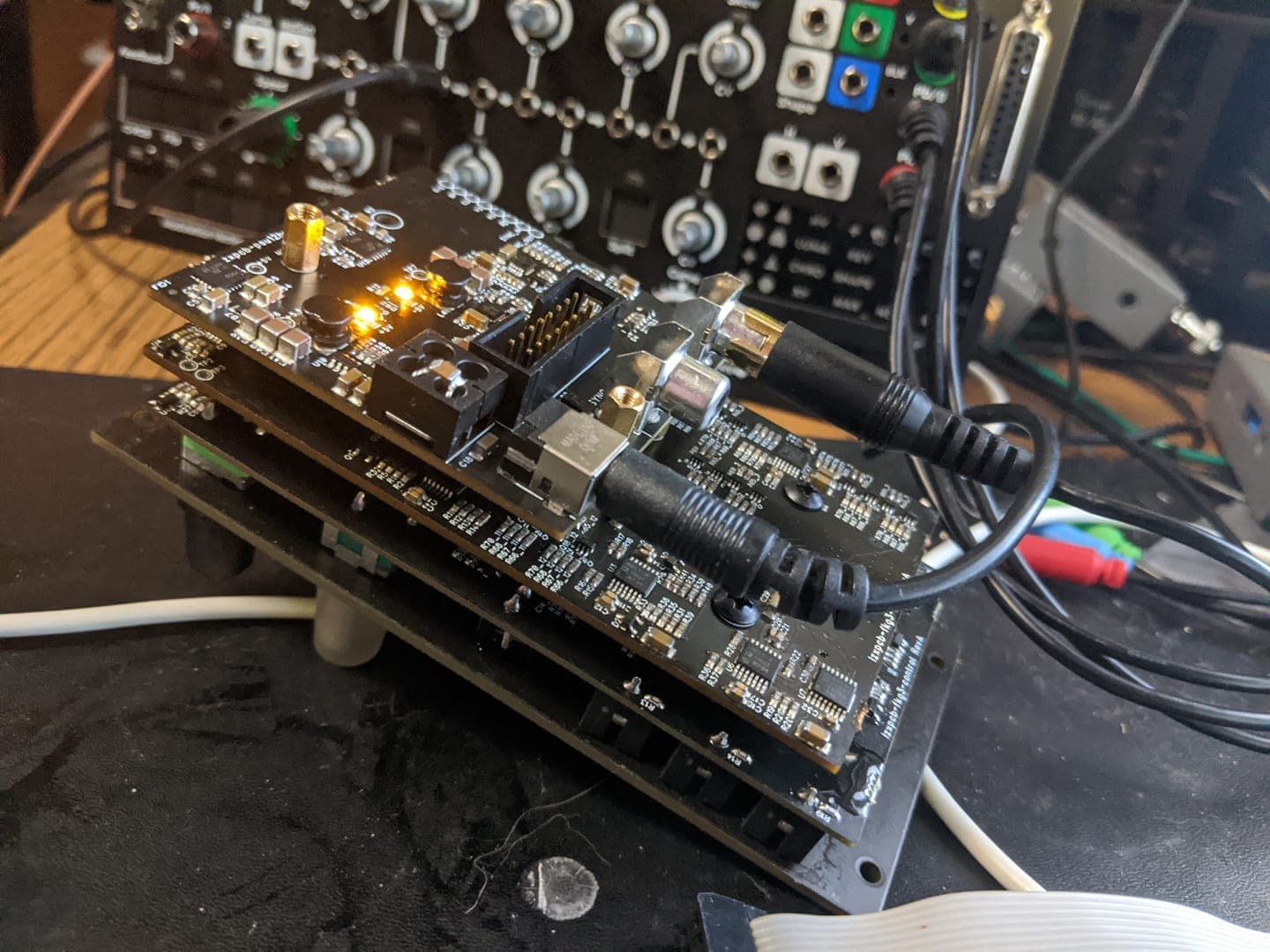
#256 — wednesdayayay · 2021-09-28
we just made a art3 emulation in touchdesigner this morning the previous offer stands for that as well if you are just dying to know what stuff does in a basic sense!
I can’t wait to patch it up as a coordinate map for video when I get home from work
#257 — nerdware · 2021-09-28
Ok, that photo definitely helps. I saw it earlier but didn’t make the link with the photos of what I’m assuming are sub-assemblies for the power and sync connectors. I’m also assuming the back PCB has been removed to expose the circuitry and LEDs in particular. Very pretty! As always, your patient support is greatly appreciated. Many thanks.
#258 — nerdware · 2021-09-28
wednesdayayay wrote:
we just made a art3 emulation in touchdesigner this morning the previous offer stands for that as well if you are just dying to know what stuff does in a basic sense!
I can’t wait to patch it up as a coordinate map for video when I get home from work
I’d love to play with your emulation. Unfortunately Touchdesigner doesn’t appear to be available for Linux, which is the only platform I have here. Thanks for the offer.
#259 — delray · 2021-09-28
I’d love to see a link to the TD emulations…
#260 — wednesdayayay · 2021-09-28
right the offer was to do a video chat through discord! no need for you to have touchdesigner.
I’d show you what the output looks like and talk through the building blocks I used to make it.
no worries if that isn’t for you
@delray I’m not planning on posting any files until I get modules in my hands.
I will walk through the functionality/building blocks with people on the LZX discord. This is all based on the front panels and discussions within this thread.
#261 — creatorlars · 2021-09-28
An affine function is a complex function used in mathematics and specifically graphics. Electronically it involves a 4x 4 Quadrant Multiplier/VCA circuits and some summing amplifiers.
If you are more familiar with synth functions think of an affine function as a 2D matrix VCA with thru zero modulation
Written as an equation, it looks like this:
Hout = Hin * XX + Vin * YX + X
Vout = Vin * YY + Hin * XY + Y
If you process HV ramps with an affine function, you now have an analogue graphics machine that can perform 2D translation, scale, shear, rotation (with sin/cos sources) of the resulting patterns or shapes synthesized by the ramp sources.
The Scanimate and Rutt-Etra systems used 4 quadrant multipliers extensively for vector modification, but did not include a consolidated affine function or a “morph” function, wherein the depth of the whole transformation can be moved in one step.
For those of you doing Rutt-Etra luma displacement style effects, this is really powerful! You can program a whole deformation with your luma modulation rather than just modulating one axis at a time.
#262 — nerdware · 2021-09-28
wednesdayayay wrote:
right the offer was to do a video chat through discord! no need for you to have touchdesigner.
Ahh, there I have a different problem. While I can use Discord, my computer has no microphone or camera for the video chat. Thanks again for the offer, but please see my reply to Lars.
#263 — nerdware · 2021-09-28
creatorlars wrote:
Written as an equation, it looks like this:
Hout = Hin * XX + Vin * YX + X>>>> Vout = Vin * YY + Hin * XY + Y
Ahh, now I get it. This is exactly what I needed! Thanks.
#264 — creatorlars · 2021-09-29
Another key to understanding ART3 in the scope of this initial set, is that it works with DSG3 to provide an “analogue sprite engine.” ART3 positions, scales, and warps the sprite. DSG3 defines the sprite’s texture and boundary. How you patch DSG3 to your color output / workflow defines the sprite’s colorization palette. This is similar to the Shapechanger + Navigator combo.
#265 — nerdware · 2021-09-29
Yes, I recognised this from your earlier explanation of the affine transform. It’s very clear from that how ART3 can scale and position the sprite. I was studying your quadrature patch again a few hours ago and the router’s role suddenly made sense to me. I’m having little epiphanies like this now. Thanks! This is so helpful.
#266 — petro · 2021-10-08
creatorlars wrote:
The “Mode” has four options: Luma Key (extracts luma channel from selected source), or Chroma Key Red/Green/Blue. The chroma keys are color channel exclusion based, on analogue MIN/MAX circuits.
Just a question re: FKG-3. I don’t quite understand the chroma key functionality as you have explained it here.
for instance if I plug in RGB video to RGB key inputs, can I use the threshold scan across all three channels and key out any color such as purple(R+B) ?
Or does it only work for individual channel . so I can key out red or green or blue individually but not colors in between ?
if so how would I key out purple or a particular shade of brown or whatever color that isn’t red or green or blue? Are there dead spots or can you program it to key out any possible color just by selecting a particular channel and setting ?
Also the switch on the top left is to invert the key ?
cheers

#267 — creatorlars · 2021-10-08
FKG3 is “RGB logic” based, it is a soft keyer adaptation of the keying logic in the Fairlight CVI and similar keyers from the era (Visionary series TVFKG had a hard key variant of this function).
It’s not the only kind of chroma keyer – for example, a YUV based keyer (like keyers with joysticks, such as Polar Fringe) is a different type of logic that involves hue selection.
Luma Key = Red + Green + Blue (weighted sum of all channels)
Red Key = Red AND NOT Green AND NOT Blue
Green Key = Green AND NOT Red AND NOT Blue
Blue Key = Blue AND NOT Red AND NOT Green
The logic is implemented with analogue minimum circuitry, so that the sources are fully soft.
Since in LZX world we patch RGB on separate cables, there are tons of patching tricks with this type of keyer, and that is part of the design intention here.
petro wrote:
for instance if I plug in RGB video to RGB key inputs, can I use the threshold scan across all three channels and key out any color such as purple(R+B) ?
Or does it only work for individual channel . so I can key out red or green or blue individually but not colors in between ?
The threshold behaves like an inclusion control. The higher the threshold, the more the key is derived from only pure blue. The lower the threshold, the more other colors (sage, cerulean, azure, turqouise, etc) are also included, until finally you are seeing all the colors (red and green, too). The softness is the proportion at which the non-perfect-blue colors apply to the key.
if so how would I key out purple or a particular shade of brown or whatever color that isn’t red or green or blue? Are there dead spots or can you program it to key out any possible color just by selecting a particular channel and setting ?
For continuous hue selection, you would want a YUV extraction based keyer, like Polar Fringe.
Or you could use a module that alters the hue of the key source before patching it to FKG3 to center Red/Green/Blue on different source hues through translation.
So think of “RGB Chroma Key” and “UV Chroma Key” as two different types of chroma keys. RGB has cones that are centered on 3 specific hues, whereas UV is more like a quadrilateral region within a 2D space. I’m sure we’ll have a UV Chroma Key in the Gen3 lineup.
Also the switch on the top left is to invert the key ?
Yes.
#268 — phosphenes · 2021-10-29
Apologies if this has already been asked but do we have any time frame on when these will be with dealers? Brexit has made international shipping a bit of a pain. To quote Stewart Lee “I only wanted bendy bananas & now there’s this chaotic inferno of hate!”
#269 — nerdware · 2021-10-29
The usual pattern is that the UK gets deliveries of new modules some time after the US distributers. I expect no change with the gen3 modules, but we’ll see.
It will be very helpful to know when shipping to distributers might begin. This year? Early next year? Some of us will need to sell modules or other gear to buy the new modules. Even a vague road plan with no dates will help. Where are we now? Can we wait until the new year before selling anything?
Regarding shipping chaos, this makes ordering direct from the US ill-advised. I will only buy LZX hardware from a UK shop, where stocks are very low for everything. When the new modules arrive, I expect they’ll sell out very fast. I’ve seen that happen before. It may be the same in the US, but its worse for LZX products than for other brands.
So everything is scarce, except anxiety. We have endless supplies of that. I’m focusing my patience by inventoring the modules I expect to sell over the coming years. Gen3 finally makes my endgame possible, thanks to the dc power solution.
#270 — Z0NK0UT · 2021-10-29
Dealers are part of the order queue, along with non-dealers. All orders are shipped on a first-come-first-served basis. Be sure to check with your preferred dealer for anticipated arrivals of LZX inventory.
#271 — nerdware · 2021-10-29
Only one dealer here seems to have any LZX in stock. I’m still waiting for Chromagnon and TBC2, but I guess I’d better start selling modules now. Thanks.
#272 — Fallinggirl · 2021-11-17
I want Memory Palace and I see you released some more. Will this work with Gen 3? And do you still recommend getting it?
#273 — Z0NK0UT · 2021-11-17
Gen3 will work great with Memory Palace–especially once the new Memory Palace firmware has been released.
#274 — Fallinggirl · 2021-11-18
Sweetness! I’ll get one then. Thank you

#275 — a_digital_index · 2021-11-26
Looks like SMX3 is about to ship. Do we know which order numbers are shipping?
#276 — Z0NK0UT · 2021-11-26
All existing pre-orders for SMX3 are expected to ship by the end of the coming week (December 3rd).
#277 — Z0NK0UT · 2021-12-06
Still making knobs for SMX3, so not all orders have departed.
Here is a spreadsheet Lars made to give y’all a detailed snapshot of current Gen3 production. This is where LZX is currently–the spreadsheet most likely won’t be updated to reflect progress on these tasks.
docs.google.comhttps://docs.google.com/spreadsheets/d/1Z29q7vGlyGBBQstdc8shpIbHOlKSexARjJlMA8g-dgg/edit?usp=sharinghttps://docs.google.com/spreadsheets/d/1Z29q7vGlyGBBQstdc8shpIbHOlKSexARjJlMA8g-dgg/edit?usp=sharingSheet1
LZX INDUSTRIES STATUS REPORT 12/05/2021 PROJECTS,RESEARCH,REV A PROTOTYPE,REV B PROTOTYPE,REV C PROTOTYPE,BUY PARTS,1ST ARTICLE PRODUCT,PART NUMBER,PART TYPE & FABRICATION...
Link: LZX INDUSTRIES STATUS REPORT 12/05/2021
#278 — Vdot · 2021-12-06
Will you continue building SMX3 for regular inventory once the preorders are fulfilled? I think this is the case with FKG? I was paying off a Mempal when the preorders went up but would probably pick one up if they are in stock soon.
#279 — Z0NK0UT · 2021-12-06
The goal is to keep everything in stock. We’ll see how possible that is once Chromagnon final assembly begins, but we’ll try!
#280 — Vdot · 2021-12-06
Awesome, I definitely prefer prioritizing the Chromagnon
#281 — Z0NK0UT · 2022-03-15
Here is the updated LZX Gen3 Status Report:
docs.google.comhttps://docs.google.com/spreadsheets/d/1Z29q7vGlyGBBQstdc8shpIbHOlKSexARjJlMA8g-dgg/edithttps://docs.google.com/spreadsheets/d/1Z29q7vGlyGBBQstdc8shpIbHOlKSexARjJlMA8g-dgg/editSheet1
LZX INDUSTRIES STATUS REPORT 3/14/2022 PROJECTS,RESEARCH,REV A PROTOTYPE,REV B PROTOTYPE,REV C PROTOTYPE,BUY PARTS,1ST ARTICLE PRODUCT,PART NUMBER,PART TYPE & FABRICATION...
Link: LZX INDUSTRIES R&D STATUS REPORT 3/14/2022
#282 — nerdware · 2022-03-15
Thanks for the update.
#283 — Dr_Rek · 2022-03-18
Thanks for the transparency, looking forward to more things later this year

#284 — dryodryo · 2022-03-20
Just seeing this now. Thanks Chad! Super excited for the bright future of LZX. The dark clouds of a long winter are clearing – literally and figuratively.
#285 — saiteron · 2022-05-14
hey Chad! are there any more updates on the Gen3 status? curious to see how things are progressing since the last update in March.
#286 — Z0NK0UT · 2022-05-16
No updates. We’re still on schedule to deliver DWO3, DSG3, and ESG3 before the first day of summer. TBC2 should start shipping around the same time.
#287 — saiteron · 2022-05-16
awesome! that’s enough of an update for me
#288 — brendanleespengler · 2022-05-16
Is there a way to tell where we are in the queue for TBC2 pre-orders? I’d hate to be 101.
#289 — wednesdayayay · 2022-05-16
the first wave of DSG3s are sold is that correct?
#290 — Z0NK0UT · 2022-05-17
Yes, but a second wave is probably not far behind the first. Gen3 is designed to be easy to keep in stock.
#291 — dubpixel · 2022-05-20
First day of summer:
6.21.22
So in approx, one month From today
Looking forward to it.
#292 — Boneoh · 2022-05-20
Great news! Thanks for the update.
#293 — Z0NK0UT · 2022-05-20
It probably won’t be exactly 100 units (the margin could be +/- 10), so it is tough to guess where the cutoff will be until after QC. The second batch won’t be far behind the first.
#294 — Tremendm_Labs · 2022-05-22
Am I still able to pre-order the ESG3 or is it Sold out?
Says its sold out on the LZX site but I thought ESG3 were still in pre-order along with a few other units.
#296 — Tremendm_Labs · 2022-05-23
Cool, gave it another shot and had success with the pre-order. Thanks
#297 — Robbertunist · 2022-05-28
Nick spoke a little about production numbers per Gen3 module towards the end of the latest stream on the LZX Twitch.tv channel. Probably broadcast on the May 26th, 2022.
#298 — monads · 2022-06-22
Anyone received any shipping status updates??? First day of summer was yesterday
#299 — analogbrainsurgeon · 2022-06-23
Obviously no shipping notice here, haha, but there was a cool video of some flower feedback produced by TBC2 posted to IG last week.
#300 — Z0NK0UT · 2022-06-23
Yep! Final round of TBC2 testing.
#301 — Midcitysteve · 2022-06-23
Any DSG3, ESG3, and DWO3 updates?
#302 — creatorlars · 2022-06-23
ESG3/DSG3 production units are built and awaiting production firmware release before shipment (we are fine tuning performance of a few features.) We’re on the cusp of an announcement here, as well as with TBC2.
DWO3 has undergone another PCB layout revision that’s wrapping up this week, but we expect to go into production when those boards arrive in early July.
#303 — cata · 2022-06-23
Are all new orders for ESG3/DSG3/DWO3 going to be part of a second batch or is there some availability left from the first run?
#304 — creatorlars · 2022-06-23
We are ahead on current orders, meaning there are assemblies built which are unallocated. There isn’t a fixed batch size that correlates to a grouped delay, since production on Gen3 modules is all in house and coming from shared parts stock (so we can just build more based on demand, with fast turnaround – instead of batching things 6-12 weeks apart). For example, we’ve managed to keep FKG3/SMX3 in stock since release, with some short gaps. If you want to be 100% sure you are ordering from stock-on-shelf it would probably be best to check with us after the initial shipments go out and the dust settles. We may have some ready to ship immediately, or we may be filling a rush of new orders – it’s impossible to say at the moment.
#305 — cata · 2022-06-23
Appreciate the transparency!
#306 — Robbertunist · 2022-06-26
Where did you see the TBC2 video in IG? Was it a clip from the streams Nick had been making on the LZX Twitch channel?
Regarding dates, this is definitely worth reading!
It has been a busy Summer for us here at LZX, with both R&D and our in house workshop! Here’s the state of all current projects at the end of this past week. >>> During the last half of Q2, ESG3, DSG3, and TBC2 hardware units have been assembled, but waiting for a production firmware release before shipping begins. We finished those releases this past week, and all three modules are now being beta tested in house with release candidate firmware. If everything continues to look good, we’ll star…>
#307 — Z0NK0UT · 2022-06-26
It was in stories. You can see it in the Gen3 highlights (from the LZX profile).
#308 — sprthhfk · 2022-09-06
Is the quadrature mode a scrapped idea? I haven’t heard/seen anything about it in Nick’s streams
#309 — creatorlars · 2022-09-06
For DWO3? I think a quadrature core VCO is something we’ve decided to save for a different module, likely one that involves multipliers and thru-zero FM. DWO3’s primary identity settled as a wide range triangle/saw/sine/square generator, and the compact 6HP per oscillator footprint.
#310 — sprthhfk · 2022-09-06
Ah, gotcha. I went pretty far back in the thread looking for info on DWO3, and was reading about the quadrature concept. I have one DWO3 ordered and am debating whether or not to go for another, or to find another VCO solution. TZFM and multipliers sound pretty tasty!
#311 — monads · 2022-09-08
Combining SMX3 and FKG3 with some Expedition series modules like Marble Index/Color Chords/Mapper combos is pretty sweet!!! Curious how “Color Wheel” will play out against Mapper.
#312 — wednesdayayay · 2022-09-08
from what was shown of color wheel we will be able to hue rotate an entire RGB input vs just a single hue input for mapper
that will be wild!
honestly it would still be nice to have a mapper though…
just imagine taking a TBC2 output
RGB into color wheel and Y into mapper
and then controlling both modules in different ways and recombining
or honestly even using a Baja or other quadrature oscillator then putting both color wheel and mapper into FKG for color keying them against each other.
#313 — Dr_Rek · 2022-09-12
@wednesdayayay Used Mapper are selling at reasonable prices on Reverb. I confirmed it works with HD timings with my ESG3, and looks awesome in HD.


#314 — rempesm · 2022-09-12
There’s no reason that any LZX compatible video module released to date, apart from those with sync connections, will not work with HD timings.
If it doesn’t have a sync connection, it will just work in any available sync format. There’s no real caveats or gotchas to it.
Would it help everyone if there was a chart?
#315 — Dr_Rek · 2022-09-12
This post covers HD compatibilities well, but a spreadsheet / chart would be great for quick reference

Any volunteers in the community that love making infographics?
#316 — pbalj · 2022-09-13
without bandwidth tests, saying something works in HD is unhelpful. so it passes a signal. its akin to saying an audio module works for video synthesis. yes it passes a signal, but does it look like a blurry potato taken on a nokia 7650?
i pray for the day when bandwidth measurements are included in specs, or at least third party evaluations.
#317 — rempesm · 2022-09-13
Totally appreciate that point and agree that specific bandwidth measurements published per module would more concretely answer this question.
The intent with my phrasing is to hopefully avoid concerns from users that their LZX Visionary/Expedition, BSO, Reverselandfill, Syntonie, OmiiIndustries, VisibleSignals, FoxingHour, etc. modules without sync connections will just flat out not work at all with the new Gen3 series and potentially lead to them selling modules in advance that will still offer value in their system.
Most modules will probably look just fine but I’d wager at least some modules will exhibit a degree of slight softening with external HD footage. Nowhere near how a typical audio module would unrecognizably smear the hell out of an image but still technically present.
I look forward to more concrete numbers that can empirically show the true bandwidth limits of each module. I just don’t have the right test equipment or knowledge to comprehensively clarify that question.
For now, I’d suggest actually trying modules in HD signal paths before getting rid of them and see if it’s acceptable to your own tastes.
#318 — pbalj · 2022-09-13
as long as no sync they will work with hd timings, for sure.
i want to process video at the crispiest quality possible so im on the hunt for this info
#319 — meudiademorte · 2022-09-14
a bandwidth info would be really handy!
my personal thought:
for now its fine to use older modules without having direct comparison to a gen3 equivalent (for example staircase - stairs /or/ passage - proc), because the step to hd is already a huge quality gain.
#320 — Dr_Rek · 2022-09-14
Mapper with DSG3 is awesome!!!
https://www.youtube.com/watch?v=Ptjkr80f9Iw
#321 — monads · 2022-09-15
^Pretty Sweet!!! What’s some of the patch breakdowns?
#322 — destroythings · 2022-09-15
Watching the new Keychain - Triple Hard Key Generator video on Youtube and can see there is some kind of break in the key it creates. At the start of the video when keying the diamond shape you can see the corners cut flat before the point. What is causing this. Is it just the settings that are being used?
Screenshot to give example.
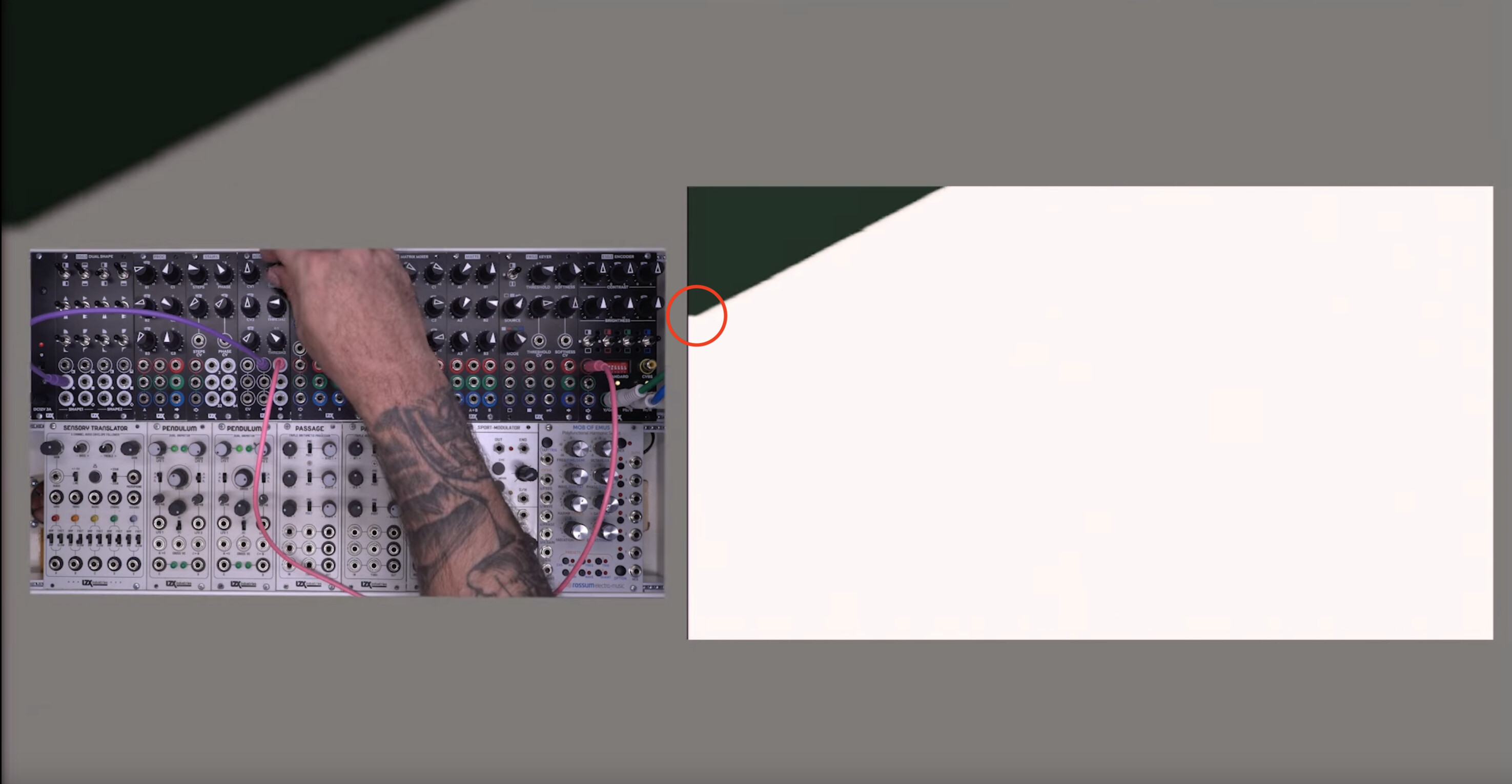
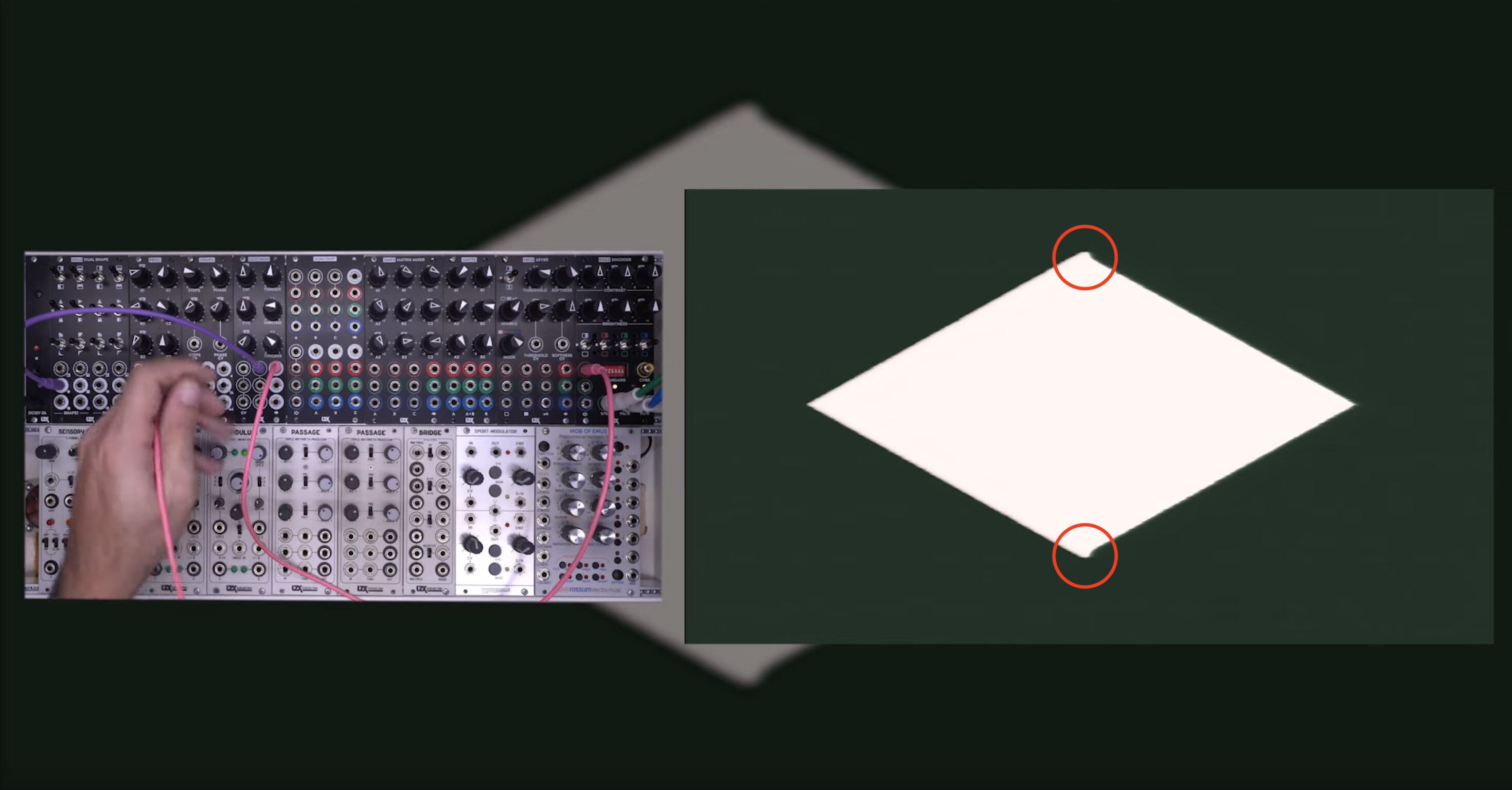
#323 — nerdware · 2022-09-15
I noticed that too. I’m wondering if that’s just a calibration issue or if we might all see that. Hard keying tends to reveal things like this.
#324 — Z0NK0UT · 2022-09-15
Lars says:
That’s just a part of the analog signal path when going thru that many wave folders and buffers. The ramp sources before going into that signal chain are perfectly linear. The little imperfections are part of what makes it analog (the signal is always moving left - to - right.)
#325 — destroythings · 2022-09-15
I have never seen those imperfections when using ramps into doorway or the VC keyer before. Is this something i am just not seeing using expedition modules due to not patching in certain ways or using many wavefolders? I have ran stuff through staircase and keyed but had never noticed these type of imperfections.
#326 — meudiademorte · 2022-09-15
Wait for tbc2 and use digital ramps via medialoader

#327 — nerdware · 2022-09-15
TBC2 is a much more expensive module, but much more powerful. You just need to be a little more flexible.
For example, I’m already using digital ramps by generating them with FFmpeg and feeding them to my VC. As a bonus, I can animate the ramps. I can also get 3 very different ramps. All I need to do this in HD will be a TBC2. If I had a second video player, I could expand this to 6 ramps, but the medialoader can do that for me.
Of course this is cheating! How is that a problem?

Gen3 ftw!
#328 — wednesdayayay · 2022-09-15
I’ve been thinking about making some digital image samples for the TBC2 where you had a simple
R Horizontal ramp
G Vertical ramp
B Triangle or circle
that way you could load up different “ramp packs” to use via TBC2
if you need a H ramp just patch the R output etc…
this kind of thinking about patching opens up lots of possibilities
you could do the same thing with a video with 3 black and white channels added together that aren’t meant to be combined directly but used as separate sources throughout the patch.
R static H ramp
G a modulating shape
B camera feed of some trees.
TBC2 is going to be so nice.
#329 — Dr_Rek · 2022-09-15
Agree it’s an odd “feature” / bug that was not found in the SD ramp shape modules… It’s present on my DSG3 too, but I don’t really mind it. I would hope they can achieve a cleaner shape generation for Chromagnon, but I won’t be sad if it’s the same.
@monads see the YouTube description for module list, here is a photo of where the patch went last night
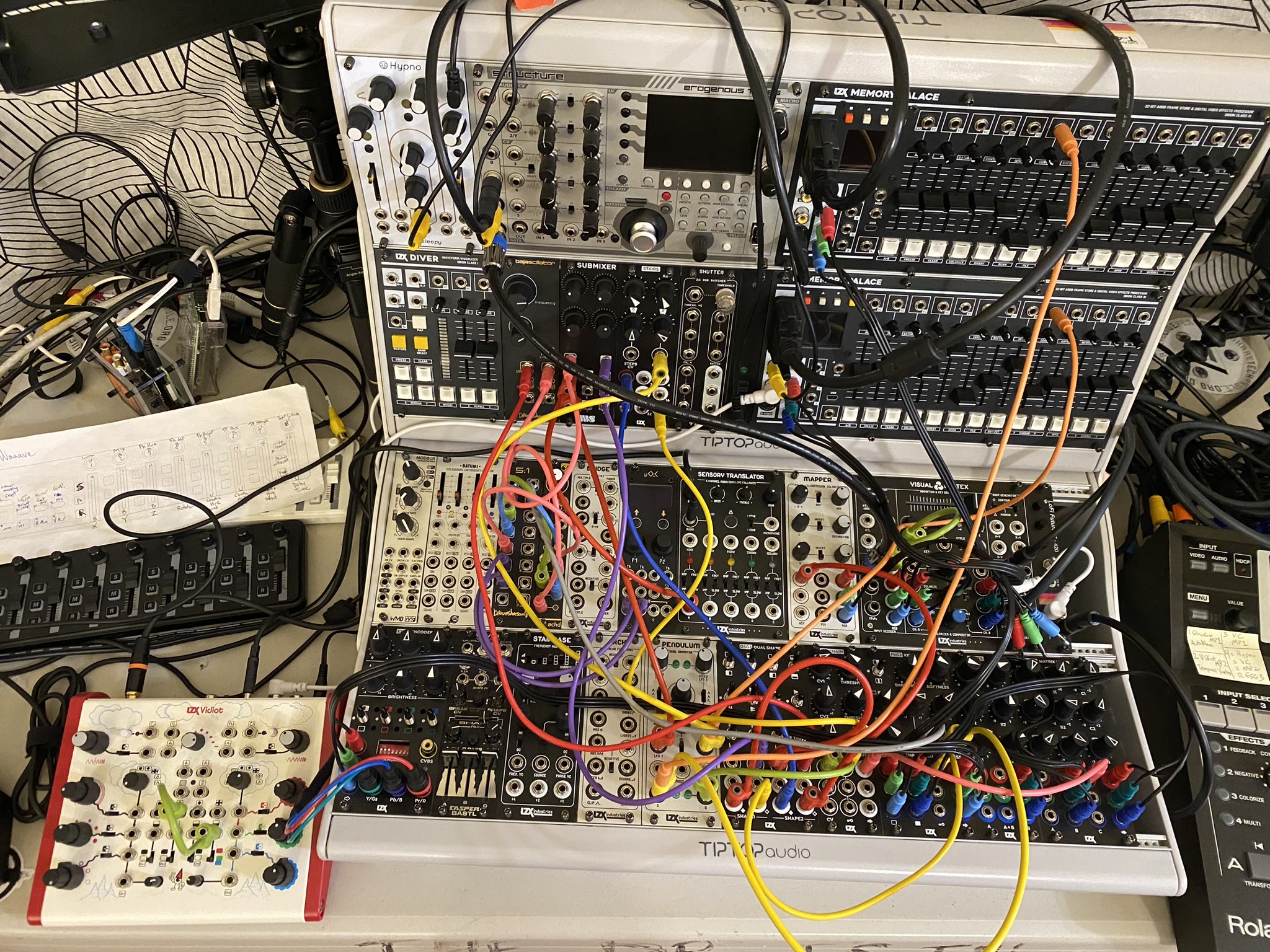
#330 — jwsmithwick1 · 2022-09-15
That’s a brilliant idea!
#331 — creatorlars · 2022-09-16
It’s important to understand that DSG3 is not a ramp generator – it is a shape generator. Ramps are a spatial reference, whereas shapes are a figure derived from a spatial reference. This isn’t the only way to think of it, but it’s why I called DSG3 a shape generator. It is really a complex analog function bank that processes a source vector (that could be a linear ramp or could be something else.) The ramp generators inside DSG3 are very linear and precise sawtooth ramps produced by 10 bit DACs, like Visual Cortex’s ramp generators – but aligned to all 15 video format scalings. So it is the analog function blocks (which process the internal ramps) that creates the deformations in the resulting shape.
In other words, when we release the “HVREF” module, the triangle ramp outputs won’t have the same deformation (this comes from the DSG3’s processing path.)
A guide to system ramp gens
– Video Ramps & Cadet IV are analog ramp gens, they are not precisely aligned to the screen
– Visual Cortex & Diver are 10-bit hi res ramp gens with digital waveshaping
– DSG has 10-bit hi res ramp gens with analog waveshaping
– Chromagnon is 10-bit hi res ramp gens with digital shape selection plus analog waveshaping
– Memory Palace & TBC2 media loaders can produce 8-bit ramps via the media loader
#332 — jwsmithwick1 · 2022-09-16
Just remembered that there is a Y out on the TBC2 as well. Even more shapes!
#333 — wednesdayayay · 2022-09-16
but the Y will be a weighted combination of the RGB outs
something like
Y= R 0.2126 + G 0.7152 + B 0.0722
#334 — creatorlars · 2022-09-16
The Y output is a good way to exceed the 8-bit limitations. When you make your source ramps, give them a slight tint – then when you blend the channels in the Y output, you’re not just getting 3x duplicates of the same source, but the color channels mix to form a higher resolution gradient.
#335 — jwsmithwick1 · 2022-09-16
@creatorlars would it be possible to have the Y output an alpha channel from a png file?
#338 — joem · 2022-09-17
I’m pretty sure based on what @creatorlars just said that the Y out is derived directly from the R, G, and B outputs through analog processing, via the formula @wednesdayayay mentioned (multiplying and adding is easy in the analog realm), not via a separate output from the digital brains. So if your question means you want the R, G, and B channels from the same png to go out on the R, G, and B outputs, AND you want the alpha channel to go out on the Y, that’s not possible.
That said, if you can output separate pngs on both halves of the tbc2, you could have a png where one or all of the rgb channels is a copy of the alpha channel from the original png, then you can get the alpha out that way in addition to the rgb channels from the other tbc2 half. So, technically possible if you need it, though not in the way you were probably asking about.
#339 — dryodryo · 2022-09-17
creatorlars wrote:
It’s important to understand that DSG3 is not a ramp generator – it is a shape generator
This may be a common misconception. I was certainly wrong about what DSG3 was until I saw the demo videos posted to Facebook.
Honestly, I think the naming of the module is a big part of the confusion. Yes, the DSG3 generates ramps. Yes, those ramps get processed to generate shapes. But as you say, the module is really an analog function bank. Correct me if I’m wrong, but DSG3 is really very close to 2x Arch, except:
- DSG3 also generates H and V ramps
- Connections among DSG3 function blocks are internally normalled, so a lot less patching
- Different options for logic / compositing operations
- Different options for rectifier aka folder aka frequency doubler
When my system is fully operational and I have time, I think my first video demo will be about putting DSG3 through its paces. IIRC Johnny Woods’s demo did focus on the internal ramp/shape generation. But there’s so very much more that DSG3 can do with a video signal patched in.
Someone posted on Facebook about the use of dummy plugs; this was a revelation to me. Patching a dummy plug into one of the inputs bypasses the compositing stage. That gives access to the invert, rectify, and exp/log functions on a single ramp or single external signal.
#340 — Z0NK0UT · 2022-09-18
The production team snuck in a short run of Contours this week! There are a few more available on the site: Contour – LZX Industries
#341 — wednesdayayay · 2022-09-18
do you all think the ART3 will end up being 499 like DSG/ESG?
this is a module I’m super looking forward to. Repositioning workflows are going to be so neat.
#342 — Z0NK0UT · 2022-09-19
Still a bit early to know the price on ART3. We’ll try to keep it as affordable as possible, of course.
#343 — Gavin · 2022-09-20
I think you may have said this above, but is Gen3 actually intended to be a stable longer-term set of core modules, in the way the Orion series wasn’t, and the Expedition series was almost? In terms of the expense of these modules, longer term availability without switching up the range becomes an issue of more equitable accessibility.
#344 — Dr_Rek · 2022-09-20
DSG3 is so awesome, mapper and stairs are it’s best friends
(bit of compression artifacts from a h.264 capture)
#345 — monads · 2022-09-22
^That image didn’t help me Dr_Rek so I just placed an order a DSG3.

#346 — creatorlars · 2022-09-23
Gavin wrote:
I think you may have said this above, but is Gen3 actually intended to be a stable longer-term set of core modules, in the way the Orion series wasn’t, and the Expedition series was almost? In terms of the expense of these modules, longer term availability without switching up the range becomes an issue of more equitable accessibility.
Yes, this is exactly the plan. I’d like to continually build it up over the next two decades, and prioritize keeping all modules in production.
Early EuroRack frontier days were different – each product release was a limited batch, and an experiment! Now it’s been proven these products have staying power, so we’re interested in developing our “player’s set” or “52-card deck” – and focus more R&D time on lots of continual documentation and content support to go along with it.
So any future revisions to the modules will be Mk2, Mk3, etc. as opposed to entirely new products, and focus on the same format/identity.
Among the first modules we’ve released there are three groups:
-
“hybrid powerhouses” (FKG3, ESG3, DSG3, DWO3, SMX3, etc) that are combo functions designed to deliver lots of functionality to a small system. Think of these like ambassadors and paragons of their functional groups: keyer, shapes, encoder, osc, mixer, etc.
-
“triple CV functions”, triple key gen (Keychain), triple hpf (Contour), etc.
-
“patching utilities”, SumDist (buffered distro/summing amp), Matte (buffered offset controller), etc.
#347 — creatorlars · 2022-09-23
wednesdayayay wrote:
do you all think the ART3 will end up being 499 like DSG/ESG?>>>> this is a module I’m super looking forward to. Repositioning workflows are going to be so neat.
Definitely will be in the $499 category, it’s got a huge multiplier count! A 12HP positioner/rotator (Navigator Mk2) would be natural frontend for DSG3 as well.
#348 — creatorlars · 2022-09-23
dryodryo wrote:
Honestly, I think the naming of the module is a big part of the confusion. Yes, the DSG3 generates ramps. Yes, those ramps get processed to generate shapes. But as you say, the module is really an analog function bank. Correct me if I’m wrong, but DSG3 is really very close to 2x Arch, except:
You’re correct. What makes DSG3 a shape generator is just the HV mix oriented signal path (two input chains going into multiple HV output mixes.) So it’s a shape generator with the hood popped open. By “shape” in the video synth context I mean “enclosed figure”… usually a quadrilateral. That is, a shape generator must have the ability to create a pattern that has an enclosed boundary inside the space of the screen. Other words I guess would be “complex ramp” or “2D ramp.”
#349 — dryodryo · 2022-09-23
creatorlars wrote:
What makes DSG3 a shape generator is just the HV mix oriented signal path
But when breaking the normal to the H and V ramps, and inserting an arbitrary voltage, video image, whatever, DSG3 is not “generating” a “shape” in the sense of creating a 2D geometric figure. It’s performing a series of transforms on that incoming voltage. And with two input voltages, DSG3 additionally performs logic/blending operations. Right?
We can still consider it a “shape” generator inasmuch as any function curve has a shape. So although the naming of the module might not immediately paint a full picture of what it can do, it’s not misleading or inaccurate. But I think the messaging can be improved a little here. This is an analog function processor with video HV ramps built in.
Beautiful work, I’m having so much fun. Thank you again.
#350 — dryodryo · 2022-09-23
creatorlars wrote:
“hybrid powerhouses” (FKG3, ESG3, DSG3, DWO3, SMX3, etc) that are combo functions designed to deliver lots of functionality to a small system
In the short time I’ve had to play with these, I can say they absolutely pack a huge functionality into a small form factor. Utterly amazing what I can do with just two or three modules! Retail pricing is fair considering the versatility, build quality, forward-thinking “modular module” design, long-term commitment to support, and smart adaptation to supply chain issues. I’ve said it before, but LZX has really arrived, Gen3 exceeds all of my expectations.
#351 — creatorlars · 2022-09-23
dryodryo wrote:
So although the naming of the module might not immediately paint a full picture of what it can do, it’s not misleading or inaccurate.
Absolutely. The names of the modules are best thought of as a shorthand, or as nick names. In this case it’s very much an answer to the beginner’s question of “wow, what does that do?” “It generates shapes.” If you answer the question “well it’s 28 analogue functions in multiplexed arrays” then the next question is still “wow, what does that do?!” So it’s perhaps less about describing function, more about communicating identity. You are totally correct that this module hides a lot of functionality that’s applicable in so many patches not related to shape generation.
#352 — creatorlars · 2022-09-23
dryodryo wrote:
I’ve said it before, but LZX has really arrived, Gen3 exceeds all of my expectations.
I really love to hear that. Thank you.
#353 — rempesm · 2022-09-23
creatorlars wrote:
this module hides a lot of functionality that’s applicable in so many patches not related to shape generation.
It’s great for feeding the Y of a video source into Doorways → DSG3 → Marble Index’s opacity inputs for Porter Duff compositing. Not sure we can do the full Porter Duff patch with Gen3 quite yet or if it just requires more FKG-3s than I have to patch up. I’m still used to having the soft keyer broken out with Doorway.
#354 — Dr_Rek · 2022-09-29
Reminds me of this, shape generator is a great nomenclature for quick understanding of the functions
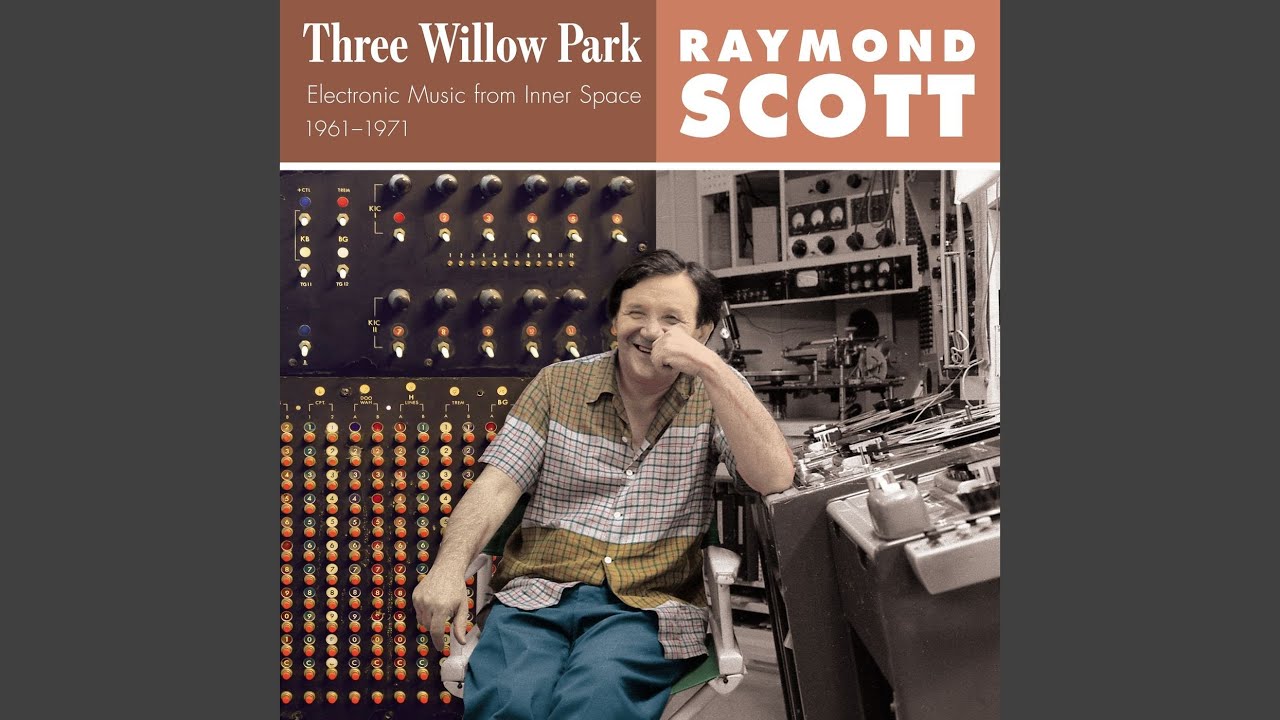
https://www.youtube.com/watch?v=RreYxl8MKhQ
#355 — monads · 2022-10-21
Any updates on DSG3 availability? Had an order from 1mos ago and received notice of some delays? Just checking. TIA.
#356 — creatorlars · 2022-10-21
We finished SMT / thru hole assembly for a large batch of DSG3 (double what we need to fill current orders) last week. They are in QA right now. Anyone still waiting will receive an update soon. ESG3 large batch starts next week when boards arrive. There have been numerous shipping delays this month costing us time, I appreciate everyone’s patience.
#357 — Robbertunist · 2022-12-16
Hey @creatorlars, any interesting teasers or previews of some Gen3 modules in development that we will see in the first half of 2023?
I had posted a similar question on the LZX Discord & someone pointed out the October 2022 Update post & thread, perhaps that would have been a better place for me to have posted.
#358 — creatorlars · 2022-12-16
Swatch is ready to show.
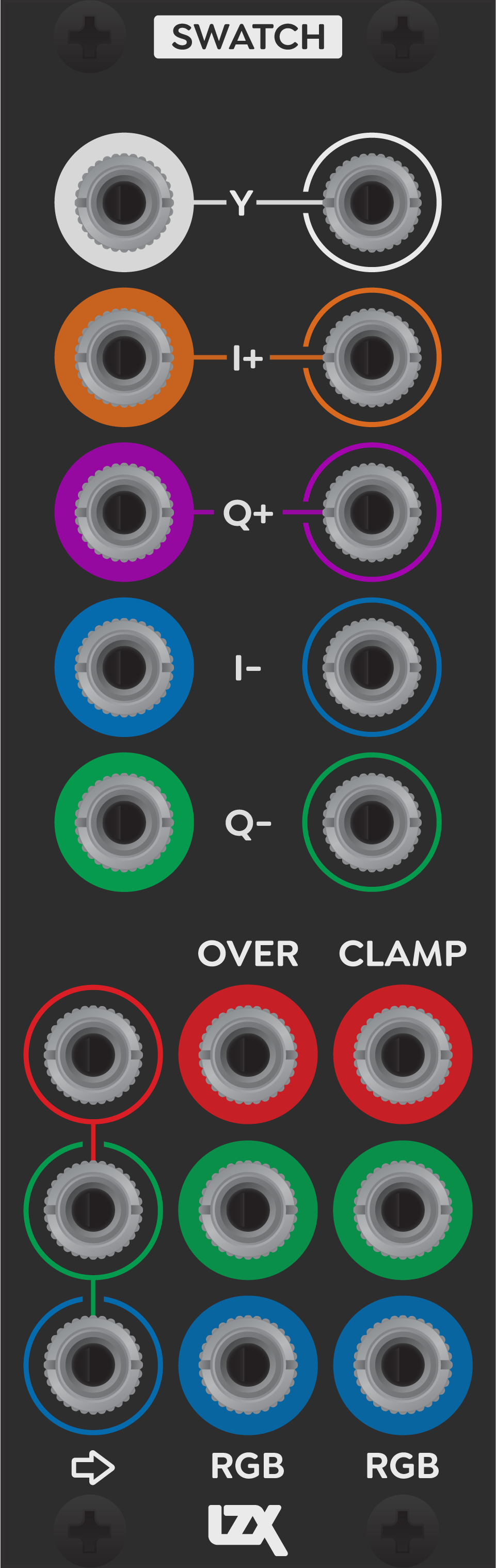
Swatch is a 2-in-1 colorspace converter: RGB to YIQ + YIQ to RGB. The connections are normaled so you can get RGB in / out pass thru (but still patch in for IQ modulation, etc.) So it is both a dual converter and a luma/chroma modulator, by intent. I find it very fun to patch, and it gets into those “muddy pastel” regions that can be difficult to see in the RGB colorspace.
#359 — creatorlars · 2022-12-16
As far as development path goes, we decided to split the “Color Wheel” functionality into 3 modular blocks, as it was far too much circuitry to squeeze into 12HP comfortably, and the component pieces deserved some additional exploration in the modular context.
The other two modules will be Angler (Polar-to-Cartesian converter/generator) and ART3/Complex Rotator (name change pending). These modular pieces will be able to be used in many ways outside of HSY modulation (as in Color Wheel), but that is one of their uses. Chromagnon will make a fine all-in-one HSY modulation effect.
So, Swatch can be thought of as the entry/exit points of an “HSY modulation patch.” The other two components being a rotator (for the IQ signals) and a polar-to-cartesian generator (to generate a Hue/Sat → IQ offset.)
#360 — dryodryo · 2022-12-17
creatorlars wrote:
we decided to split the “Color Wheel” functionality into 3 modular blocks
Cool, I have many questions!
Are all three modules 8 HP? Or is that TBD?
I’m confused by the Swatch panel layout. Looks like some outputs on the top left? Aren’t outputs on the right by convention?
What’s the purpose of the positive and negative I and Q patch points? AFAIK, I and Q are bipolar signals.
How does modulation work here? Patch RGB in at bottom left, modulate colors in YIQ space by patching signals in at top right?
In order to use other modules to process YIQ signals, one would need two Swatches, right?
Swatch #1 RGB to YIQ → other modules → Swatch #2 YIQ to RGB → Encoder.
I’m curious about this despite the fact that my initial experiment with colorspace conversion via 2x SMX3 didn’t give me the aesthetic results I was seeking.
#361 — creatorlars · 2022-12-17
dryodryo wrote:
I’m confused by the Swatch panel layout. Looks like some outputs on the top left? Aren’t outputs on the right by convention?
In this case, there are 2 separate functions on the panel, which is why it breaks convention. Function one (RGB in/YIQ out) is on the left, and function two (YIQ in/RGB out) is on the right.
What’s the purpose of the positive and negative I and Q patch points? AFAIK, I and Q are bipolar signals.
They are negative versions of the same positive inputs / outputs. The purpose? We need negative outputs of I and Q for some patch concepts. And in the case of the negative inputs, they provide a place to patch an IQ modulation source (in the case this is used as a chroma modulator with RGB in/out.)
In order to use other modules to process YIQ signals, one would need two Swatches, right?>>>> Swatch > #1> RGB to YIQ → other modules → Swatch > #2> YIQ to RGB → Encoder.
No, it’s two separate converters. You’d just patch YIQ outs, then back to YIQ ins. So the above patch is possible with just one Swatch. You can think of YIQ in/out as like a “Send/Return” in a mixing bus.
#362 — creatorlars · 2022-12-17
dryodryo wrote:
Are all three modules 8 HP? Or is that TBD?
The polar-to-cartesian module will be at least 8HP. You can think of this module as a sort of quadrature/sinusoidal variation of Stairs, if used for wave shaping. Or it’s also a driver for patches in which you need to define angle/distance in vector space at high bandwidth.
The affine/complex rotator module will be at least 12HP, and like Chromagnon will have unipolar and bipolar input modes (so can be used with unipolar ramps or with bipolar vectors, etc.) For this module it’s important that it has direct access to all points of the Affine matrix, but we haven’t settled on the layout yet.
The point of the three modules is that they provide a patched out and expanded version of circuitry existing in Chromagnon already – this helps us in many ways on the development/production side with Chromagnon, and also offers a less abstracted interface to the underlying functions (which adds power, in the modular patch context.)
#363 — dryodryo · 2022-12-18
This is absolutely fantastic. Incredible stuff. LZX continues to amaze me. You have taken this tech and art to yet another level. Absolutely love the concept behind the product line. Standalone / high level instruments and patched out / expanded modules of the same circuitry / logic / functionality. Addresses needs of different users and use cases. Great educational value, too. Peel back the curtain of a high level instrument like Chromagnon, learn how it works, expand creative options.
So, to reiterate. Because that is how I best comprehend, by repeating back what I think I learned.
The trinity of Swatch, Angler, & ART will be at least 28 HP.
Typical use scenario for Swatch:
Patch RGB into the lower left of Swatch. That’s converted to YIQ and comes out at upper left. Send to whatever other modules you wish. Return modified YIQ to Swatch inputs at upper right. Patch RGB outputs at lower right to an encoder or whatever other modules you like.
#364 — creatorlars · 2022-12-18
dryodryo wrote:
Patch RGB into the lower left of Swatch. That’s converted to YIQ and comes out at upper left. Send to whatever other modules you wish. Return modified YIQ to Swatch inputs at upper right. Patch RGB outputs at lower right to an encoder or whatever other modules you like.
Yes, we could call that the “Hue Colorizer/Modulator” patch. Another variation would be to swap out the Polar-to-Cartesian converter directly with a quadrature oscillator, like Baja or Syntonie VU006. This variant could be called a “Hue Rotator/Animator patch.” Or you could set up a vector mixing bus with Proc or similar, and have both at the same time.
Here are a few ways you can use Swatch all by itself:
- A Chroma inverter (patch IQ- outs to IQ+ ins) for RGB images
- A Chroma modulator (patch external modulator to IQ- ins) for RGB images
- A patch-wide conversion interface (you could convert a source to YIQ, run your entire patch in the YIQ colorspace, then convert back to RGB for the encoder.) In this sense, Swatch is an expander module for whatever decoder/encoder IO path of your system.
- Direct YIQ pattern synthesis (using some sort of quadrature oscillator into IQ inputs and some sort of ramp/shape into the Y input)
- In a more abstract sense, if you have any patch where you are interested in finding ways to extract meaningful modulation paths from a color image, having both RGB + YIQ channels available at the same time introduces some meaningful contexts. For example, modulating Stairs with IQ channels is going to be quite different from modulating it with RGB channels.
#365 — dryodryo · 2022-12-18
Thanks! I was referring to the patch-wide conversion interface function. But of course there are lots of applications! I didn’t even think of the chroma inverter function.
Epic stuff. If I put too many exclamation marks here, my post will get flagged. But just imagine a wall of capital letters and exclamation marks, because that’s how I’m feeling right now.
#366 — creatorlars · 2022-12-18
dryodryo wrote:
Thanks! I was referring to the patch-wide conversion interface function.
I think I had “how do all 3 modules do HSY modulation” stuck in my head still. To dismiss anything unclear about my reply: Your patch example is correct, and demonstrates you understand the signal flow perfectly.
More Swatch trivia:
There are two sets of RGB outputs – unclamped RGB and clamped RGB (white & black level clippers on all channels.) Since the YIQ colorspace has regions outside of valid RGB ranges, the clippers remove content that might mix weirdly with a downstream fader or composite. On the other hand there may be cases where you want to intercept RGB pre-clipping.
#367 — dryodryo · 2022-12-18
creatorlars wrote:
unclamped RGB and clamped RGB
Yes, that was one thing I understood from the panel layout.

The ability to control the mapping from the square IQ space to the RGB range is essential. Sometimes it’s good enough to just limit the values. But if the incoming IQ signal is too hot, and we want to preserve all its data, we need to attenuate that somehow, hence the need for unclamped output.Regarding voltage ranges, are you mapping I and Q values directly to voltage? I.e. -1 to +1? If so, am I correct in concluding that the unclamped RGB values can exceed 1V?
#368 — creatorlars · 2022-12-18
dryodryo wrote:
Regarding voltage ranges, are you mapping I and Q values directly to voltage? I.e. -1 to +1? If so, am I correct in concluding that the unclamped RGB values can exceed 1V?
The transformation follows the matrices for NTSC 1953 YIQ as described in this Wikipedia article:
en.wikipedia.orghttps://en.wikipedia.org/wiki/YIQYIQ is the color space used by the analog NTSC color TV system. I stands for in-phase, while Q stands for quadrature, referring to the components used in quadrature amplitude modulation. Other TV systems used different color spaces, such as YUV for PAL or YDbDr for SECAM. Later digital standards use the YCbCr color space. These color spaces are all broadly related, and work based on the principle of adding a color component named chrominance, to a black and white image named luma. In YIQ the Y c...
Link: YIQ

So assuming RGB is 0 to 1V scaling, I is +/-0.5957V and Q is +/-0.5226V.
So if you’re driving the IQ inputs with Proc’s +/-1V bias control for example, you’d have a saturation range from 0% to 170%-190%.
#369 — Rik_bS · 2022-12-19
This is exciting - I found Mapper to have a bit of a steep learning curve, to generate more than just rainbow vomit, and it’s slowly made its way in to every patch now
Even without the details of the other two I’m keen to explore further!
#370 — wiatrob · 2022-12-20
Hi @creatorlars,
Will ART3+? be capable fo video-rate spins?
#371 — creatorlars · 2022-12-20
wiatrob wrote:
Will ART3+? be capable fo video-rate spins?
Yes, you can think of ART3 as a kind of fully voltage controlled SMX3 with a few extras (and 2x2 instead of 3x3). If you have quadrature VCOs, those can be used to generate the rotational offsets – or you can use the Polar2Cart module if you want “Rotation Angle” to be a single video rate parameter.
So to spin some ramps, you need.
- A module to generate ramps.
- A module to generate Sin/Cos offsets (Quadrature VCO, Mapper, future Polar2Cartesian module discussed here)
- A 2x2 four quadrant multiplier matrix (ART3, etc.)
For Gen3, we’re splitting multiplier matrix, colorspace converter, and rotation driver into separate modules (Mapper and Navigator are like 2-in-1 functions in this sense.) This makes the initial patch more complex in some cases, but the modules can now be used like building blocks in a lot of new ways. You can patch up some more expanded subsystems in ways that were not possible before. For example, one system could have just a sample of rotational control, while another system could triple up on some things for 3D rotation or parallel YIQ processors, etc.
#372 — Robbertunist · 2022-12-20

https://lzxindustries.net/products/swatchSwatch is a dual function colorspace converter module with RGB-to-YIQ functions and YIQ-to-RGB functions.LZX Gen3 Design Standards Long lifespan pots, jacks and mechanical switches. Active switching and gain control of the entire...
Price: USD 249.00
Link: Swatch
#373 — mrfang · 2022-12-20
Any patch tips or conceptual strategies for less experienced Mapper users?
#374 — Robbertunist · 2022-12-20
There’s a fresh video/stream on Twitch created just over 24hrs ago with an hour of patching goodness


https://m.twitch.tv/lzxindustries/homeTwitch is the world's leading video platform and community for gamers.
Link: Twitch
I’m not sure if this fresh stream would immediately help you @mrfang or other Mapper users but it wouldn’t hurt to check it out.
And the super informative classic “3 Patches” video for Mapper of course.
#375 — creatorlars · 2022-12-20
mrfang wrote:
Any patch tips or conceptual strategies for less experienced Mapper users?
Try making a Double Linear Rainbow as your “Home Row” patch:
HRamp or Vramp → Hue input. Hue CV Level fully CW. Hue CV Bias fully CCW.
The ramp’s brightness is now shifting the hue angle as it transitions from black (no offset) to white (720 degrees of hue phase shift, 2 trips around the color wheel)
Saturation & Brightness bias controls - set CW to taste - hyper saturated rainbow vs muddy pastel rainbow, etc.
RGB Out → video output
Now swap out the ramp with Luma video, and you’ve got a 1960s video art style colorizer function.
In it’s relationship to Swatch, Mapper also contains a YUV to RGB function block – but does not contain an RGB to YUV function.
#376 — monads · 2022-12-21
Another new LZX module before 2022 close?! I’m in and will find a spot for!!!
Needing TBC2 soon though
#377 — dryodryo · 2022-12-22
@creatorlars Is there an exceptionally clever way to reintroduce color information into a rescanned vector signal? Patch the vector rescan camera into the Swatch Y input?
I do not understand ART3, but I’m sure that will come. I didn’t understand DSG3 either until I got hands on experience.
Thank you Sensei
#378 — creatorlars · 2022-12-24
dryodryo wrote:
Is there an exceptionally clever way to reintroduce color information into a rescanned vector signal? Patch the vector rescan camera into the Swatch Y input?
I would modulate the Hue/Angle of the Pol2Cart module (or a Mapper!) with the luma signal from the camera.
With Swatch in general: find creative ways to split the Luma channel into interrelated YIQ components and feed those into YIQ inputs. For example, you could patch the luma into Stairs, and feed any 4x outputs directly into the IQ+ and IQ- inputs. That should make something fun.
#379 — dryodryo · 2022-12-24
Thanks again. I didn’t articulate my question well. Maybe you answered the question I was trying to ask, but I’m not sure.
What I’m contemplating is the possibility of reintroducing the color of the original video source into the rescanned vector graphic, emulating an RGB vector monitor.
It’s not easy to wrap my head around this because I do not fully understand the polar to cartesian concepts. Even articulating the problem is presenting challenges, especially for my currently influenza-afflicted brain.
#380 — creatorlars · 2022-12-25
dryodryo wrote:
What I’m contemplating is the possibility of reintroducing the color of the > > > original> > > video source into the rescanned vector graphic, emulating an RGB vector monitor.
Oh, I get you now. Hmm. The issue is that to deform/transform the image’s spatial arrangement (as is the point, with scan processing), then you have to do that to all color components in the image – there wouldn’t really be a way to restore them afterwards – except maybe some sort of digital algorithm.
Here’s one rather straightforward way to do color rescanning with a little pre and post processing of the source material:
- Encode source footage such that Red, Green and Blue are split into consecutive frames’ luma channels. The result is “sequenced RGB” frames at one third of the frame rate.
- Rescan the XY display as normal luma content, capture the results with a camera that is genlocked to the source.
- Decode the “sequenced RGB” back into single images, restoring its original frame rate.
Steps #1 and #3 could probably be done with some ffmpeg scripting.
#381 — dryodryo · 2022-12-25
Thanks, that’s what I thought. But I had to ask!
Even if the color components are in sync, they all have to be transformed the same way. The raster is a spacetime matrix. Mucking with the raster means that although the brightness of the scanning dot is nearly simultaneous with the original video intensity, the dot lands in a different place on the screen.
But then I thought, well, we have the transformed spatial coordinates – the rescanned vector graphic. And we have the original color information, which we can extract using Swatch. Maybe there’s a way to marry the two.
The sequential RGB approach sounds clever, but it would fall down if the vector graphic was animated in any way. I guess one could quantize the animation to frame triads with a V-sync circuit incorporating sample & hold, a 1/3 clock divider, and a synchronous start trigger, or even a sequencer. But I don’t have all of that currently. And anyway it would be pretty unintuitive trying to perform at 1/3 speed.
Lacking a fast RGB vector monitor, or a stroke-to-raster converter, it sounds like digital emulation is the only way to get full color raster manipulation.
Thanks again, happy holidays!
#382 — creatorlars · 2023-01-03
dryodryo wrote:
The sequential RGB approach sounds clever, but it would fall down if the vector graphic was animated in any way.
Yeah, it’s possible – but you would need to replicate the RGB sequencing process for any modulation sources (record the animation sources as an image, then play them back the same as you are doing the source), or just use static sources (like fixed ramps, etc – which is fine if you are composing stills.)
#383 — dryodryo · 2023-01-03
creatorlars wrote:
you would need to replicate the RGB sequencing process for any modulation sources (record the animation sources as an image, then play them back the same as you are doing the source)
Interesting idea. That’s an awful lot of computer work. IMHO, in this case it’s better / faster / easier to fake it with digital emulation. But this paradigm of prepping video signals in unconventional ways does expand the range of possibilities. Definitely “outside the box” thinking. That’s always welcome, even if it turns out that staying in the box makes more sense in the particular situation at hand.
Thanks as always.
#384 — creatorlars · 2023-01-03
dryodryo wrote:
But this paradigm of prepping video signals in unconventional ways does expand the range of possibilities. Definitely “outside the box” thinking. That’s always welcome, even if it turns out that staying in the box makes more sense in the particular situation at hand.
It just depends on the project, I guess! This is a lot less scripting than is involved in a complex animation rigging or game development project, for example. If it gets you the right 5 second recording you’re after, it may be worth the pursuit. Having modern computers and analog video synths existing in parallel to each other is very exciting to me.
#385 — Boneoh · 2023-01-03
creatorlars wrote:
Having modern computers and analog video synths existing in parallel to each other is very exciting to me.
Yes! It’s exciting to have 21st century tools available!
It’s also nice to use the tools we have instead of repeated GAS, pun intended.
For IT geeks like me that like to program, it’s fun to build something that works exactly the way I want. I’ve done a lot of programming for fun the past year, building the digital side of the hybrid workflow I have in mind. I’m guessing that it’s also fun for the folks that can get really deep into the hardware as well.
#386 — 337is · 2023-01-21
Question about the design language decisions on Swatch, and not a criticism, but a genuine curiosity. Why are the upper inputs (Y through Q-) positioned on the left side of the module? I’m used to inputs on the right. Does this configuration allow for a particularly useful patch flow with specific modules to take advantage of what appears to be a unique layout in the the LZX ecosystem? Thanks for any insight you care to share.
#387 — joem · 2023-01-21
It seemed a little weird to me at first too, but after seeing how the module works, I’ve come round to it. I’m guessing LZX chose to do it this way so signal flow would be from left-to-right in general and so that related I/O on the top and bottom are near each other. The bottom-left (RGB) input leads to the top-left (YIQ) output. The top-right (YIQ) input leads to the bottom-right (RGB) output. And the top-left output (YIQ) output is normaled to the top-right (YIQ) input. So the signal flows up on the left, down on the right, and if the normalization isn’t broken it flows left-to-right on the top. (It’s important to remember that the YIQ input does not lead to the YIQ output.)
If the top part had inputs on the left and outputs on the right, then the bottom parts would be related to the top parts diagonally AND the normalization flow of the YIQ parts would be right-to-left, which I’m guessing seemed weirder to LZX than to do it the way they did (and I’d agree).
Another way they could have laid it out would be RGB Input at top-left, YIQ Output at top-right, YIQ Input at bottom-left, and RGB Output at bottom-right. IMO this would be a reasonable layout signal-flow-wise. But it wouldn’t be possible to lay out cleanly on the grid that LZX has been using for gen3 (look at Swatch next to the rest of gen3, especially Sum/Dist). And you’d probably be stuck with the situation of having the top-most jack of the bottom-left YIQ Input in line (or perhaps almost-but-not-quite in line) with the bottom-most jack of the top-right YIQ Output, which would be unideal.
In otherwords, the layout makes sense if you consider Swatch as two modules side by side that just happen to have the top (YIQ) parts normaled from left-to-right, and (I think?) it’s the best way it could be laid out given gen3’s established grid.
Anyway, this is just a guess at LZX’s design choices. Not certain it’s right, but it makes sense to me that this would be why.
#388 — creatorlars · 2023-01-22
337is wrote:
Question about the design language decisions on Swatch, and not a criticism, but a genuine curiosity. Why are the upper inputs (Y through Q-) positioned on the left side of the module? I’m used to inputs on the right. Does this configuration allow for a particularly useful patch flow with specific modules to take advantage of what appears to be a unique layout in the the LZX ecosystem? Thanks for any insight you care to share.
Swatch has two separate functions. An RGB to YIQ converter (left side) and a YIQ to RGB converter (right side.) If you consider that the YIQ out to YIQ in are normalized, then the primary RGB in/out are left/right side as usual. We tried it a few different ways and ended up settling on the configuration that kept the RGB I/O on the bottom and in line with other modules. So you could think of it like RGB in/out, with the top area being the send/return (YIQ out/in).
If you want a cheat sheet that should clear anything up, it’s pretty simple:
RGB in → YIQ out → YIQ in → RGB out
So I’m imagining a situation where you have a 6U case and the bottom 3U is all RGB left-to-right flow. And the top 3U is vector processors, oscillators, etc. Swatch is in the bottom row, and your YIQ processors are piecemeal, in the top row. YIQ signals leave the RGB path (exiting YIQ outs at the top of Swatch), get modified, then re-enter the RGB path (entering YIQ inputs at top of the Swatch). So RGB flows left to right, while YIQ sends up, then returns down. We tried some variations with arrows and lines illustrating this, but it felt very busy.
Ultimately it was important to keep this module 8HP, but we did not want to break design rules – so we handled RGB IO in the existing left-to-right flow convention, and used the top part of the module to interpret the YIQ components differently. I think it gives the module a unique look, and the inversion of expectations with the YIQ IOs helps underline the identity of the module – you’re supposed to pause and go, “Huh. These IOs work differently from the typical RGB path. Maybe YIQ isn’t just RGB by another name after all.” At least these were my thoughts/justifications!!
#389 — dryodryo · 2023-01-23
Swatch is perfect. The layout does deviate from convention, but it’s no big deal at all. Just think of the signal flow within Swatch as clockwise, starting from lower left.
I’ve installed mine in the center of the rack, as equidistant from everything as possible, to keep cable lengths and spaghetti clutter to a minimum. Swatch wants to connect to everything. At first I thought it would be most convenient to install it next to the encoder, because generally Swatch will patch directly to the encoder inputs. But then I realized that Swatch is in many ways the centerpiece of the system.
#390 — sean · 2023-01-23
Since Swatch breaks color into 2 dimensions, does controlling it with an X-Y joystick make sense as a single controller to effect 360° color shifting?
Haven’t quite wrapped my head around the possibilities of the module yet and not sure I’ve seen folks do that in any demos (though I haven’t necessarily watched all of them yet).
Oh, another question: in demos I have seen, it appears that patching into I & Q but not Y produces an image. Whereas, with Y input at 0, I would expect black. In the absence of a Y input, is the module normalled to averaging the luma values of the IQ inputs?
#391 — nerdware · 2023-01-23
Is Y normalled to 1?
#392 — creatorlars · 2023-01-23
sean wrote:
Since Swatch breaks color into 2 dimensions, does controlling it with an X-Y joystick make sense as a single controller to effect 360° color shifting?
Yes, that would allow you to do IQ color picking and offsets. Color rotation (like continuous hue cycling) will require a rotator module.
Is Y normalled to 1?
Y input (of the YIQ to RGB side) is normalled to Y output (of the RGB to YIQ side). The RGB inputs are normalled to 0V (Black.)
#393 — sean · 2023-01-23
creatorlars wrote:
Y input (of the YIQ to RGB side) is normalled to Y output (of the RGB to YIQ side). The RGB inputs are normalled to 0V (Black.)
I can see that I need to take a closer look at how YIQ works.
#394 — creatorlars · 2023-01-23
sean wrote:
Oh, another question: in demos I have seen, it appears that patching into I & Q but not Y produces an image. Whereas, with Y input at 0, I would expect black. In the absence of a Y input, is the module normalled to averaging the luma values of the IQ inputs?
Edit: Rewrote this reply after the first attempt.
If you are patching from arbitrary sources (oscillators, ramps, keys) directly into the YIQ inputs, it’s possible to generate illegal YIQ colors. Illegal colors can be a good thing! But to generate a legal YIQ source, where IQ are constrained by Y’s amplitude, you need a saturation processor (dual VCA) so that you can multiply Y with IQ. You also need a quadrature source for IQ where the outputs are 90 degrees out of phase, like a quadrature oscillator or polar-to-cartesian function.
Without a YIQ generator, you should go in thru the RGB inputs with your image – and then go into IQ- inputs, with your modulation sources (like XY from a joystick.) The RGB outs will then be the RGB source image, but with IQ distorted by the joystick’s offsets.
Swatch is a YIQ converter, and the Polar-to-Cartesian module that is following it up can be used as a YIQ generator. The rotation/affine module that is also coming can be used as an IQ modulator. Together they can be patched as a comprehensive YIQ manipulator/generator/rotator tool suite. Swatch on it’s own has lots of tricks and utility, but is not the full picture.
#395 — sean · 2023-01-24
I think I am getting it now.
One wants to think of YIQ as separating the luma and chroma values. Wherein the final RGB is always some multiplication of Y times IQ (0y equals black; 1y equals full saturation or white).
But, in actuality, IQ is always (supposed to be) relational to Y (hence the requirement for VCA treatment before input into IQ). And the math behind the YIQ to RGB conversion is addition/subtraction, not multiplication. So you can have a Y value of 0 and still end up with an image, even though logically that doesn’t make sense (under the more conventional HSV way of thinking about color).
…Okay, just noticed that you rewrote your description and made it clearer (and maybe better than what I just said). But I am pretty confident that I get it now.
#396 — creatorlars · 2023-01-24
If you’re wondering why we didn’t combine all this into one big module – we did! That’s what Chromagnon is.
Breaking it up into modules, Swatch has a very special place – it allows Chroma to exist in the same signal path as general use vector processors for shape generation or scan processing. So we can release “generic rotator module” and you won’t need separate variants for chroma rotator, shape rotator, scan rotator, etc.
#397 — sean · 2023-01-24
I will admit that, for my purposes, the original Color Wheel module concept could’ve perhaps been more useful. Or even something stripped back from that, with only RGB ins/outs and then the control over HSV.
But I totally appreciate why breaking it out with more modularity is practically more realistic and functionally more exciting.
#398 — creatorlars · 2023-01-24
sean wrote:
I will admit that, for my purposes, the original Color Wheel module concept could’ve perhaps been more useful. Or even something stripped back from that, with only RGB ins/outs and then control over HSV.
But I totally appreciate why breaking it out with more modularity is practically more realistic and functionally more exciting.
Color Wheel is still going to be entirely present, as well as the functions of Mapper, Navigator, Polar Fringe, and Shapechanger, in the functional set of these three modules alone – so you may feel different when you see it all together. Nothing prevents us from doing a Color Wheel module – but modular roadmap wise, doing the modular functions first means we have a Color Wheel function, and also cover a lot of territory beyond it.
#399 — monads · 2023-01-24
Can we get some of the Swatch demo videos back on-line? The “twitch” content was removed I think and I didn’t get a chance to watch all the content.
#400 — Pagoda · 2023-01-24
The last LZX J. Woods Youtube vid made mention of a Swatch vid on the way I think.
Twitch streams are indeed lengthy and fun but the archival nature of the Youtube content is nice as a ref manal of sorts.
#401 — sean · 2023-01-24
Past Twitch streams: lzx twitch - Google Drive
#402 — creatorlars · 2023-01-24
Yes, Johnny’s working on a video. I also posted some patching tips here.
Swatch is a deceptive module. On paper, it’s rather dry – a bidirectional color space converter with fixed color space, but the modular context of this function opens up some exciting use cases. Swatch is designed to interface RGB signals with parts of your system dealing with 2D vector processing (for Chroma processing) and waveshaping (for Luma processing). But even on it’s own, the interface has been designed to be highly hackable, through some patching tricks I’d like to share. > Patch Setu…>
#403 — monads · 2023-01-24
Thanks for the Swatch vid details! Gonna go back and watch some of the twitch ones and looking forward to Johnny’s video!!!